I’ve always thought the same thing. A roof top players retreat would crush it there. City Plat always finds a way to do less with more.
9 Likes
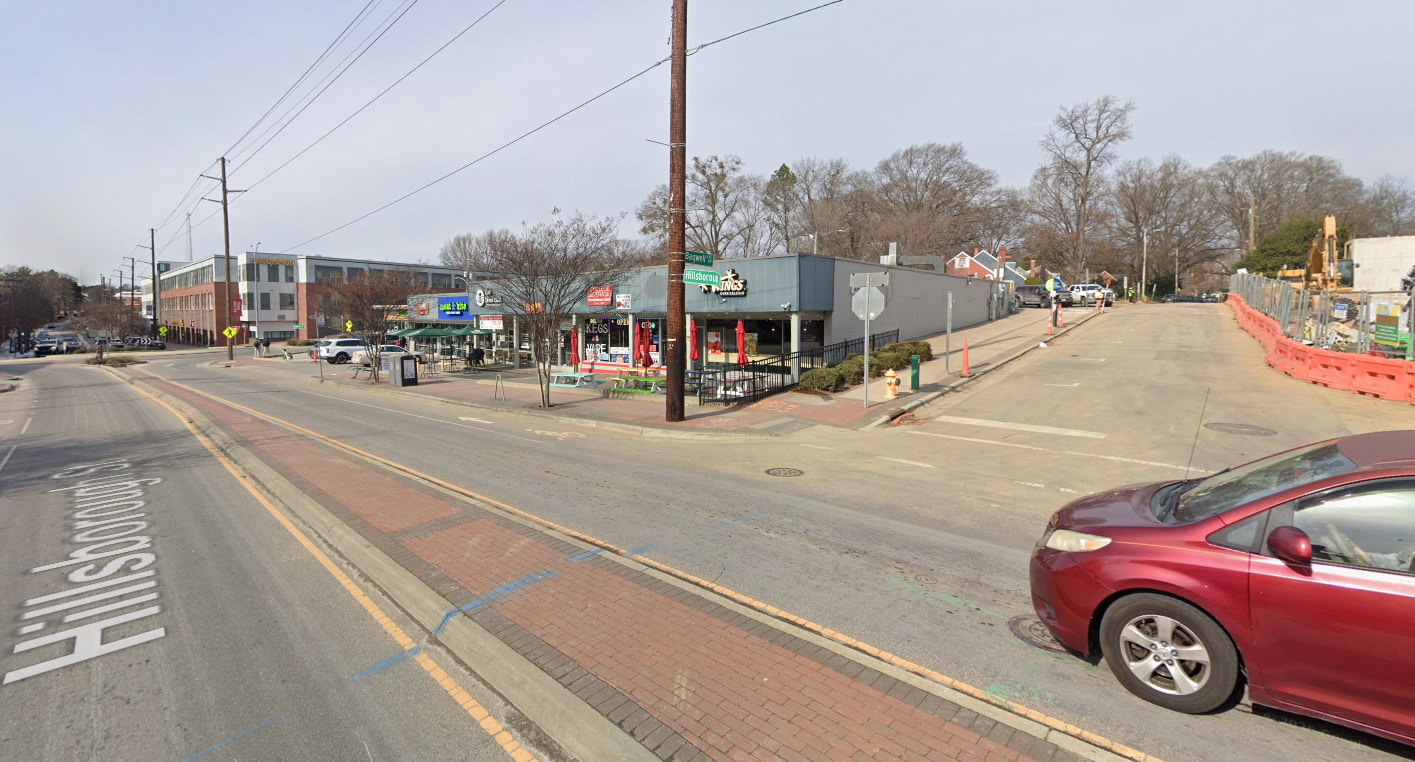
Me and the owner of this section of Hillsborough still have plans to build a “Top of the Hill” style restaurant like in Chapel Hill. Not anytime soon unfortunately, he just installed a new roof.
13 Likes
Because the single family home neighbors to the north effectively killed the college bar scene, and that lead to it being moved to my neighborhood because those of us homeowners in condos in Glenwood South don’t matter as much as them.
3 Likes
The drinking age changing to 21 back in the 80s, and then the rise of Glenwood starting in the late 90s were the 1-2 punch that eventually killed the college bar scene on Hillsborough. East Village was the last dying gasp, and that closed almost 8 years ago. Unless something big changes, it’s not coming back.
The long time iconic places that are left like Mitch’s and the PR are not college bars in the usual sense.
Catering to juniors, seniors, and grad students living on or near campus who want to go out, but don’t want to go downtown, just isn’t a strong enough niche. Because even if you manage to make an awesome bar, how do you hold a candle to the bar hopping and variety you can find if you go downtown?
4 Likes
The phrase “the neighbors north of Hillsborough Street” refers to the historic, wealthy residential neighborhoods of University Park and Cameron Park (now Forest Park) located directly behind the NC State university strip.
Historically, this affluent, highly politically active homeowner base effectively dismantled the legacy Hillsborough Street bar scene through a multi-decade campaign of aggressive zoning restrictions, relentless noise complaints, and targeted city ordinances.
1. The Rollback of Late-Night Permits
In the 1980s and 1990s, Hillsborough Street was a legendary, gritty hub for nightlife and live music (featuring iconic spots like the Brewery). The neighborhoods directly to the north began a coordinated pushback against the rowdiness, drunk driving, and trash overflowing into their historic streets. They successfully lobbied the Raleigh City Council to weaponize the conditional use zoning process. The city stopped approving late-night permits and severely restricted any new bars from opening near residential property lines, effectively choking out new nightlife ventures before they could start.
2. Relentless Noise Complaints & Code Enforcement
The homeowners association and neighbors actively monitored the strip. Rather than tolerating the ambient noise of a college town, they leveraged Raleigh’s code enforcement and police non-emergency lines to file continuous complaints over music levels, patio crowds, and standard bar operations. This intense oversight made it financially and logistically exhausting for venue owners to host live music or maintain outdoor seating, forcing several establishments to shut down or alter their business models.
3. The 2000s “Revitalization” and Rezoning
The final blow came during the major Hillsborough Street revitalization project that began in the late 2000s. Neighborhood coalitions worked alongside the city to deliberately rebrand the street away from a “college party district” into a sterile, pedestrian-friendly, family-oriented corridor.
- Zoning laws were shifted to favor multi-story, mixed-use buildings that require heavy commercial rent.
- The new properties prioritize corporate fast-casual restaurants (like Chipotle, Target, and boba shops) that close early, rather than dive bars or music venues.
The Resulting Shift
The continuous friction from the northern neighbors, combined with rising property values, effectively priced out and pushed away the student nightlife. Consequently, Raleigh’s primary nightlife hubs migrated entirely to Glenwood South and the Fayetteville Street districts, leaving Hillsborough Street to function primarily as a daytime retail and dining strip for students between classes.
^AI overview
It’s not true that the change in drinking age caused the shift from Hillsborough to Glenwood.
11 Likes
i think some better nightlife on Hillsborough would really help mellow Glenwood south and spread out the weekend crowds
12 Likes
I am sorry, I did not read your AI generated response. I do not have time for an impenetrable wall of text generated at a push of the button like that.
I will respond to your final sentence though which seems to be human-written:
I did not say that raising the drinking age caused a shift to Glenwood. I said that the raised drinking age, PLUS the revitalization of downtown, especially Glenwood, are what made Hillsborough’s college bar scene a mere shadow of what it evidently once was, even by the time I was a student at State from 2000~2005. It will never, ever return to the glory days of the 80s.
12 Likes
don’t be sorry. i skipped right over it too
3 Likes
That’s true to some extent. The bar scene was alive and well when I attended State in the mid to late 2000s. We were OK with getting giant X marks on our hand just to get in the door. From Farmhouse, Katmandu, Pantana Bob’s, East Village, Western Lanes (yes, I consider this a bar with a bowling alley) and also Sadlacks towards the end. As @John mentioned the revitalization along with the new developments killed the cheap rents those places relied on.
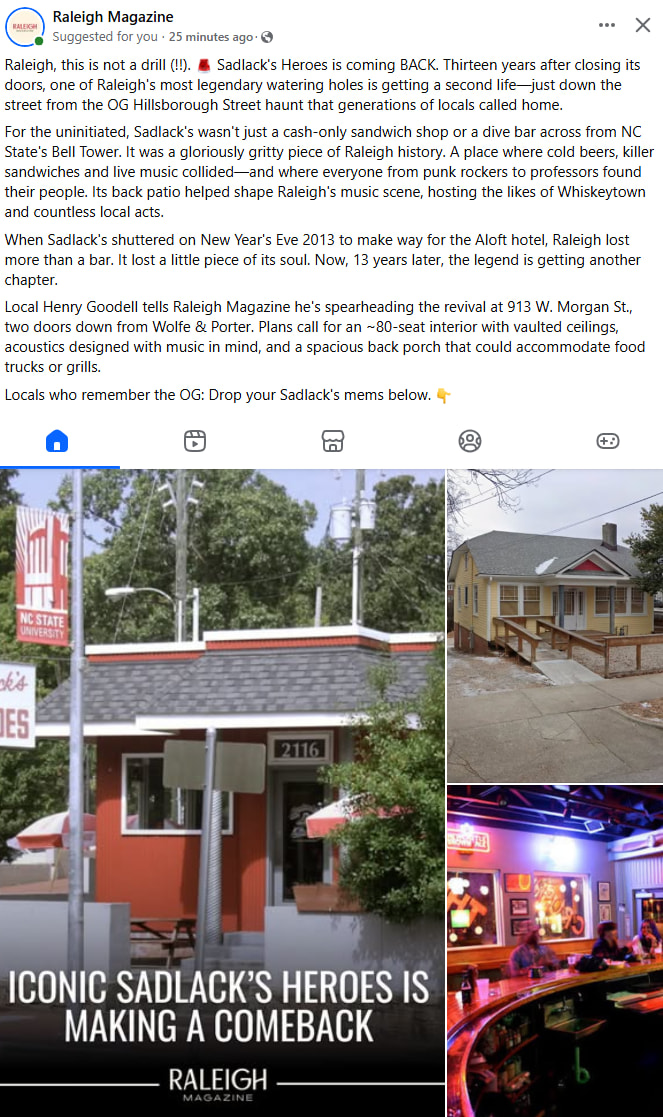
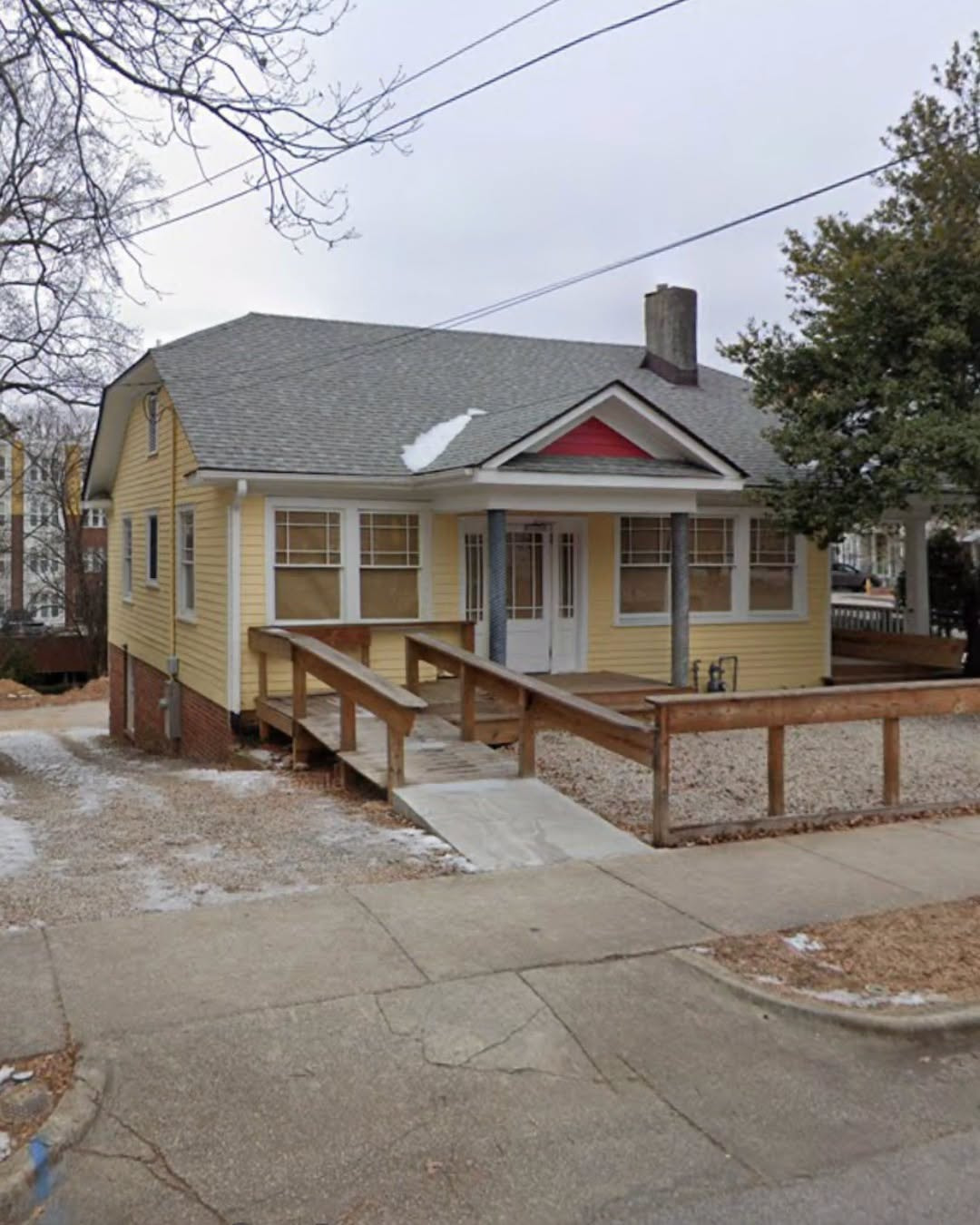
Speaking of Sadlack’s, Raleigh Magazine is reporting it is making a return!! to 913 W. Morgan St.
17 Likes
I did not say it died stone-cold dead the day after the drinking age changed in 1986 nor the day The Rockford opened on Glenwood in 1994. But the nightlife scene has been on a one-way downhill slide, with place after legendary place closing, the entire time I’ve lived in the area - and (from what I gather,) for quite a few years before that. Some of the Hillsborough Street places held on longer than others, but sooner or later the Glenwood Reaper comes calling. While I do get the feeling that the PR is probably safe, I worry even today about whether Mitch’s has legs.
2 Likes
When I wrote my contract to buy my condo and to invest in the vision that the city of Raleigh had for Glenwood South, it was NOT the shit show of cheaply thrown together bars that currently occupy many of the parcels between Peace Street and Hillsborough. Since moving into my home more than 20 years ago, we have lost many good businesses to the likes of some of these trashy “bar de jours”
AI or not, what I posted is a pretty good summary of what went down that shifted the bar scene to Glenwood South, and it was led by a relentless campaign of single family homeowners who wanted to live a block or two from a university, but who also wanted to pick and choose which parts of that community they wanted in their backyards.
You said: “The drinking age changing to 21 back in the 80s, and then the rise of Glenwood starting in the late 90s were the 1-2 punch that eventually killed the college bar scene on Hillsborough.” That’s not how it went down. The first statement about the drinking age didn’t kill anything, and moving the bar scene to Glenwood was certainly not contributing to its rise. In fact, a lot of good businesses have been lost over the years that were actually part of its rise 20+ years ago. These included independent boutiques, Cherry Modern Furniture, 518 West Italian Restaurant, Red Room, etc. I’d argue that the shift of the late night party scene has actually been killing Glenwood South by making it a ghost town during the daytime with storefront after storefront only being open at night, and many only having an impact on weekend late nights.
It’s a damn shame.
2 Likes
even if Hillsborough had bars anymore that admitted under 21’s, after about age 25, who in their right mind wants to go hang out with a bunch of 18-21 year olds? Glenwood Avenue has its share of immaturity, but about the last thing I want to do is party it up with underage college kids across from NCSU. I don’t think I’m alone in that. Some places (not necessarily Raleigh) even have 25 and up rules for that very reason.
Regarding the AI response you got, it’s wild how easy it is to recognize the hallmarks of AI writing. I’m not gonna read all that crap. Sounds like that poster has sour grapes about how the neighborhood took a turn from what he wanted, but that commentary (not yours) came across as very classist combined with “get off my lawn” shaking fist at sky. Glenwood can be a fun vibe, and if we didn’t have it, there would be a huge lack of things to do downtown.
The demographics of poor college students on fixed income isn’t exactly enticing to entrepreneurs that want to build or operated a Hillsborough street food outlet beyond fast casual. Cheap students with parents’ money doesn’t lend itself towards big eatery bills, let alone generous tips. Hillsborough Street and The 80’s version of it over and not coming back. The drinking age is a huge part of why, regardless of what the AI  says.
5 Likes
Same time as me. I lived on Vanderbilt Ave. I feel like the Hillsborough Hike and the Halloween bar crawl were started up and got huge then too. Do they still do the Hike?
From today’s update in the wire services thread, the rezoning application for 2402, 2404, 2408 Clark Ave & 300 Horne St has been withdrawn.
1 Like
What’s the AI version of TLDR?
TLAIDR? or just AIDR?
1 Like
Apparently both BulBox and Guasaca have closed.
Damn I liked having the Guasaca closer than Lake Boone…BulBox is no big loss
1 Like
It has to be difficult to run a business that has very little revenue in the Summer and over the Christmas break. It’s almost as if Raleigh’s walkable “high street” should be where more people are there year round like Glenwood South. But what do I know?
3 Likes