For those keeping score, the FAST buses proposal is the same group of proposals as the one for extending BRT lines to the state fairgrounds, per the density/sprawl thread. Here’s the full slide deck if you’re interested!
Another thing to remember is that NCDOT is also using the Triangle as a guinea pig for potentially making FAST (i.e. BRT-friendly) bus infrastructure into standard practices that can be deployed throughout all of North Carolina. This is probably one of the reasons why NCDOT is heavily involved in this study.
Zooming in on the RDU-specific proposal:
As @CivilFuture pointed out, the whole point of FAST bus infrastructure is to build them whenever road expansions or upgrades are already happening. This is exactly why NCDOT is involved.
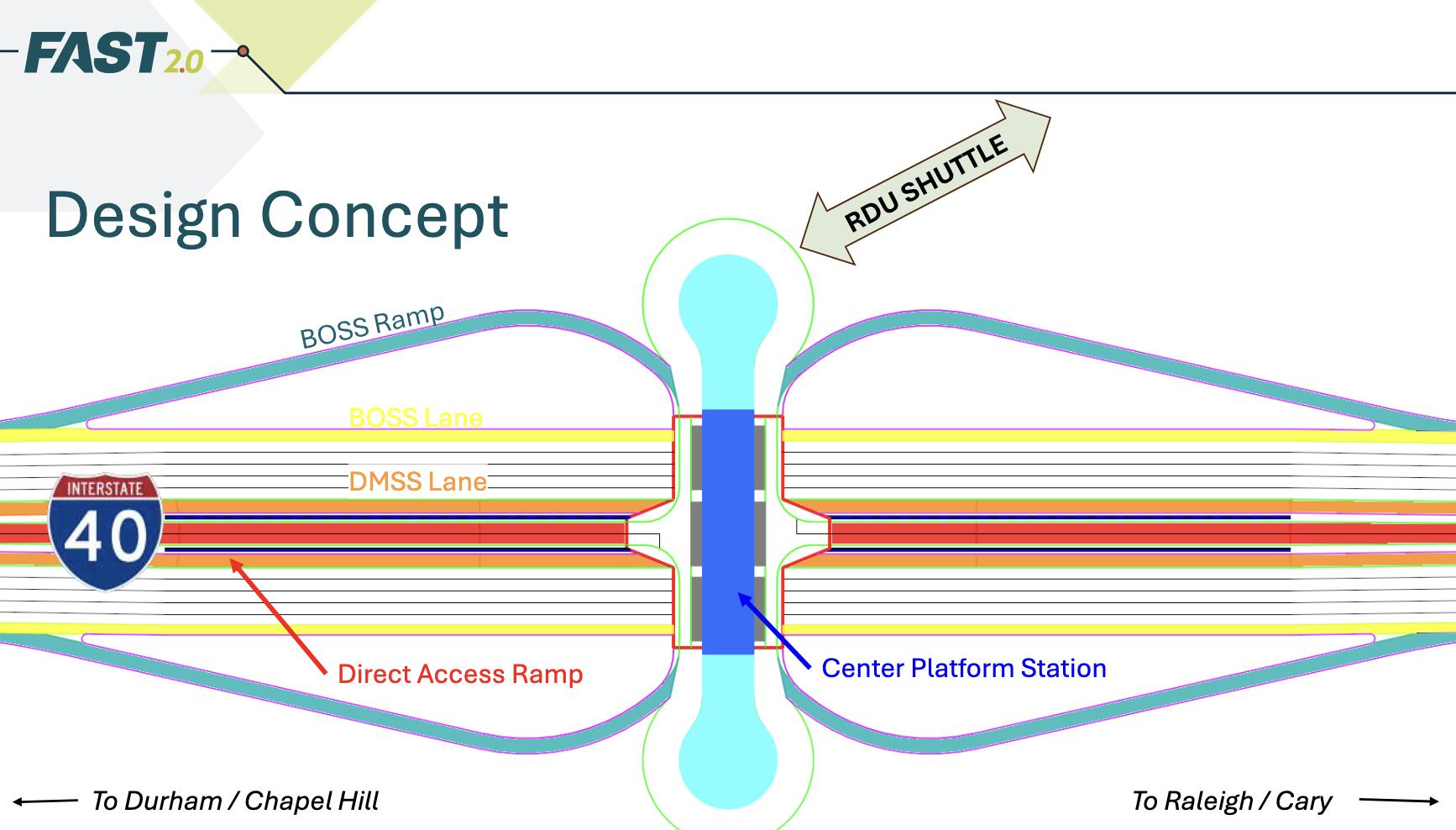
This is why the proposal has ramps both on the shoulders and median: buses are just expected to use whichever ones they can access more easily. See this diagram from the slide deck (the yellow lanes are BOSS lanes - i.e. the highway shoulder where buses can run):
The presentation specifically suggests these three places for this exchange station:
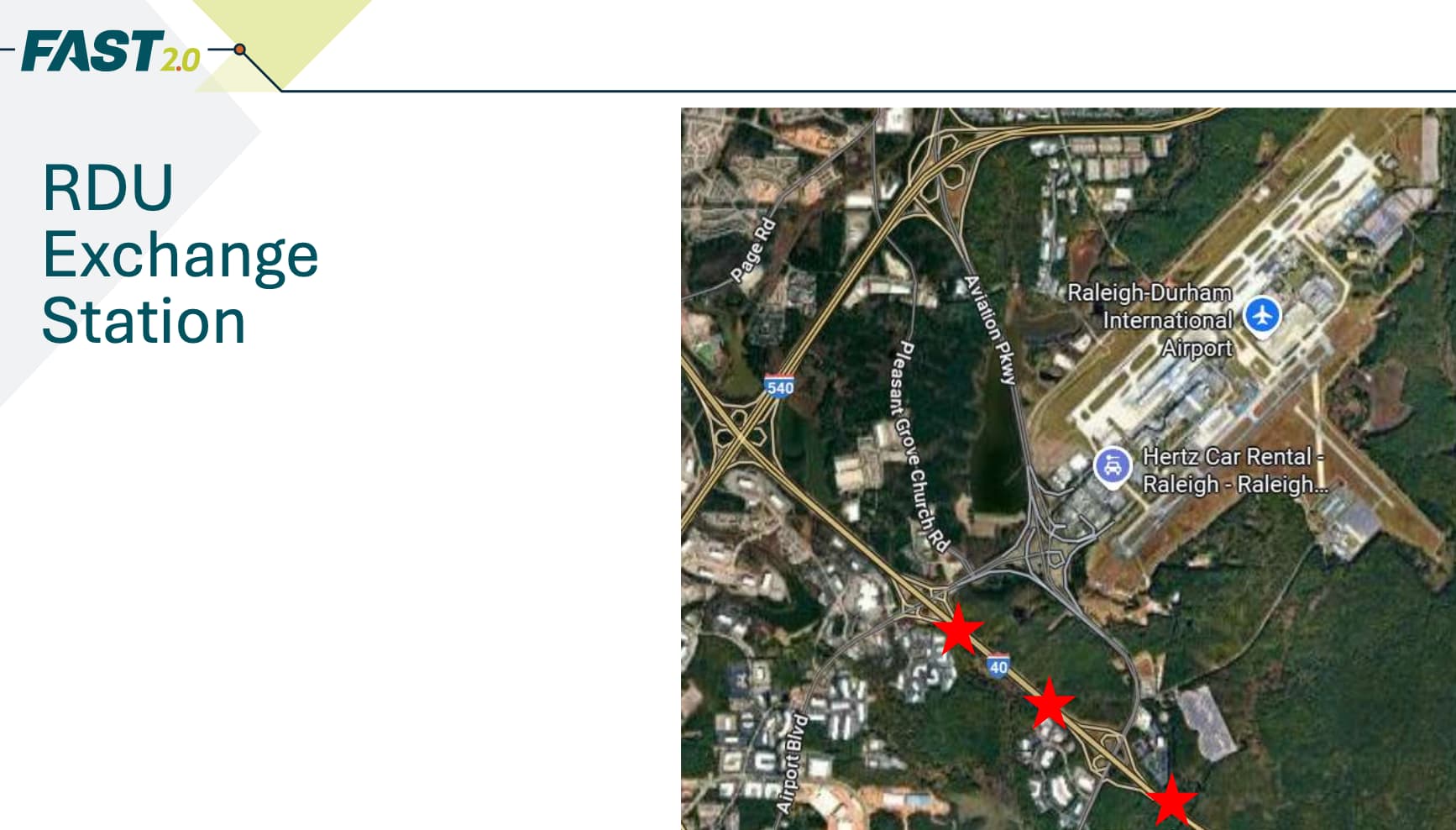
The location on the right fits best with RDU’s upcoming expansion of Park Economy 3 lot (which is the only known construction plan around here that could be relevant), as well as the Vision 2040 plan where it comes from. If it’s either of the other two locations, this would also involve new roadwork for those circulators, too.
Anyways, this obviously brings RDU much closer to our public transit network, shutting down the “they need to bring trains to RDU” crowd once and for all! But according to the RTA, there are many more benefits than just those.
Click here to see what the more interesting ones are!
-
By allowing buses to briefly pause at the station over the Interstate and then easily return to the freeway, the location allows essentially any current or future bus or transit route that traverses I-40 to become an airport route.
-
Locating the station in the center of a roundabout over the freeway, with buses rotating clockwise, ensures that bus or other doors will be on the right side, adjacent to the exchange station – which ensures that transit users can immediately enter the station without either waiting outside or crossing active traffic.
-
By keeping buses on the interstate, and away from the terminals, the location frees up valuable terminal curb space.
-
The exchange station will be connected with the terminal area by dedicated, frequent, RDU shuttles that will simplify campus travel. Those shuttles may be electric and/or autonomous.
-
The number, frequency, and operating agencies serving the station can change throughout the day/over time.
-
The station can [be] served by some or all of the proposed BOSS and DMSS ramps initially. As long as one set of BOSS ramps are in place (e.g., westbound BOSS ramps), the station can activate, with access to I-40 west from the other direction of I-40 and/or from RDU shuttles via the adjacent interchanges/U-turns as needed.
-
The attractive appearance of the exchange station is still very important. It will be iconic and prominent, easily visible, and serve as a recognized marker for this connected region and as a point of regional civic pride.
-
While there won’t be a single BRT or transit hub for this polycentric region as it develops a regionwide BRT network, with 10+ BRT corridors along streets, freeways, and arterials, the central, prominent location and iconic appearance of the RDU exchange station will make it a centerpiece of regional transit and transportation.
…and as a result, per the RTA: