I agree, there’s a lot of foot traffic that will appear overnight within the next year to 18 months. And after seeing the immediate success of Chido Taco, it’s looking good.
9 Likes
That, sir, is an awesome video. There are a lot of positive things happening in Downtown Raleigh! Thanks for sharing!!
3 Likes
Alright, massive reply incoming. Been meaning to get some of these thougts in writing but tbh I find the conversation exhausting.
the existing zoning was arbitrary and pointless in the first place!
Totally with you there. I think our city would be much better off if everything were zoned at a higher density already. But given where we are, and given the desperate need for affordable housing, I understand why some people see rezonings as one of the only tools they have.
You’ve obviously got an angle on this
My angle is what I originally stated – I don’t advocate for holding rezonings hostage to affordable housing. I just don’t think the opposing perspective is all that unreasonable either, and over the years I’ve come to understand where those who hold that view are coming from. I see both sides.
there are absolutely properties that rely on increased density just to be economically feasible so it is often very much a something-or-nothing game.
Which ones, specifically? I can see that being the case for a small lot where parking minimums make a project infeasible, or being able to build a mid-rise instead of townhomes would be a game-changer. But I’m skeptical that there is any scenario in the current Raleigh development environment where it is not highly profitable to build a 20 story residential building. Further, the developer bought the land when it was zoned for 20 stories. If the numbers for a project within the current zoning did not pencil out, that’s on them – no one is owed a rezoning, and I highly doubt any developer is relying on one to make the numbers work when they purchase a property. That’s too much risk to take on.
If the city wants affordable housing, but doesn’t want to build or fund affordable housing, then going around and cutting a little sweetener off the top of new projects is a really half-assed unserious policy
Yes, it is a band-aid approach to addressing a deep wound. But lots of cities have density bonuses for affordable housing in their UDO, which is not all that different. Ultimately, the NC legislature needs to overturn its ban on inclusionary zoning for the city to be able to do much more, but I also don’t think asking for affordable housing in rezoning cases is all that crazy so long as what council asks for is reasonable and calibrated toward the economic reality. In other words, if they ask enough, but not so much that it leads to developers not pursuing rezonings/density bonuses because there’s no profit in it, it seems like a win-win.
I’m gonna say it louder for the people in the back but EXCLUSIONARY ZONING CONSTRAINS HOUSING SUPPLY, WHICH RAISES PRICES
No one is arguing otherwise.
There’s not a luxury housing bucket and a market rate bucket and an affordable bucket, it’s all together in one big pool.
Yes, I’m aware. But this isn’t the whole story, and “supply = the solution to all our affordability problems” is a reductive position that harms the case for housing and density advocates like ourselves. There’s so much research out there now that shows that the issue of supply and affordability is complex, often with contradicting evidence, and that it can impact income levels differently. A great summary of this research is in this report on “Supply Skepticism”, which supports the idea that increasing supply improves affordability. But there are some interesting points in there too that imo warrant a closer look. For example:
Damiano and Frenier (2020) examined the impact of new development in Minneapolis on rents in the apartments close by the new market-rate apartment buildings, as compared to those further away. They found that new buildings had no significant effect on rents in nearby units overall. But when they divided those buildings into neighborhood-level rent terciles, they found that the “new construction increased rent by 6.6 percent in the lowest rent tercile, had no effect on the middle tercile, and decreased rents by 3.2 percent in the highest tercile.”
Similarly, Li (2022) used the same methodology to examine the effect the development of large market-rate buildings in New York City had on nearby rents. She found that for every 10 percent increase to the housing stock that new high rises add within a 500-ft ring, residential rents for the buildings in that ring decrease by 1 percent. The decreases were seen for nearby high- and medium-rent buildings, but were not significant in nearby low-rent buildings.
Another interesting one:
Singh and Baldomero-Quintana (2022) investigated the effect new buildings had on nearby apartments in New York City by exploiting changes in a local property tax exemption that would make it less generous. They found that overall, a 1 percent increase in the rental stock within 150 meters of an existing building results in a rise in rents in that building of 1.8 percent. That increase was driven by new units in census tracts with below-median-city-income; indeed, they found that additional units had a negative impact on rents in tracts with above-median-city-income.
So, again, increased supply according to these researchers helped affordability in the middle and upper end of the market, but negatively impacted affordability for low income units in the short term. Elsewhere, research on Land Use Reforms and Housing costs by the Urban Institute found that effects on increased supply impacted housing markets unevenly:
reforms that loosen restrictions are associated with a statistically significant, 0.8% increase in housing supply within 3 to 9 years of reform passage, accounting for new and existing stock. This increase occurs predominantly for units at the higher end of the rent price distribution; we find no statistically significant evidence that additional lower-cost units became available or moderated in cost in the years following reforms.
To be clear, I think increasing supply is a no-brainer and a massive priority, and the evidence is overwhelming that it helps affordability on average. But the idea that market forces on their own create below-market rate units for the lowest income segments of society, and that this just happens without other intervention, is far less clear to me. And if the process of filtering takes decades for new market-rate units to become accessible to the most vulnerable people in our communities, what’s being done in the meantime? I’m not advocating for any specific policy solution here, but I do find people’s insistence on dismissing this problem, or making sweeping statements on the actual impact of supply/zoning reform, to be increasingly problematic. I saw a discussion last week in this forum asking what the current temperature on development is in millennial/gen-z circles, and my take is that many people are moving beyond a nimby/yimby binary towards more nuanced positions.
9 Likes
This is good stuff and I agree down the line. The NIMBY arguments against infill do not explain the steep rise in rental rates throughout the Triangle, which is a global phenomenon and mostly unrelated to what the downtowns–which are less than 1% of the housing market, are doing. The legacy population adjacent to the downtowns that is actually being displaced is also extremely small compared to the total displacement in suburban areas. However the libertarian argument that “just adding more supply” will fix the affordability crisis is also false. It helps a teeny bit, but it will not be enough to fend off what is a fundamentally unsound design for our economy, which is the concept of tying social mobility to property inflation. This process is global and will destroy all cities in the long run whether they’re YIMBY Calgary or NIMBY San Francisco.
3 Likes
You cannot build cheap, old apartments. The only kind of apartments you can build are new apartments, which always command premium rents over equivalent older stock.
This is why I think we should focus on redeveloping empty lots, derelict commercial buildings, and low-density R-4, R-6 stuff into higher density. Don’t want to force developers into prematurely redeveloping existing cheap apartments. Redeveloping a 100 unit garden apartment complex built in 1985, into a 225 unit midrise texas doughnut, is less of a win than redeveloping ten single-family homes into the same.
Seems to me that game-changing density bumps are where we gain ground on affordability, and also make the most progress toward urbanizing this overwhelmingly suburban city. Incremental density increases do help with urbanization too, and are less shocking of a change if you’re comfortable with the status quo, but I can’t help but think that when it comes to affordability, amounts to treading water, at best.
16 Likes
I agree with almost everything you’re saying, but this part seems like a bit of a red herring:
You cannot build cheap, old apartments. The only kind of apartments you can build are new apartments, which always command premium rents over equivalent older stock.
Yes, but we are not talking about the price of the new units – the research I quoted looked at the impact that new units had on the affordability of existing ones. And while there is certainly conflicting evidence on this, the point is that when we talk about supply leading to affordability, affordability for whom?
My concern is that there is a growing body of research that seems to indicate that at least in the short term, low income populations experience rent increases as a result of new construction, while middle and upper income populations experience rent decreases. If this is true, I believe that a just approach to urbanizing our city is to promote densification while also making concerted efforts to preserve and build new subsidized housing, whether that is through asking/requiring private developers to contribute or through affordable housing bonds/land trusts/etc. I feel it is even more imperative to make these efforts in context of a history where much of the development intensity is happening in neighborhoods that were historically redlined or impacted by government policy that robbed residents of building generational wealth. Perhaps some people feel that the goal of addressing suburbanization is a bigger priority than this, but I believe they need to be addressed in balance.
2 Likes
Almost finished 
Loving  all the surrounding cranes
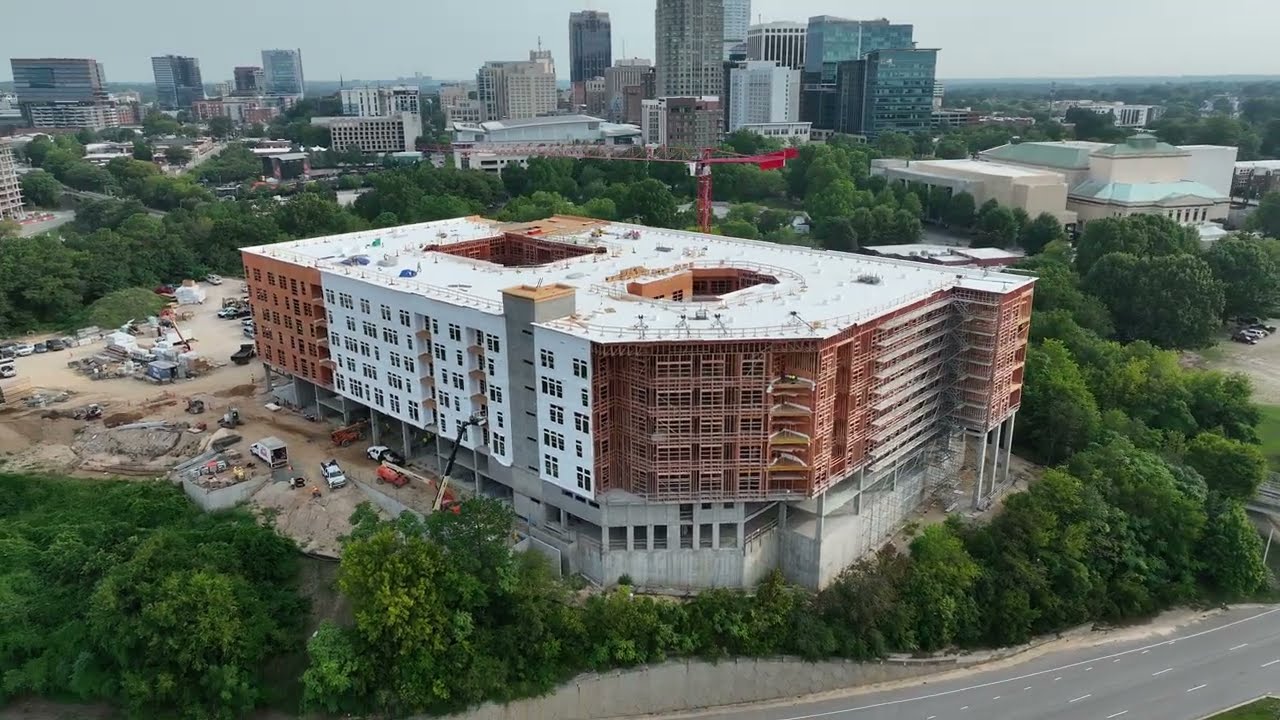
23 Likes
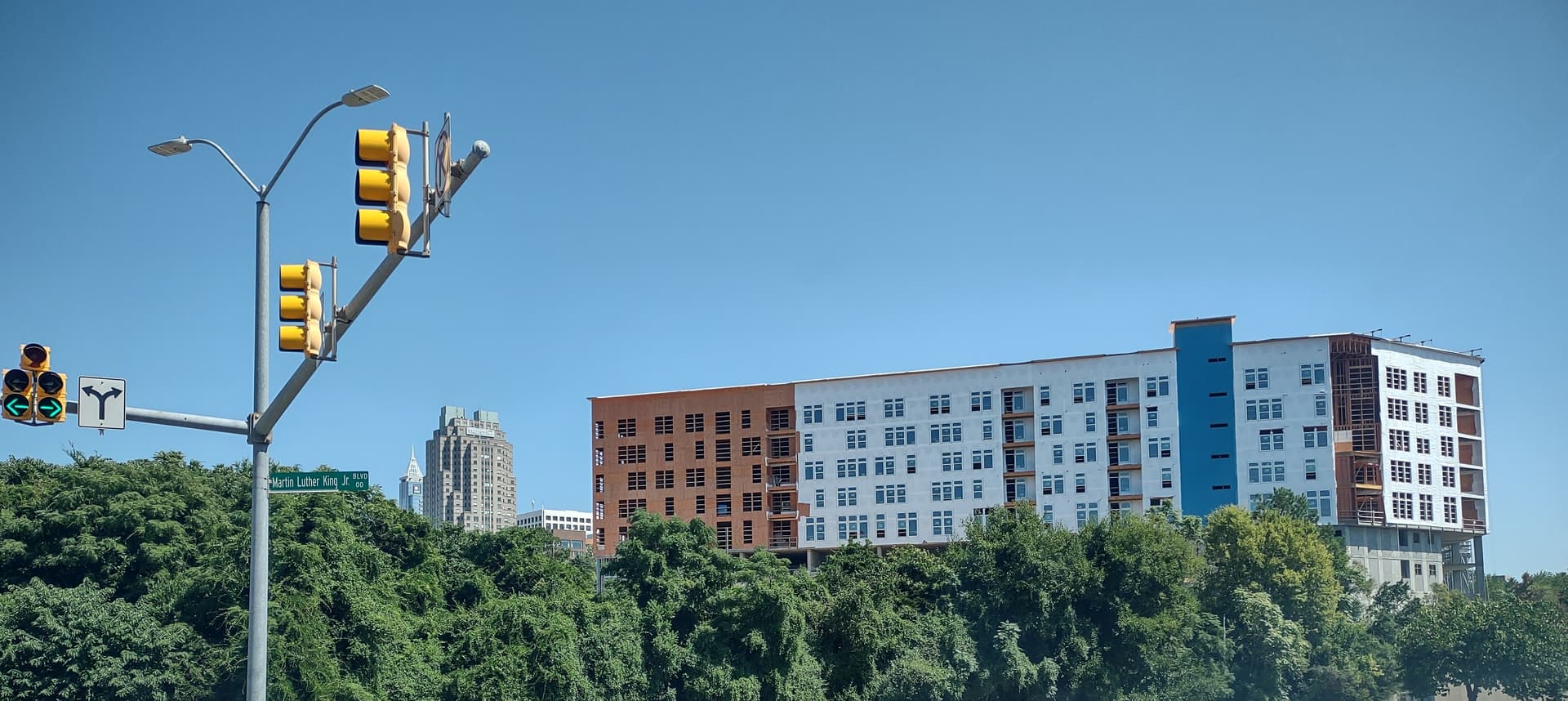
Joke’s on us, these are the final exterior colors.
6 Likes
I like the crown on the building myself. 
1 Like
Once the 20-40 story towers surrounding this go up, this won’t stick out so much and just look like a dense extension of the downtown footprint. Hopefully all the residents and activity this building brings to this previously COMPLETELY dead area will be the catalyst needed to push that future development to the front of the line!
5 Likes
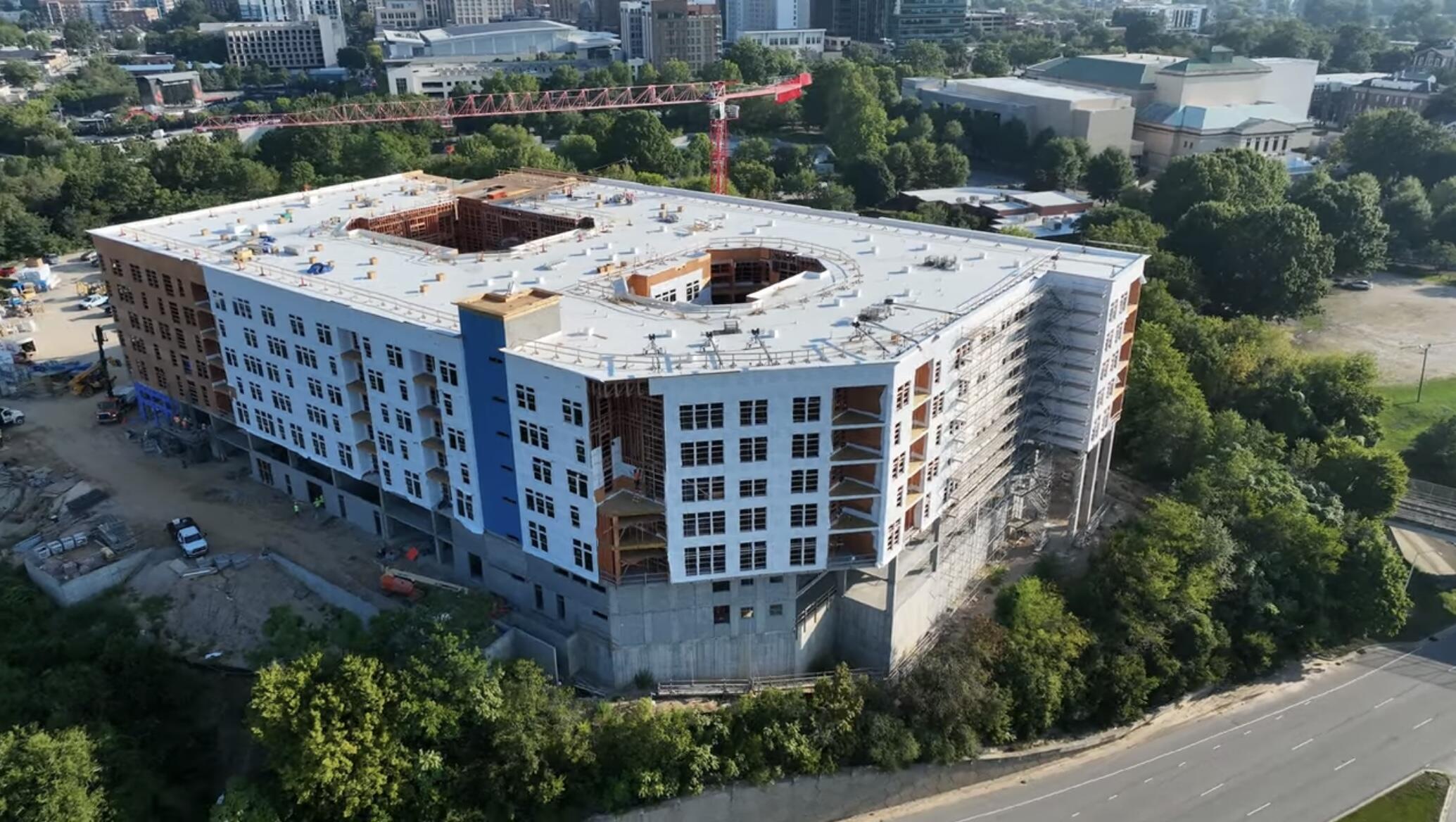
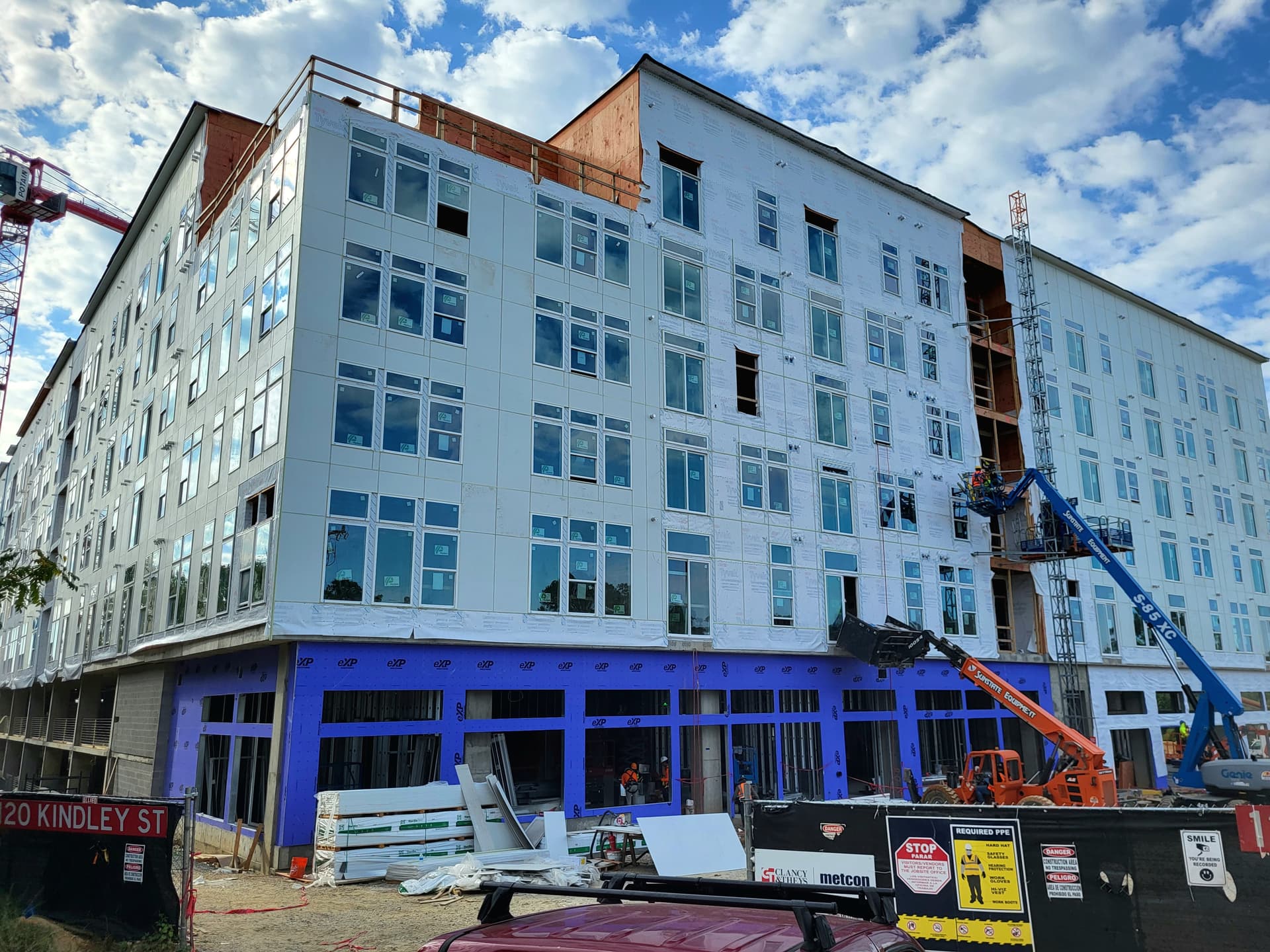
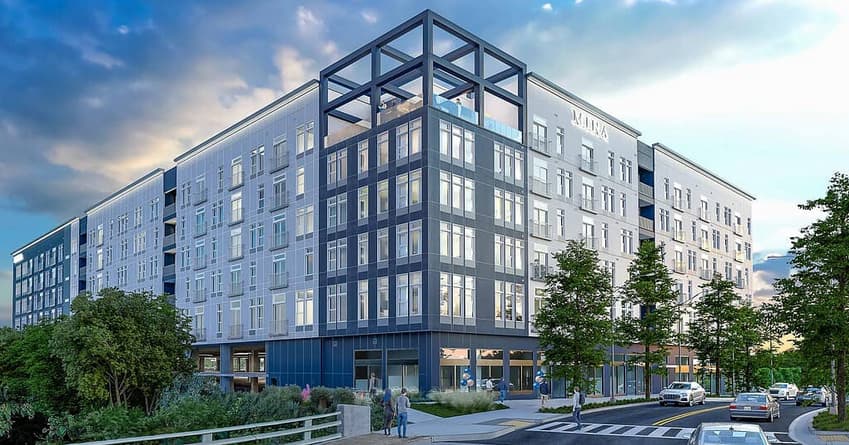
Ok that’s a cool feature on an otherwise basic 5-over-1! Is it a residential lounge only, or planned to be a public rooftop bar??
Lol I can’t imagine it’d be for the poor public like us.
1 Like
The Metropolitan has one of these but it faces the Quorum.
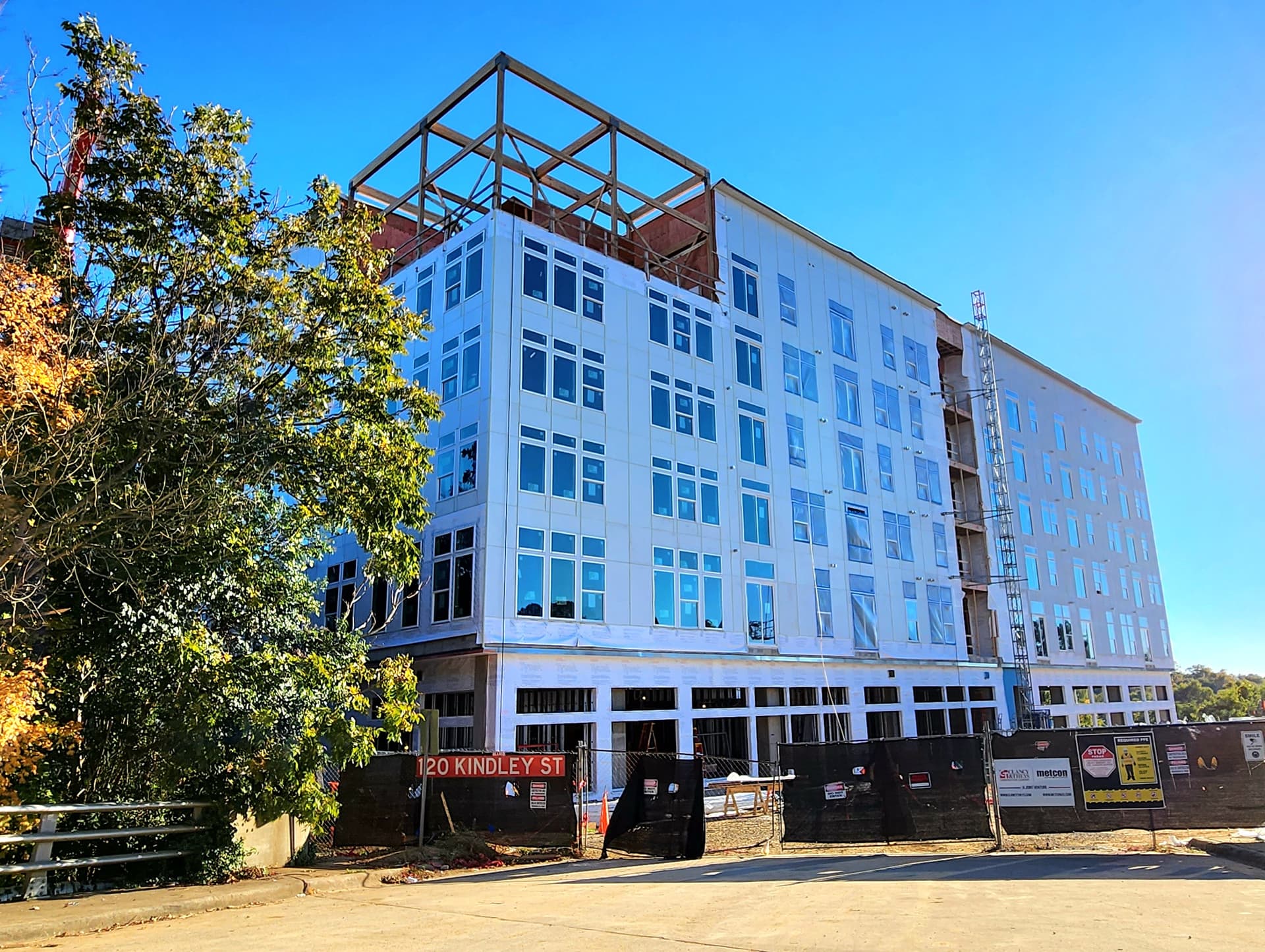
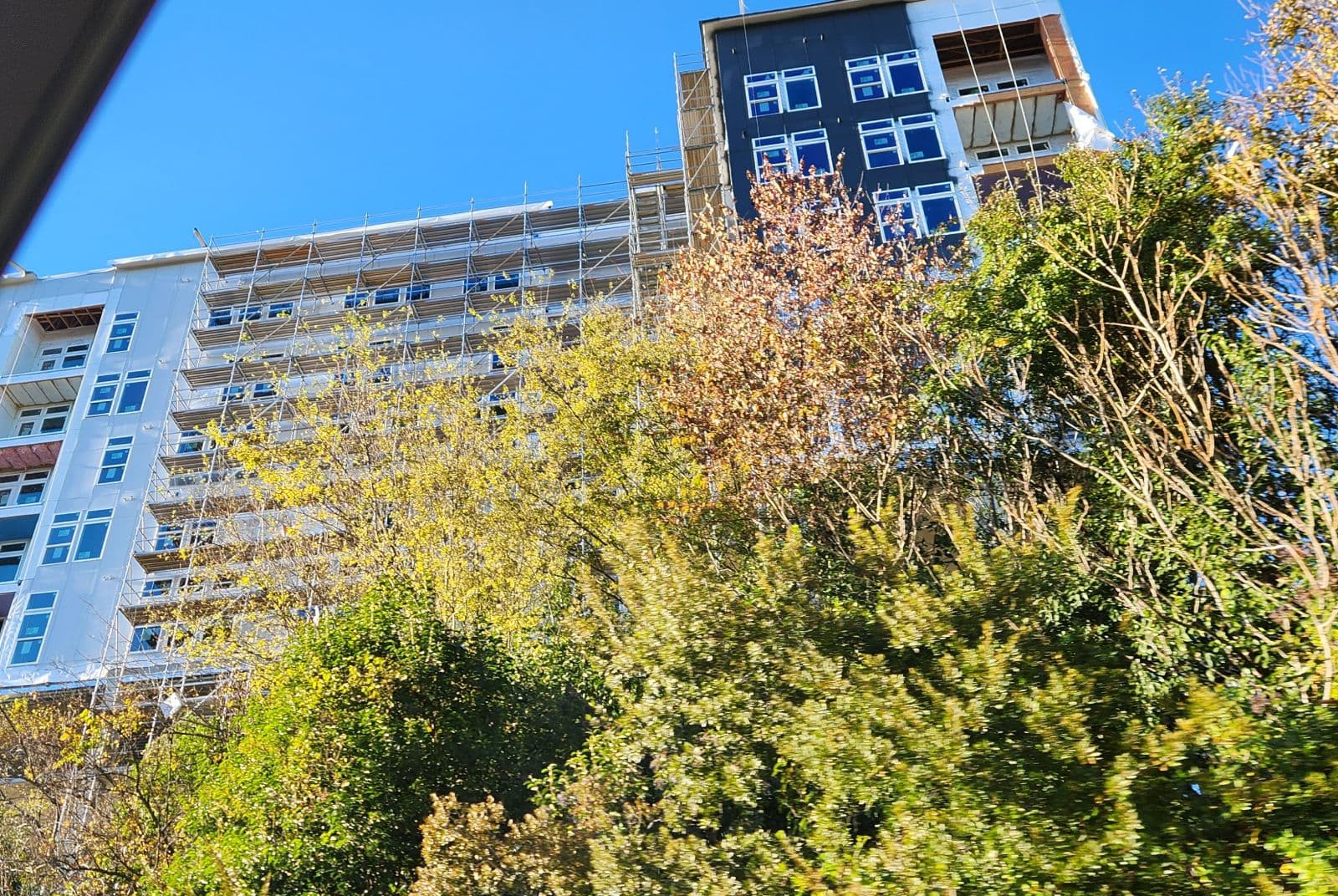
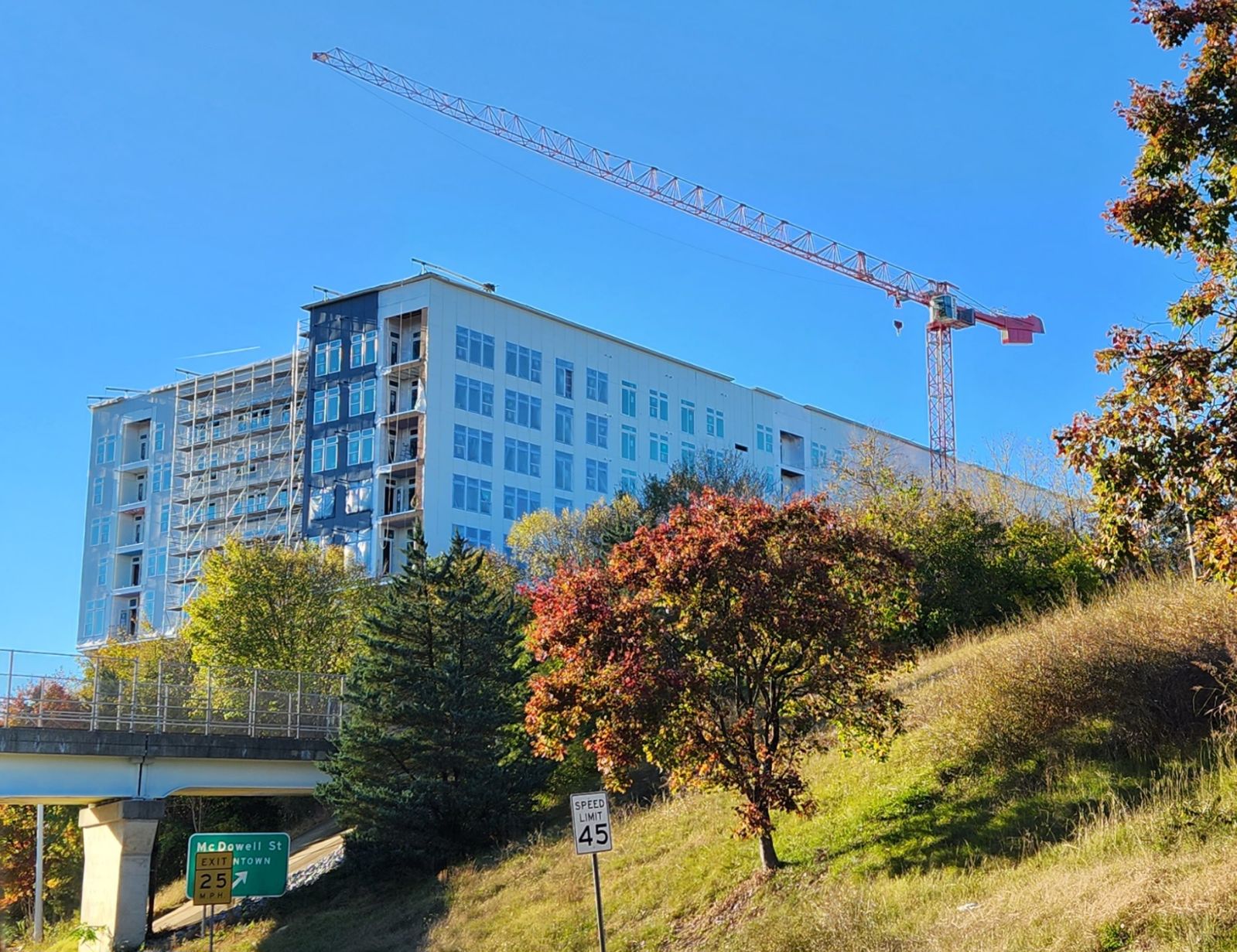
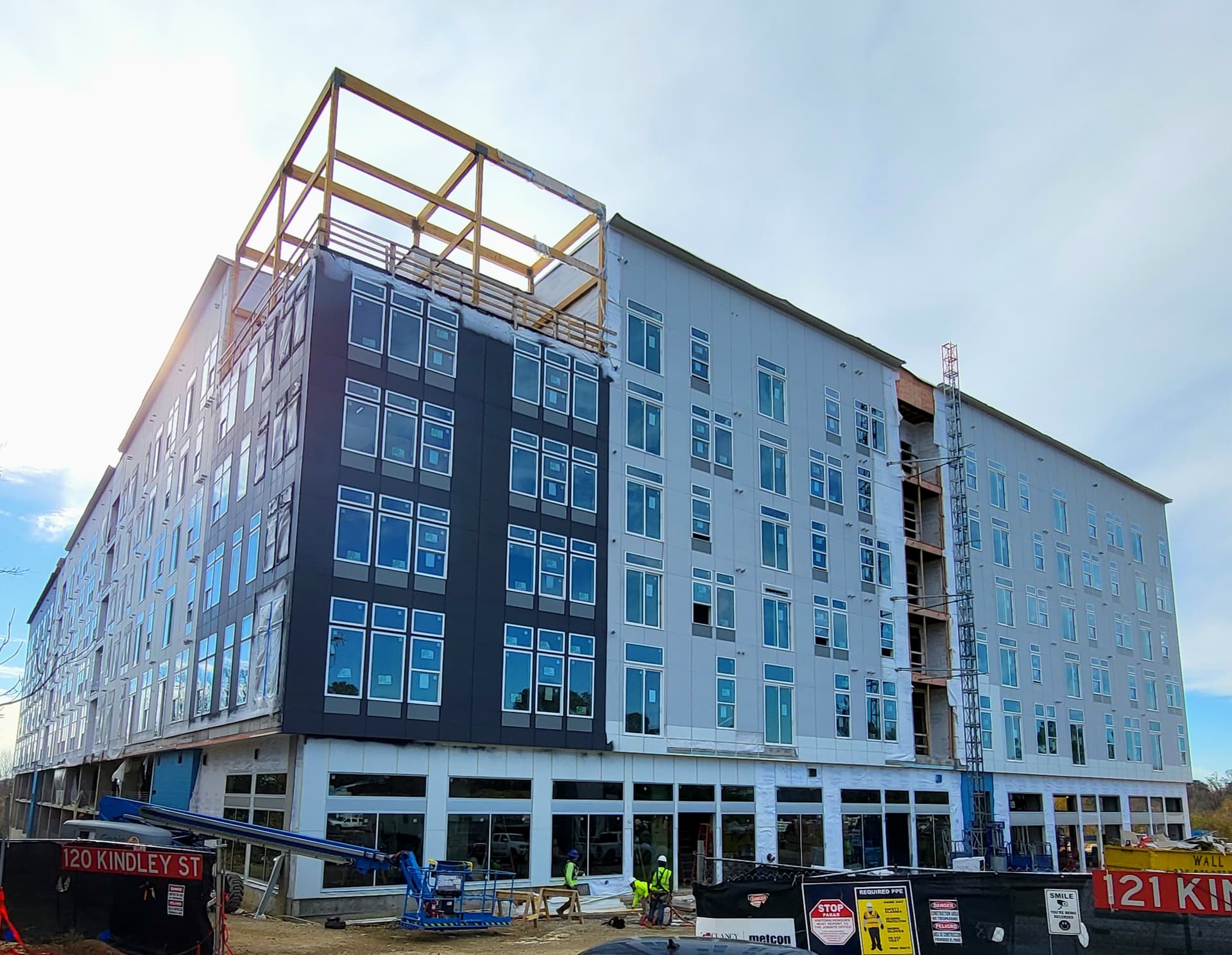
Apologies if I missed this - but is retail/restaurant space going in at the bottom? Or does this development not incorporate anything like that?