I’ll admit… I’m mostly (and somewhat surprisingly) OK with this one.
An automated parking garage moving forward in downtown Raleigh is a step toward the kind of “new-age” infrastructure we need.
For a city that’s grown as fast as Raleigh has, we’ve been relatively slow to adopt innovative approaches to mobility and land use.
What stands out even more is the financing structure.
By tying long-term, fixed-rate financing to the property, it opens the door for projects to actually get off the ground.
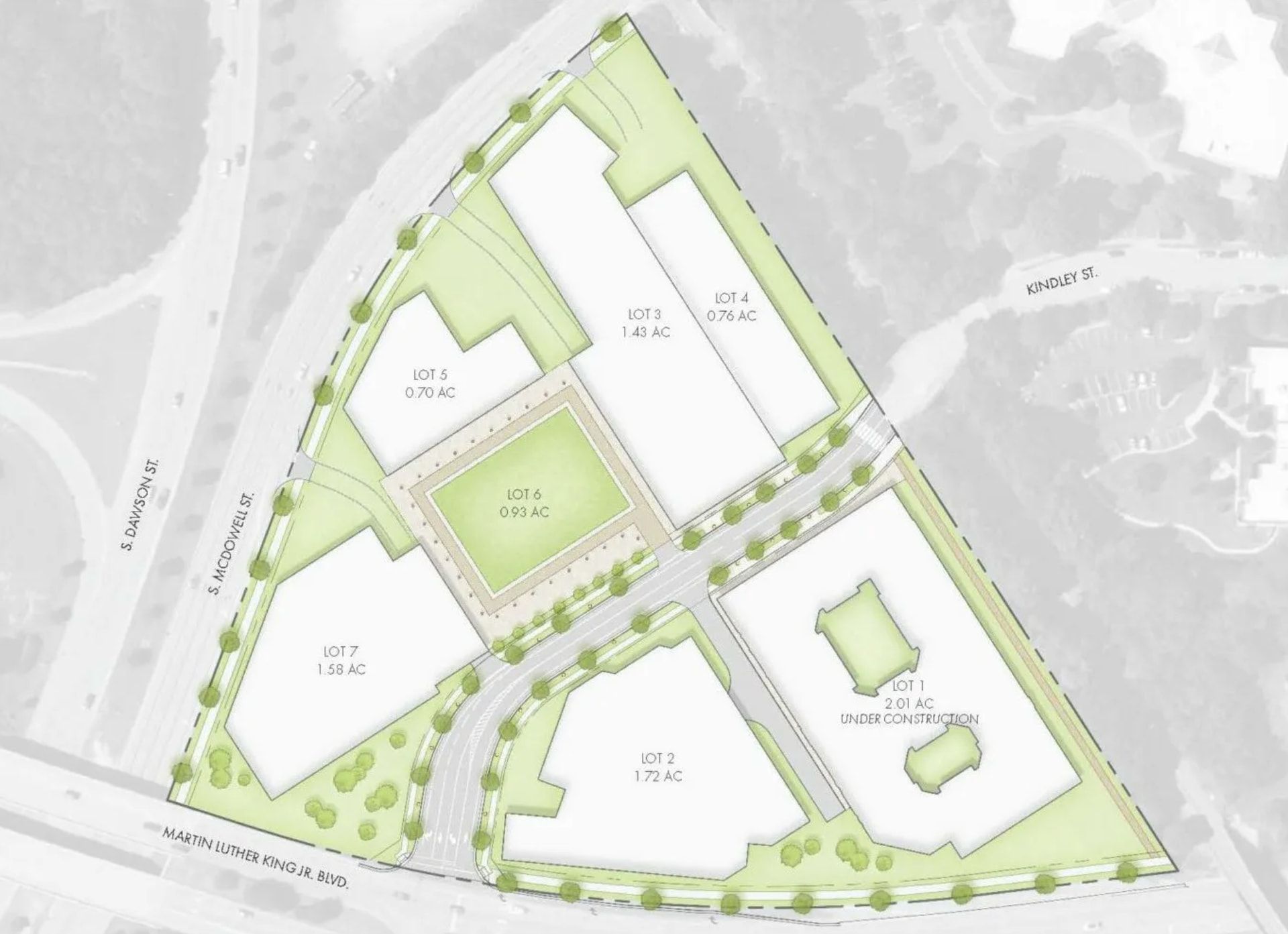
This garage is just one piece of a larger Gateway District vision. With tools like C-PACE, we start to unlock shovel-ready sites that are primed for higher-value development around them.
If used correctly, this isn’t about building more parking it’s about creating development momentum and laying groundwork for future mixed-use growth. This feels like a small, but meaningful, step in that direction.
I’m OK with this potentially being the springboard to help get more development going on this lot, but I’ve always been skeptical about these autonomous vehicles reducing cars on the road. If they operate like a driverless Uber, wouldn’t that just add more vehicles to the road competing for the same business? but without a driver? In theory you would like the vehicle to pick up and drop people off in the same area, but that’s not realistic. Does the car drive around to the next pick up, or go back to the garage and wait?
I mean, they literally WILL increase the amount of cars on the road by simply … adding more cars to the roads lmaooooo there really is no way around it. They WILL add to traffic, full stop.
The theory is that eventually folks will use something like waymo instead of using their own cars and those that own will rent their self driven cars during certain time points for others to hitch rides. Seems like it would reduce cars (at least being parked in a city which is what we are all about) to me.
Sounds like a dream world! (as in: keep dreaming, none of that is happening on a large enough scale to reduce cars here hahahahahaha). This is America.
We don’t have a parking scarcity though. we will have limited road capacity though. Public transit is what would help to provide an alternative to using up road capacity with single-occupant vehicles. Sounds like this might solve the wrong problem.
Just like Uber and Lyft once promised, they’ve done the complete opposite of reducing congestion and vehicle miles traveled. I posted links about the similar false promise of Waymo a few posts up.
The vehicles being electric is also pointless given the fact that they rarely park themselves and are being charged with electricity primarily generated by fossil fuels to drive around while empty.
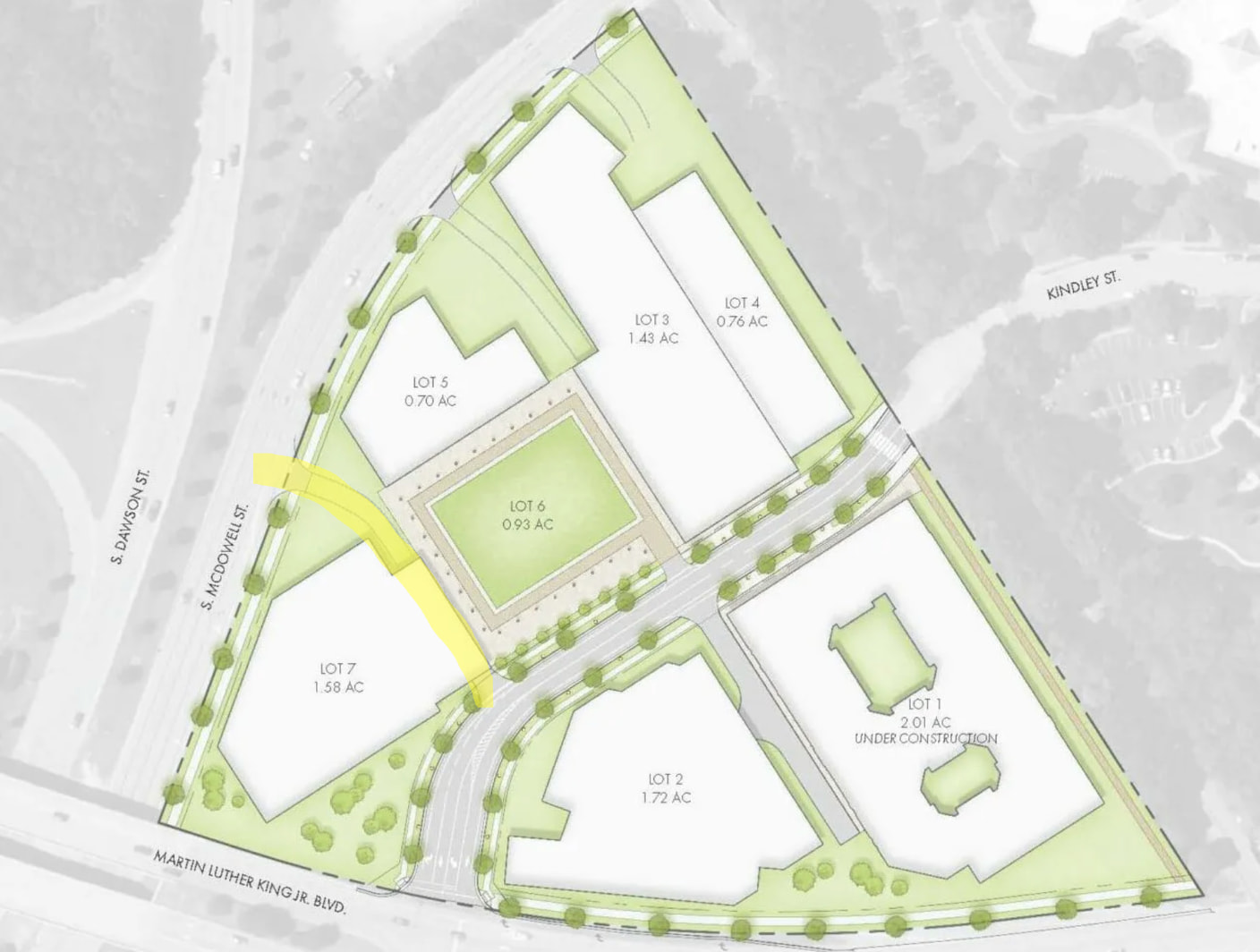
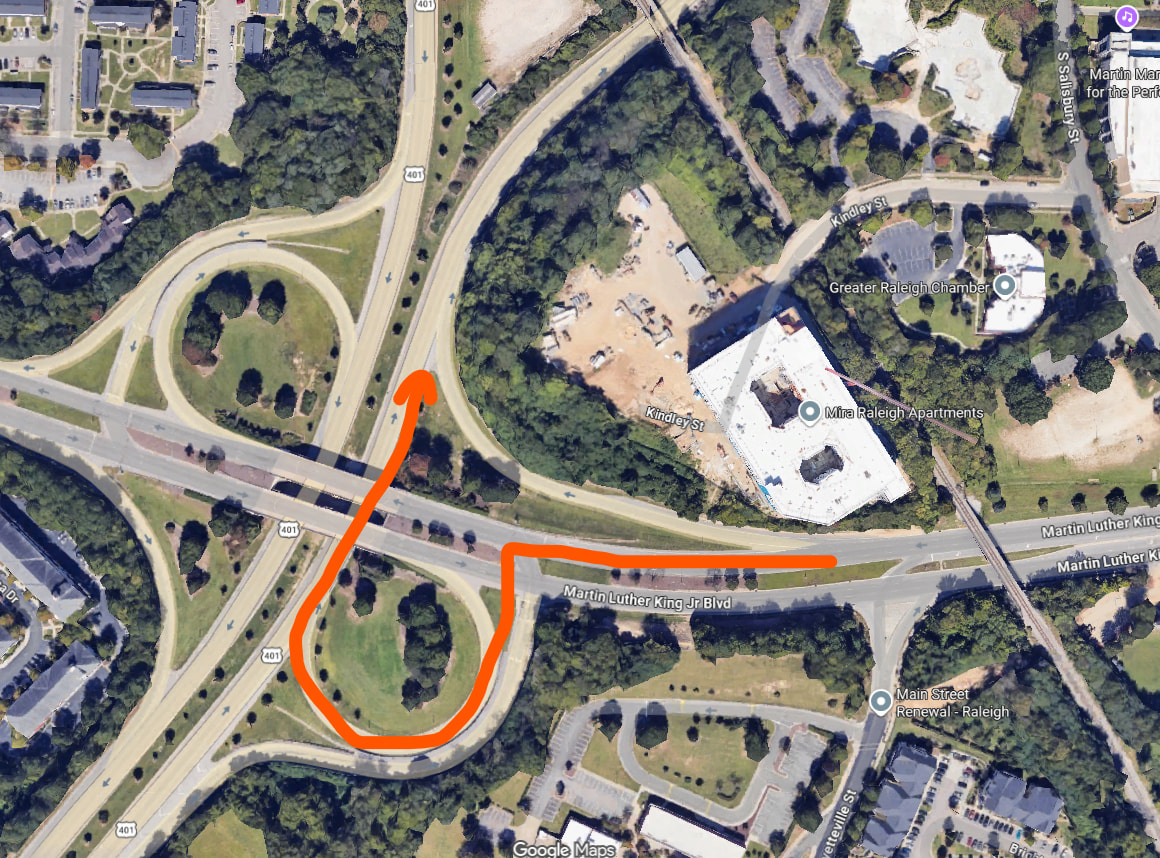
Definitely going to be interesting to see how the traffic funnels through this new design. I’m curious about this connection (highlighted in yellow) and how much traffic will filter off of MLK to McDowell if this is a true connection.
If I recall correctly the prior ASR for Lots 5 and 6, the combination parking garage and hotel before it was revised to only include the garage and plaza, showed that drive you highlighted as being on a different level than Kindley. So to take that shortcut you would have had to enter the parking garage and exit on the lower floor
There should be a new left-turn lane along MLK. This shows a through lane from Kindley St. to what is currently the NB ramp for eastbound MLK. This is only showing the site layout, excluding MLK/Western Blvd
WRAL asked: “Does [AUTOParkit] have projects in the United States that currently house autonomous driving?”
“We have projects in the United States that are capable of housing autonomous cars, however we do not have a contract yet with any of the autonomous vehicle companies to house their cars,” he said.
“But we would like to. We’ve had talks on the perimeter, and hopefully those will move forward, but multiple facilities that are capable.”
“With Waymo’s arrival to Charlotte, WRAL reached out to the company, asking if there are plans that include Raleigh on its list of next cities for expansion. A spokesperson for the company said it "don’t have any plans to share about Raleigh at this time. WRAL asked a second time, ahead of this story’s initial publication. The spokesperson’s second response reiterated there was “nothing to share.”
Alan, though, acknowledged that the infrastructure would need to be in place first to begin with. He noted while the company has had “perimeter” conversations with autonomous driving companies, they are looking for their first contract of that kind.
WRAL asked: “Is this a ‘Field of Dreams’ situation? Where the timeline goes, ‘If you build it, they will come?’”
“I think that analogy is 100% accurate,” Alan said.
So, there’s a strong potential this never houses Driverless cars, but it could one day if we build enough infrastructure for them? I honestly think these eliminate jobs for people and could care less if they ever come here.