I wonder if they will sell for a one time cash injection, or lease the land for a long term revenue stream?
5 Likes
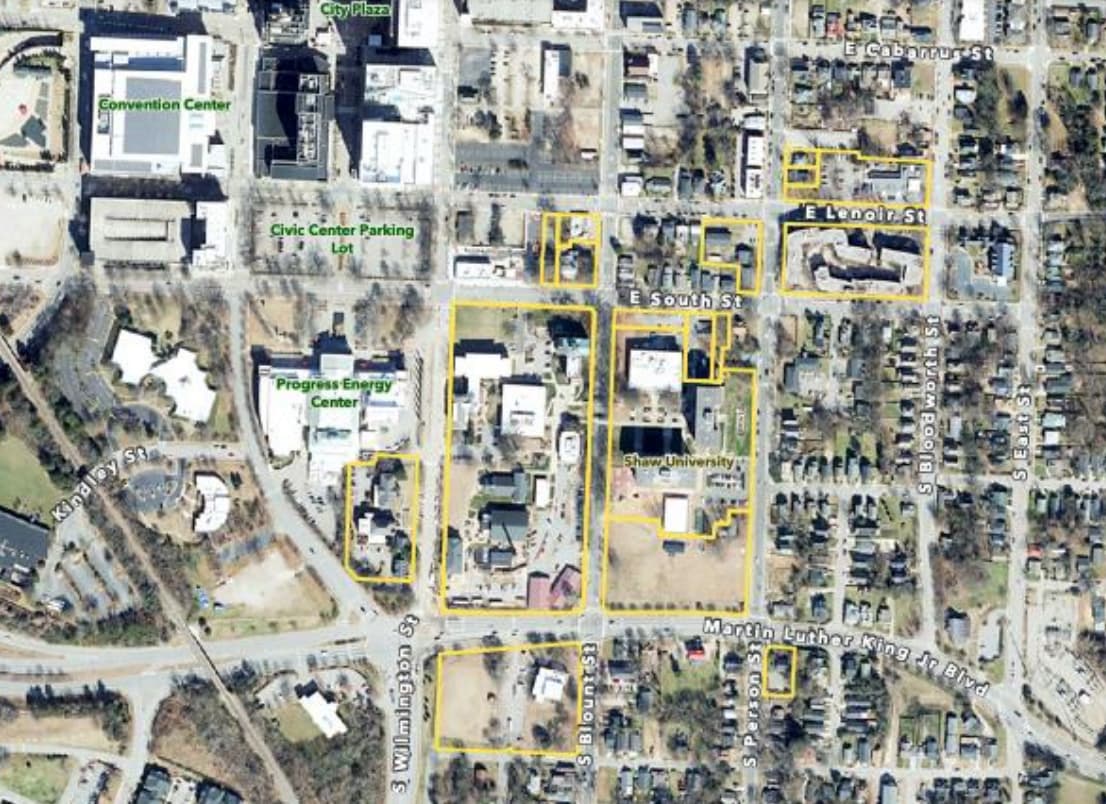
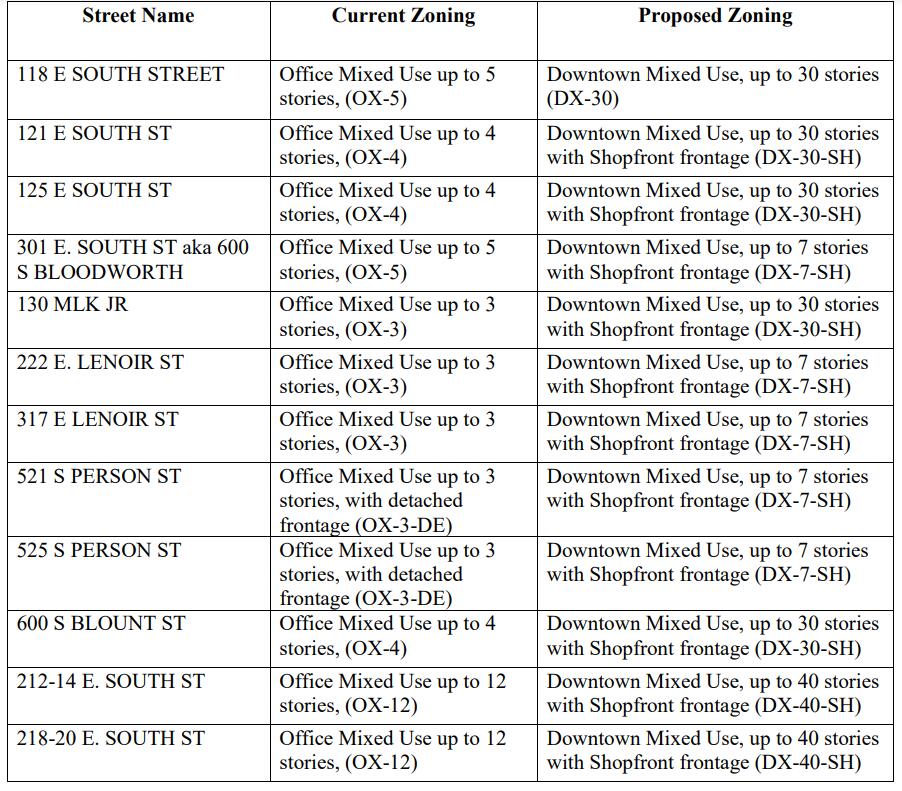
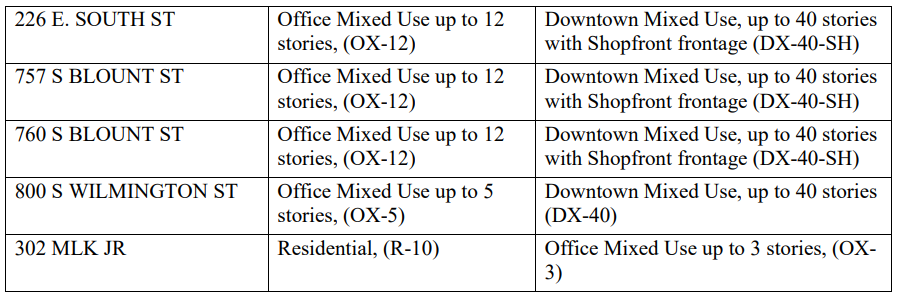
Well I hope everything in that list gets approved and it is
Hope the city gets the land behind the Performance Art Center for a future expansion.
5 Likes
City Plat will buy all of the lots. It will be glorious.
3 Likes
It would be cool if Kane does a public private partnership with Shaw. New classroom buildings along with a business incubator and offices. This would also give him properties in the CBD.
5 Likes
I think that this is a smart move by Shaw to upzone their RE holdings. It’s their greatest asset frankly.
4 Likes
It’s possible. Kane has done partnerships with the public in the past such as the dillion parking garage and the sky house parking garage. I’m sure there are other examples but those are two that I know of. Now obviously Kane is not an architect he’s a developer so any development he is involved in he’s gonna want a cut of the revenue. One other thing I’d add is the federal government recently passed a large funding packet for HBCUs so Shaw might not even need the additional funding.
1 Like
however now that I’m thinking about it Shaw is a private school so idk if they’d qualify for federal dollars
1 Like
East Downtown will eventually ‘grow up’ so this was expected. So weird that our main street is basically two blocks from single family only zoning. Hopefully the city realizes this can can apply DX streetscape standards to East Downtown Raleigh all the way to Road Quarry Rd or Raleigh Blvd.
4 Likes
If this article is accurate and if they follow the ULI’s advice, the plan seems to be to up-zone and then sell “non-core” properties, but keep “core” properties. It doesn’t offer specifics except “neither the campus nor the farm would be sold”.
Another bizjournal article from around the same time mentions that St Aug’s has been considering land-leases. Maybe Shaw is considering it too, at least for those properties they don’t want to outright sell?
3 Likes
This could be a great thing for both Shaw and this corner of downtown. Seems like a win-win?
Shaw’s president, Paulette Dillard, is quoted in this article as saying:
“I have this vision that I [sic] will be Raleigh’s urban university,” she says. “And what that means is that the city will be coming and going on my campus, as if it’s just another block in the city.”
Sounds like she sees urbanizing the campus and the surrounding areas as a positive!
12 Likes
That is good news. Also, if they are going to upzone, it probably benefits them in the long run to consolidate and update their campus on some in their upzoned parcels, using the revenues from the sale of others. They could go taller and free up adjacent parcels that could create the sort of urban campus that they envision.
4 Likes
My wife went to VCU in Richmond, and I was always jealous of the urban feel of VCU (compared to NC State). There was a fuzzy line between campus and the adjacent areas, whereas with State you cross Hillsborough and there was a hard line between campus and the private world. (and in the 90s Hillsborough street wasn’t the most inviting place to hang out). Also North campus at State was mostly classrooms and the majority of students lived south of the tracks. So it was a ghost town on weekends, but at VCU there are dorms all over the place and it all really fits into the urban fabric of Richmond. If Shaw can come close to what VCU has done for the City of Richmond, it will be night and day difference and I 100% welcome it for DTR.
12 Likes
Shaw only has a little over 1000 students. It’s private with an endowment of only 10 million. Why it needs 65 acres , I don’t know. Sell , raise money build to scale. VCU is huge . Apples and oranges .
3 Likes
TBJ on the rezoning: “We’ve been a part of downtown since 1865,” [Kevin Sullivan, the university’s vice president for real estate and strategic development] said. “We want to rezone it to make it look like downtown.”
The university isn’t looking to sell its property through this process, but rather lease land to developers for projects that make sense for Shaw, its students and the surrounding community. This could include housing with retail and restaurants on the ground floor or a grocery store or pharmacy, Sullivan said.
Among HBCUs, Howard University recently has gotten much more aggressive about developing the former moat of parking that used to separate it from the neighborhood; most of it is under ground leases with university facilities anchoring the ground floors. (Ground leases are great because the owner can get paid whenever: up front, over time, any combination thereof. Developers also like them because they’re usually cheaper up front, at least after the lawyers are paid.) But they’re in a mid/low-rise neighborhood, not right downtown. Drexel University is probably the most ambitious university-developer in the country, capitalizing on its location just west of Center City Philadelphia.
Selling is also another option; remember that William Peace bought Seaboard Station as a speculative investment for its endowment before selling it to Hoffman.
Sometimes, the most powerful mission advancement purpose for land is private development, as at this Indigenous-owned development in downtown Vancouver: [Sen̓áḵw] “is not an affordable housing project. It is an economic development venture so that we can generate significant amounts of revenue to be invested into our community because we’ve been without the means to do it otherwise”.
18 Likes
As I’m sure you’ve have all heard by now, Shaw University rolled out redevelopment plans yesterday during a “community meeting” at the historic Estey Hall. From what I gather, reactions from those online have been mixed. A few have expressed concern while others, particularly on this messageboard, think that plans to “expand” could be a positive move for the university.
Well, I’m here to tell you - this could very well be the beginning of the end of the first HBCU in the South.
There are a group of alumni who identify themselves as, “THE FRIENDS OF SHAW” who have been working fervently over the course of 10+ years to prevent this day from happening - and within good reason.
I am going to share 10 things with you over the next week or so, that you may (or may not) know about Shaw University that will substantiate claims that this newfound relationship with billionaire investors will ultimately be the cause of Shaw’s demise.
10 - THE BOARD OF TRUSTEES
The most crucial characteristic of Shaw’s BOT is cronyism. They’re all sort of buddies. Bosom buddies with each other and with the university’s president. Culturally, they’re very similar to one another. No outside voices are ever heard. It’s an insiders’ game where a significant percentage of the board have remained there for over 30 YEARS- - - although extended term limits are a direct violation of the charter of Shaw University.
The board and administration have repeatedly refused to address many concerns that have plagued our university for over 30 years and as a result, this has stifled Shaw’s growth.
Willie Gary, Shaw’s most famed board member, has been embroiled in controversy for many, many years. He made a pledge to Shaw for 10 million dollars and never contributed those funds, citing financial difficulty - all while his brother Lorenzo (who also sits on the board) have profited millions from of dollars as he holds the insurance policy to the school. He literally hit the jackpot when the tornado ravaged our campus several years ago. There’s a laundry list of other issues with Mr. Gary ranging from malpractice to sexual assault accusations posted >>HERE<<
Joe Bell, the current chairman has provided hundreds if not, thousands of unfunded scholarships to students from his hometown of Savannah, Georgia for many, many years. This is an obvious conflict of interest and has put a financial drain on Shaw - however in spite of push back from students and alumni, complaints have repeatedly gone on deaf ears. Because new users can only include 2 links in a post, search " Shaw University Students Uncover Joe Bell Scholarship Scheme" on YouTube to learn more.
The Friends of Shaw, as a last resort, filed a lawsuit in Federal Court against the board for breach of fiduciary duties. Although the official reason why the case was thrown out escapes me, Shaw’s attorney at the time was Dan Blue whose father was a senator. When everyone is in bed with each other at the courthouse, magical things happen. That’s all I have to say about that. You can read the actual complaint >>HERE<<
To read the next chapter of my dissertation, click >>HERE<< 
Okay. I still don’t see how leasing land to developers would be a bad thing, maybe the other 9 reasons might change my mind.
3 Likes
The thing about selling or leasing land for development is that it’s a “one shot” deal. Even if the idea of doing this is sound, and could be good for Shaw, you don’t want to give a brand new revenue source to management that is inept or corrupt. They will fritter it away or find ways to pocket it. Nor do you want such leadership even negotiating the deal in the first place.
I have not seen the proposal yet (will try to do so soon), but as a naive outside observer I have been thinking this could play out in a similar way to how Peace partnered with a developer on Seaboard Station to raise money, while still keeping the integrity of their campus pretty much intact.
I would assume that Shaw (being so close to the core) could possibly get even more financial return from partnering with a developer than Peace has. I have also heard that their present financial position is more tenuous than that of Peace, so I might expect that the scope of development, and the impact to the campus, would be larger, but not necessarily enough to destroy to the institution as a whole. Redevelop some parts of campus (hopefully, mostly the non-historic, non-core parts), while densifying and urbanizing the rest. It definitely seems like it has the potential to be a win-win, at least in concept.
I am certainly interested to hear other perspectives on this. If there’s some sort of corruption or malfeasance at play behind closed doors, and this is about some cronies shaking down the university and pocketing what they can, then it certainly seems like at least a change in management would be in order before moving forward with anything like this.
7 Likes
I’m not sure if you already have these 10 things written up, but the slow drip tease usually backfires as people tune out after only getting a incomplete piece that, in this case, still doesn’t seem to negate the soundness of the proposal itself. It also can come across as playing games with your audience’s attention.
If you had a guess as to the legal reason the lawsuit failed, what would it be? There’s some conspiratorial accusations in this post, and hopefully they will be investigated further and acted upon if they are true, but in this first post there’s a lot of details needed to fill in some of these assumed connections (beyond the links provided).
7 Likes