Long overdue for the city to tax land based on it’s value. Otherwise, parking-lot-landlords… I mean developers have less incentive to, you know, develop their parking lots.
2 Likes
Per iMAPS that 0.68 acre lot is valued for taxation purposes at $11.33M.
1 Like
This is interesting looking at what Parkway has done mainly in Philadelphia. (I thought at first this was Parkway out of Atlanta which is mainly an office developer) This Philly based developer has developed multiple surface lots in that city into parking garages with street level retail some with towers above. Check out their portfolio but it seems unlikely they would do a 30 plus story building but who knows. https://www.parkwaycorp.com/portfolio
3 Likes
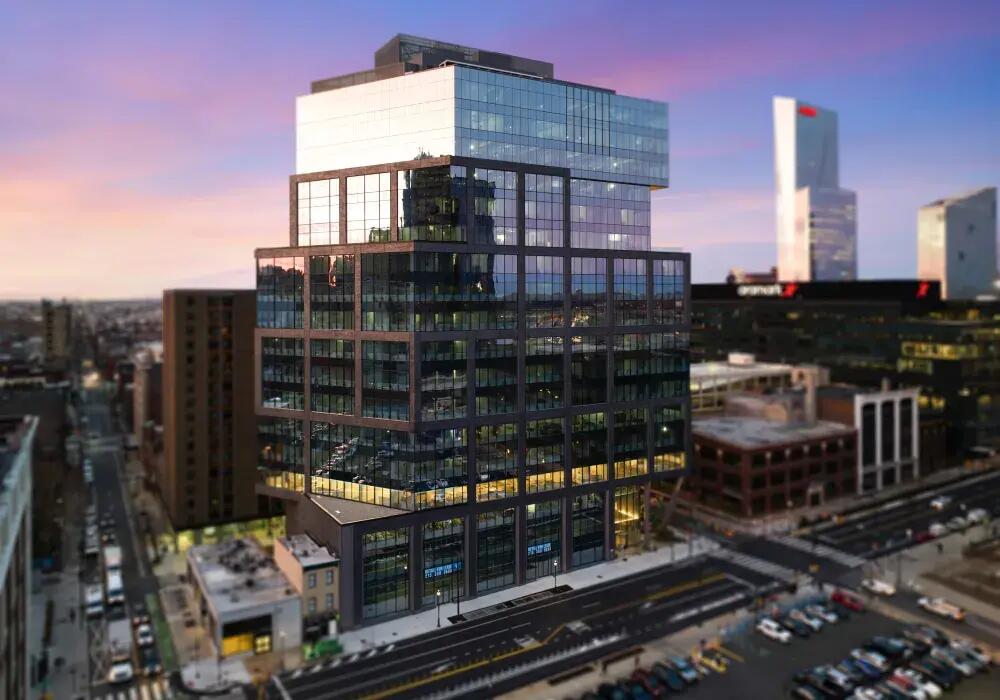
If they want to put this on that lot, I’ll be their new best friend and buy them all beers at the next DTR meetup.
21 Likes
I simply cannot fathom why an out of state developer would buy a lot zoned for 40-stories in a growing city and not build to maximum zoning.
it is a lot like soccer ….
7 Likes
Despite the $11.33M valuation for property tax purposes saw some information today that the sales price was $7.15M ($10.5M/acre).
Property owner is still listed under Highwoods Realty LP on iMaps so may not have closed the sale just yet. Info was commercial broker centric.
Parkway Corporation seems to be focused on parking lot acquisitions with revenue and long term value growth. Looks like Highwoods cashing out to free up capital as they are pretty much an office developer and letting more patient money have a go at this site.
At least what Parkway has developed seems interesting. However largest project they have built was 550K sf. This property is just under 30K sf in area. So at a conservative 25K per floor they could reach 550K sf with 22 floors.
Adjoining City parking deck has plenty of parking available so may only need a floor or so for premium VIP parking in podium form. That would result in 23 floors, same height as Skyhouse to the east of this site.
Revenue stamps on the Highwoods deed suggest a $1.835M purchase price in 2018. Pretty good return. But there is more value there.
Doubt we see anything soon on this property other than a continued parking lot. Maybe they will at least pave it and stripe the spaces.
10 Likes
Stop it. Stop. Take this bad juju elsewhere!!! 
2 Likes
With the bus station across from it, and most development energy on the west side of downtown, this is not surprising.
Yeah I just do not think this is the easiest corner to try and sell 5K a month apartments. It’s not the hottest corner of downtown.
The sad reality is that these large corporate holders have precisely 0 incentive to contribute to the community, until the proforma pencils to build a massive development. If it’s going to be a surface lot in the heart of DT, it should at least offer some shade, public art, something to contribute to the public realm. But that’s not going to happen…
6 Likes
@evan.j.bost
Being from a construction family, what are your thoughts regarding possible incentives that would encourage developers to build and show a caring for the community where they build?
Sorry for the run on sentence 
Not sure I agree. Downtown will be a radically different place in the 5 years or so it would take to deliver something like that. The building itself would change this part of downtown.
3 Likes
When developed as a high rise the DX-40 zoning district will require a 10% public amenity area component.
So why not enforce that zoning requirement now even though the use is simply a surface parking lot?
When my clients ask why there are so many rules I sometimes remind them that it is because they have seen what happens when they do not.
6 Likes
I think it’s more about the penalties associated with leaving land underutilized. The current status quo means many landowners are actually incentivized not to develop their property until they are the last one standing because they will get the “highest price.” What often ends up happening is that almost no sites are developed and areas sit incomplete in perpetuity without catalyst.
Raleigh could make lots of the land in the city have more development options and that would reduce scarcity and potentially drive down land prices.
There is no reason we have $600/SF+ sale prices on real estate except because of prime land scarcity due to development regulations and lots of American’s wanting suburban (SFR) living next to the most desired areas of a place. (New construction pricing where land is super low priced is still in $200/SF).
8 Likes
What they said^^ haha
To expand on @raleighdeveloper, I have and continue to be in full support of a surface parking lot overlay Downtown that levees additional property tax on the unbuilt entitlement (so the higher the zoning, the higher the tax rate), but can be avoided if the site is activated with a public amenity or retail component.
It would be sticky to figure out and implement, but I believe the city has the authority to do this. It might not be feasible to retroactively apply it to existing owners, but could be triggered by any deed change or permit request.
10 Likes
To expand on this concept and using the Edison Office Tower site as an example, we know that land is inherently scarce; more cannot be made.
Looking at the numbers from that deal, the site was purchased in 2018 for $1.835 million, and the owner has since generated say a few hundred thousand dollars annually from parking revenue. As a large corporation with no immediate liquidity needs or time clock, their objective is to maximize value while considering the time value of money, but not being bound by time solely. This differs from a small investor or individual who may require quicker returns or access to cash.
With approximately $200,000 in annual parking profit, that represents an ~11% capitalization rate on the original purchase, a strong yield that justifies holding the property for appreciation, especially if parking income can grow over time.
However, imagine if policy changes or new tax structures reduced the profitability of surface parking, lowering annual profit to $50,000. That change would drop the effective return to about 2.8%, making the hold strategy far less compelling unless a clear redevelopment or sale opportunity existed.
Now consider a huge change - suppose Raleigh’s zoning suddenly allowed 40-story developments citywide. Overnight, hundreds of parcels become developable, and the relative value of the Edison site diminishes. In that environment, the probability of selling the site for even $4.5M within 5 - 10 years becomes extremely low. Holding the parcel undeveloped speculatively would no longer represent its highest and best use.
In fact, under that scenario, holding for 10 years to realize a potential $2.5 million gain produces a return similar to if Highwoods had simply taken that same $1.9 million in 2018 and invested it in a cash flowing asset earning 10% compound annual growth, which would be worth roughly $3.2M in proceeds after 10 years.
14 Likes
Are there other examples of “huge changes”, such as your 40-story citywide zoning scenario, that could drive down the value of these highly valuable surface parking lots? I’m enjoying this chat as I always cringe walking by this lot.
3 Likes
It’s easier if you drive by it. 
5 Likes
As @evan.j.bost has said a tax or fees to owners for landing banking. This just gets a lot of opposition because it’s so profitable for these investments that unlikely government would consider the action.
Theoretically you could downzone the parcel if not developed by X time as “incentive” to build faster but it sets an unusual precedent.
Arguably the best approach is to just increase availability of land sites so that developers willing to increase density through new construction have the least friction.
5 Likes