It still baffles me why the GoRaleigh wasn’t part of RUSBUS? Could have been one new bus terminal that serves both GoRaleigh and GoTriangle.
That ship has sailed, but that was a big fumble in planning for RUSBUS.
It still baffles me why the GoRaleigh wasn’t part of RUSBUS? Could have been one new bus terminal that serves both GoRaleigh and GoTriangle.
That ship has sailed, but that was a big fumble in planning for RUSBUS.
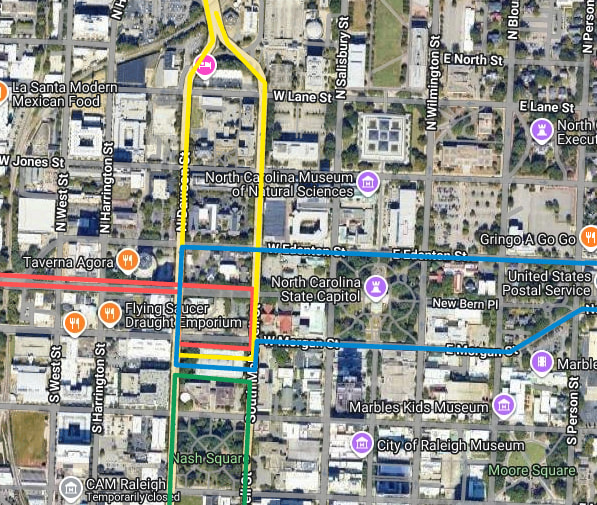
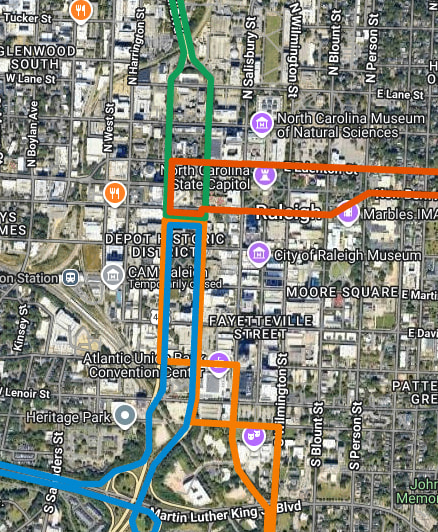
These drawings are the closest I ever got to, showing possible routes that buses could use to access this facility from all directions. Probably not quite what you’re looking for, but I’m also not really going to spend any more time on it than I already have.
I can answer that.
The Moore Square Bus Station is almost the perfect environment to sell drugs. I don’t think I could think of a better place. Every bus stop in the city will take you there. So, my customer base isn’t limited to who has a car. Which is great, because a lot of people that buy drugs are too addicted to afford a car. On top of that, the station gets packed. I can hide in crowds, lots of nooks and crannies to hide in. If things get hot, I can run on any of the open air sides of the station and run away from the fuzz.
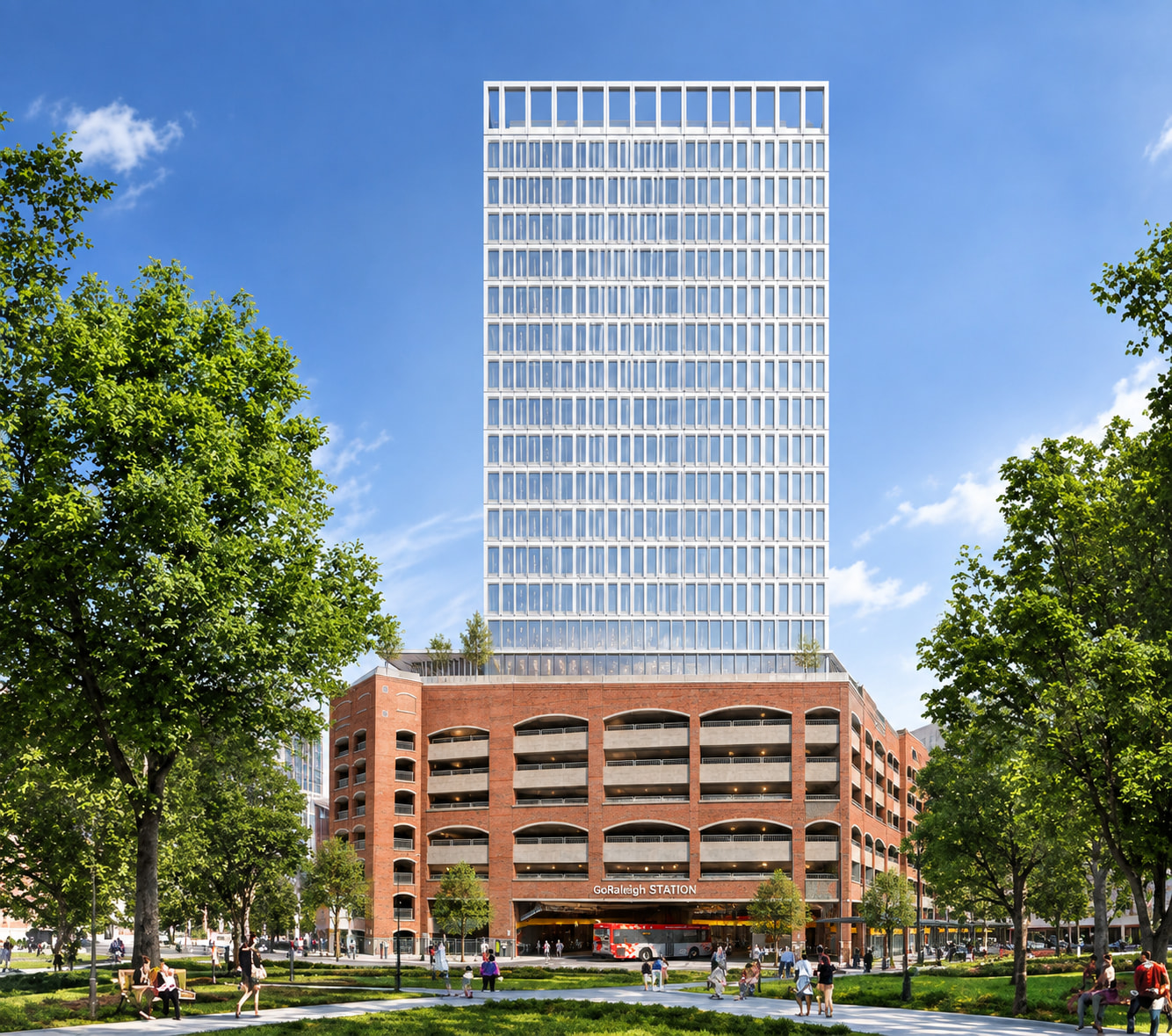
A new secure station would make it such that you can’t enter or leave the station quickly. Doors, turnstyles, etc. Cameras would be mounted. The place would be clean and away from the elements. Drug dealers don’t like dealing in places that have tight and secure ingress and egress. They also like dealing in places that are easily accessible.
A new station wouldn’t make it so easy. If the cops want to arrest you, you’ve got nowhere to run and a bunch of cameras tracking your movements. Maybe they’ll try to deal around the station, but not actively inside the lion’s den.
Thank you for the reply. Having worked as a graduate researcher at ITRE (many, many years ago), I assisted with a report that examined ridership data across transit systems. It’s not hard to get the data if riders provide the information, tickets can be tracked upon entry and departure, surveys are also possible but the data is less reliable.
Also, I was not implying that the city or any public body provide on demand or door-to-door service. Far, far, far from it! The private sector is already providing many of these services directly to the people. I’m really coming at this from a demand side, which I think is changing. For example, I don’t have to go to the airport because I can take the meeting from Zoom on my phone. I don’t need to take the bus to the movie theater, I can stream it on my phone. Need to take the bus to class? Nope, that’s on my mobile device or tablet too. Need to take the bus to see a doctor? Nope, there’s telehealth options out there, and being used heavily. And people are using these services across the socioeconomic spectrum.
I’m not advocating for getting rid of a fixed route system. At all. I’m only saying that demand for services is changing (or has already changed) and building the capital infrastructure should be responsive to that.
Hey, thanks for continuing the discussion!
They certainly track boardings and departures with fare machines and APCs but true linked trips aren’t really possible to measure without riders ‘tapping out’ upon leaving the vehicle. Maybe there is some way they can reconstruct or extrapolate this data. I don’t know.
The idea that more activities like work, school, shopping, dining, etc are being done at home these days certainly rings true, although it carries some dystopian notes as well. I suppose it’s one vision of the future that you would only have to leave home voluntarily, rather than because you have to for any reason, although I am skeptical that this will have as much of an impact on travel as you might think, given just how many jobs (healthcare, foodservice, logistics, construction, primary education) are still done in-person with no clear path otherwise.
Nevertheless GoRaleigh has drastically increased weekend service to reflect the decline of the 9-5, and is also seeing all-time high ridership numbers.
Beyond that I’m not really sure there’s much in the way of a fixed route restructuring that eliminates a downtown hub that makes sense. Having a single point where most routes come together allows for one-transfer service from nearly anywhere in the city to nearly anywhere else. Even if it’s not the most direct route, it’s often not that far from it.
I do think this is an underappreciated point, that despite the troubles around the bus station, service is increasing and schedules are changing to reflect different commuting patterns, and ridership is at an all time high and growing.
definitely worse, thanks