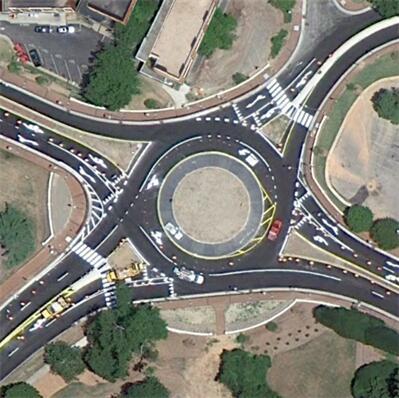
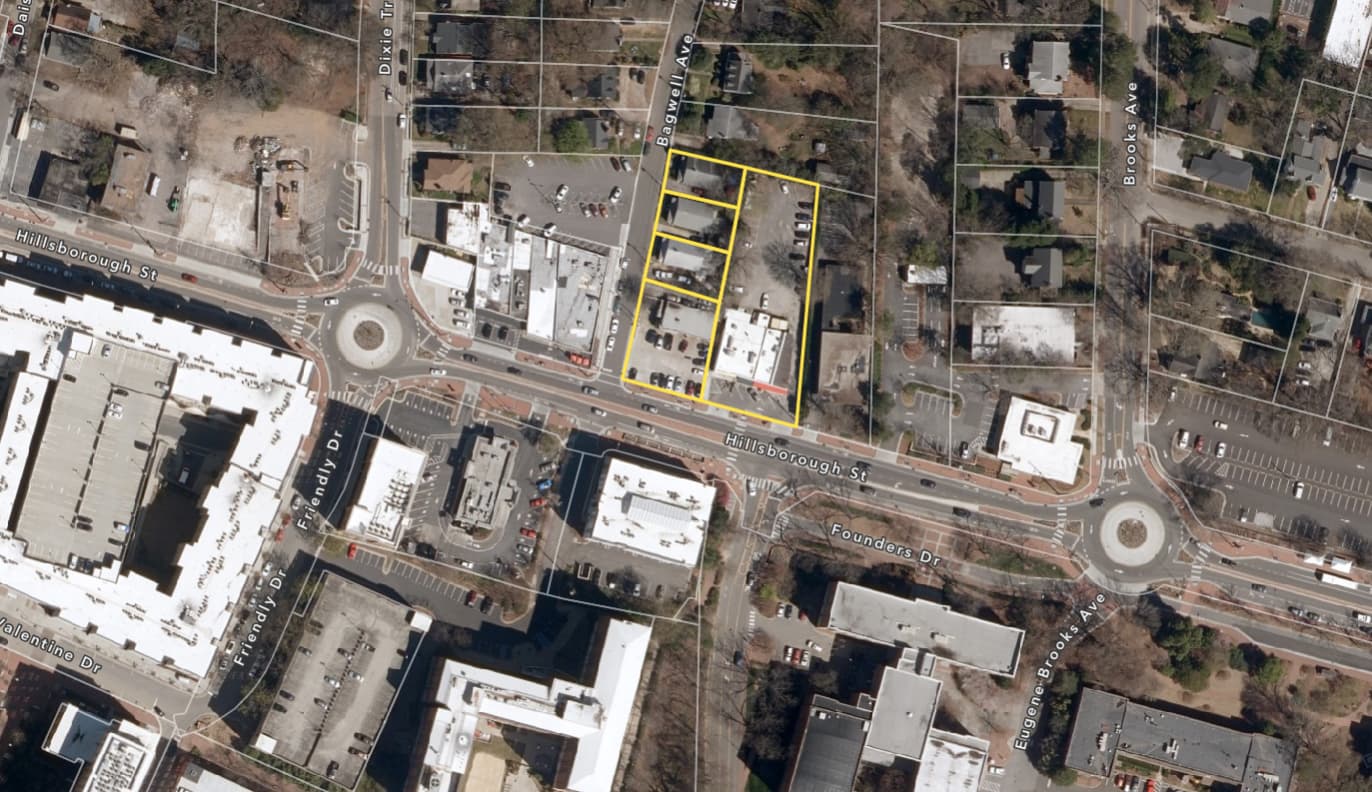
Good for you, but the crash rate was sky high and stayed that way for the entire time it was set up that way. That in and of itself shows that it was a failure of traffic engineering. I am convinced that if you put this roundabout in Amsterdam people would have had difficulty negotiating it, too.
As an infrequent driver of Hillsborough, I specifically found it confusing because it was inconsistent.
Approaching from the north and west, both lanes were through lanes.
Approaching from the east, the right lane was the through lane.
Approaching from the south, the left lane was the through lane.
The urban environment at this roundabout is busy - you have to deal with peds, bikes, parked cars, driveways, stopped buses, etc… on top of fairly heavy car traffic. Signage was inadequate to give you a chance to figure it out in advance and change lanes if needed in time. The nearest intersection in every direction was so close, that posting adequate signage would probably have been impossible.
Basically, it was over-engineered from a traffic capacity perspective, at the expense of consistency, legibility, and usability. They tried to give higher-volume movements dedicated turn lanes in each direction where possible, but that meant a different approach was required in every direction, and - sorry - when I’m driving through there, I’m focusing my attention on watching for pedestrians, cyclists, other motorists, etc - and any extra workload required to figure out how to navigate it is 100% a bad thing.
The only way to navigate the roundabout correctly every time was to become habituated to it. And any traffic control device that first-time/infrequent drivers are unable to navigate reliably or safely is a failure in my book.
Having a double lane roundabout was a bad idea from the start, anyway. The only reason for it was to enable more traffic to use the corridor, which was antithetical to the fundamental purpose of the streetscape project (that is, make Hillsborough a place for people) in the first place.