A partnership may be a good approach. What I worry is that when these requirements are put on the private sector, then it encourages them to under-deliver, just to meet the requirements. A solid AH Strategy at the city-level then sets a standard and the city will execute on that.
2 Likes
The short answer is: that would need a new funding source. And that’s why council is probably looking to developers. Bc that money has to come from somewhere and they’re probably thinking the Devs high margins are the best way to avoid raising taxes on everyone else.
1 Like
This is a huge problem that is unfortunately just another example of the tribalism that has infected the entire political spectrum. It’s framed as an ‘us vs. them’ issue which prevents any kind of good faith discussions.
3 Likes
Continuing the thought of more housing options, we have to communicate as a city that we are moving beyond the “protect olde ye Raleigh and her charm”. Fill out this residential infill survey to record that growing as an equitable, sustainable city is more important than protecting the streetscape of 1950’s SFH neighborhoods!
6 Likes
Well I was thinking along the lines of property tax incentives that both Raleigh and Wake County could provide for those projects that include affordable housing. Create special tax districts that will include a nice decrease in property taxes could provide the funding and encouragement for projects going forward. But somebody would have to work out the math to make it economically feasible and workable.
I think I’d much rather see the city or a non-profit like DHIC develop and manage affordable units since they are by nature not profitable. Any developer or property manager that operates a for-profit business that includes affordable housing will meet the minimum requirement that comes along with an incentive for only as long as the math makes sense - and I don’t necessarily fault them for it.
4 Likes
I still think that the best solution is a development fee that’s incorporated into these projects. The money can then be used to build AH on property owned or purchased by the city. Tall buildings already charge a premium for upper floors so another option is partnerships that allow AH on the lower floors with some kind of reduced tax incentives to aid with financing. What’s frustrating is the lack of a standard operating procedure.
I think the issue here is not just on the margin, but also the valuation of the developed property once it’s built. Typically commercial developers are not in the property management business, which are very different businesses with different risk profiles / returns. If we are to think about a property as capex (investment required to acquire land + build) and the resulting annual income stream (rent), the valuation on the finished property may look very different.
As a thought exercise, let’s say the developer has 2 options. Either build 100 luxury apartments at $2000 per month in estimated rent at $100M in costs (less floors but higher quality amenities). Or build 200 affordable apartments at $1000 per month in rent at also $100M in total costs (less amenities but more floors). The resulting valuation of the 2 properties will probably be different as there are different underlying assumptions around the demand / sustainability of each income stream, the ability to increase the rent, risk of turnover, how each income stream will be affected by various risk factors, etc. The eventual property management entity will look at that to determine if it’s a property worth buying, as they are buying for the future income streams.
In the core downtown area where demand is high, I’m sure the resulting valuation rarely is in favor of building affordable housing, and where building luxury apartments with luxury amenities really drive the math. This is where the tax incentives should come in to offset the differences as another poster has suggested. Otherwise the basic financial math most likely doesn’t work in favor of affordable housing, even when 2 scenarios being equal in investment and expected income stream.
3 Likes
My thought is this: Yes.
1 Like
I agree. Many residential developments are also sold when completed for profit. Especially apartments. How will the control and/ or management of AH be impacted with the sale and transfer of property? No problem if the developers maintain ownership but that’s rarely the case. The apartments near Cameron Village sold for millions almost as soon as they were finished.
1 Like
I’ve actually been discussing this a lot on Twitter the last two days. (I’ll tell you, debating Brent Woodcox about anything really forces you to think sharply and quickly.) But I think that something close to this is the right approach.
The whole city ought to be upzoned to allow for things like duplexes, fourplexes, and townhouses, but once you start really building up, I think Russ makes a good point. On one hand, building higher is a free lunch: it’s good for the environment, it makes housing more affordable, and it allows more people to enjoy living in the city. We ought to be encouraging developers to build more densely in the urban core. But on the other hand, if developers can go as high as they want to by right, then the city doesn’t have any leverage to induce developers to include affordable housing.
The way to square that circle is with some form of a density bonus. The zoning might be, say, DX-12 by right, but with a density bonus, qualifying affordable housing essentially wouldn’t count toward the limit, plus you could build more market-rate units in exchange for including affordable housing. Raleigh does not currently have a system like that, and it would be an important tool to add to our zoning code, rather than just negotiating bespoke agreements for each zoning request as happened with Smokey Hollow.
The debate on Twitter was about whether the agreement the city struck with Kane to include AH in Smokey Hollow was better than taking $1 million cash to build AH somewhere else. Lots of good debate on this, but I think the city is much better off integrating AH all across the city, rather than concentrating it in a handful of areas where land is cheap. As much as possible, we should be trying to build AH near public transit, good schools, and plentiful jobs, and trying to craft an AH policy that creates economically diverse blocks, buildings, CACs, and schools where people of different walks of life are sharing the same physical space (and transit, and political power). Building higher in those areas is the only way you can make that happen.
The debate on Twitter was very, very different from the debate on this forum: the concern with the deal the city struck with Kane was that it didn’t include enough affordable housing, and you could leverage that $1 million to build a greater number of units. And that’s definitely a valid point, and there may be rezoning requests where that makes sense. But I think the sort of strategy @dtraleigh is describing should be not only explored, but implemented.
10 Likes
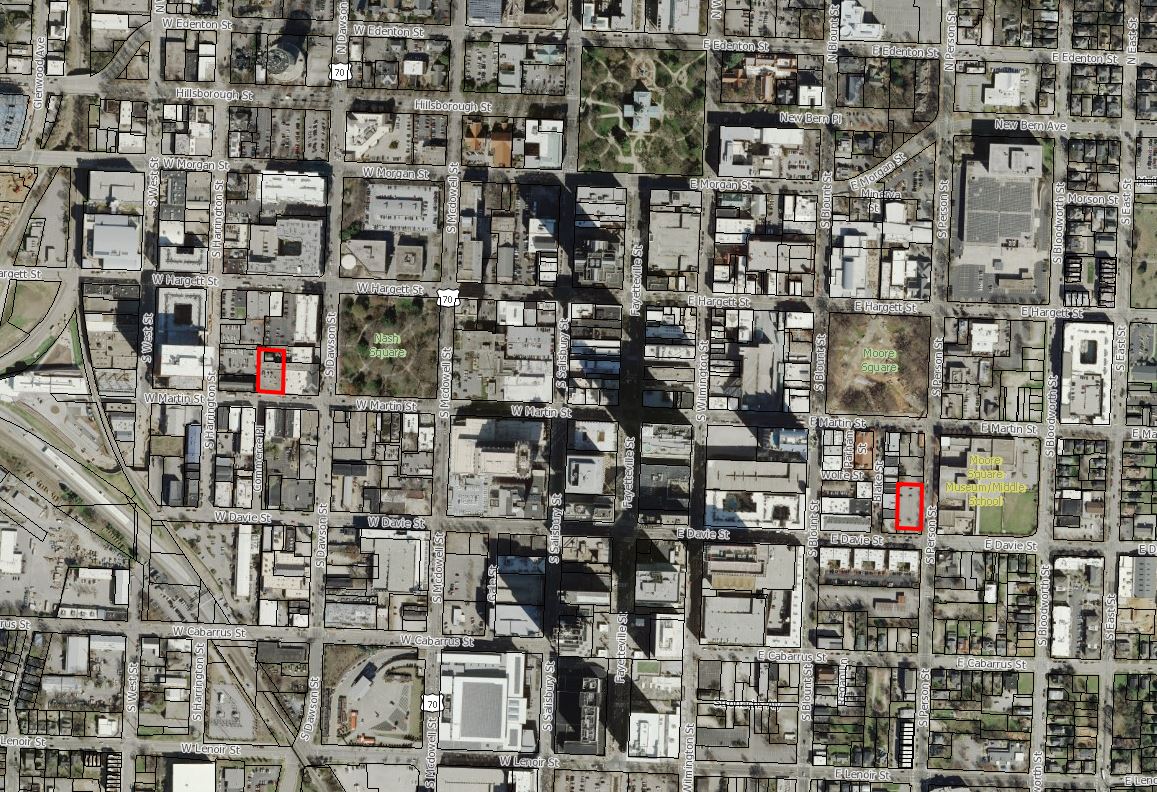
City of Raleigh City Market parking lot, build a skyhouse style building 12 stories. 176 units. all affordable. Construction funded by the city and housing managed by raleigh housing authority. Close to jobs, transit. Less complicated = higher chance for success. Repeat at 310 W Martin, 18 stories, 272 units. Start 1 building per year and just keep going to unused city land and start building. After five years, 1000+ units.
8 Likes
I like the debate around the best way to implement and get more affordable housing. What you and @dtraleigh outlined sounds like the general thinking I have.
This next part is about the dynamic of the city council not really meant to say all people in Raleigh are one way or the other:
Where it seems to come off the rails is the politics. One side doesn’t want anything in neighborhoods (so the triplex, ADU, etc. density is off the table), doesnt care about increase in tax dollars from denser development, and generally just doesn’t like developers and wants to stick it to them. I also think this group lives in the NE side of town (or near falls lake) neighborhoods that don’t have any affordable housing of any type, so not the most credibility with me. Hard to create some joint solution which is like what you described with them.
The other side (which I mostly see as reactionary to them with a little bit of “we love tall buildings and shinney new things!”) sees that we don’t seem to be allowed to add density except in really tall buildings downtown so we need to steamroll these NIMBYS and get it! So the the affordable housing part seems like a general blocking strategy/ concern trolling that is in their way. This side doesn’t do themselves any favor with people who want more affordable housing. Every time someone make a joke about “maybe they will request affordable housing” on here I see someone in my head who actually care about affordable housing deciding not to listen to anything else you have to say and joining the first political group.
All this adds up to move the discussion away from a general good strategy like you are bringing up towards “well the other side won’t give so I need to ram stuff down their throat”.
end of political thoughts
Lots more to the dynamic going on, but that is kind of what I see playing out right now. I would be totally cool with a 12 story limit with higher stuff giving tradeoff, but I would want to allow missing middle housing to grow where ever, and for the city to lead on an affordable housing plan where tax payers share the responsibility.
3 Likes
Just exactly what is affordable housing anyway? I think that the definition of it is too squishy at the moment. And, as for as affordable is concerned, for whom? What’s affordable to some isn’t affordable to others. Some people need significant governmental assistance just to survive while others just need a lowered rent. Then there’s the idea of workforce housing. Many cities in America don’t pay their public employees enough to even live in the cities in which they work. I don’t know that Raleigh has that particular issue since the city has so many price points and options, but many cities do.
Conversely, I’d say that the city is better off integrating AH all across the city, rather than concentrating in a handful of areas where the land is expensive.
I’ll add that the city should look at their own land holdings downtown to redevelop so as to not get caught up in the effects of a bidding war that drives up land costs for new privately developed projects.
Finally, it wouldn’t surprise me if the costs to accommodate affordable housing in high priced projects isn’t just peanut buttered across the rest of the market rate project: driving up the cost to obtain retail & commercial space and rental housing prices per s.f/month. A savvy developer isn’t going to dig into their own pockets first.
3 Likes
IMO the council lost all credibility regarding affordable housing with essentially banning ADU’s. Now ADU’s alone is not some magic solution, but it’s an important component of it. Essentially allowing every SFH lot to double in housing capacity. Not every home owner will run out and build an ADU, but over time it will add a good bit of housing with limited involvement by the city. Allowing homeowners to get some extra income by supplying affordable places for people to live. And also these are integrated into existing neighborhoods, rather than creating a concentrated area of low income housing, AKA - slums, projects, etc.
7 Likes
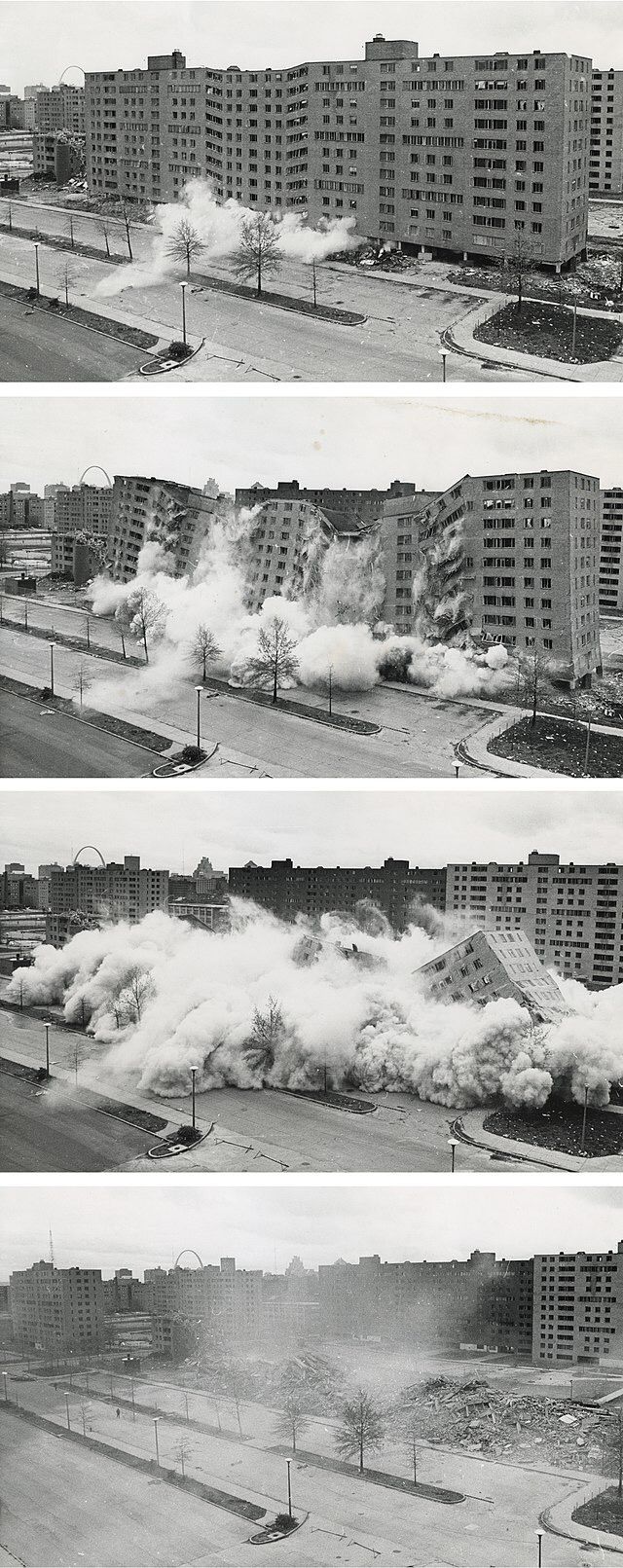
I hope that we’ve remembered the lessons about concentrated high-rise AH from Saint Louis. It’s only just now that there’s going to be redevelopment of the old Pruitt-Igoe project 40 years after their demolition (remembering it well as my mother used to work there amidst the ruins in the 1990’s).
2 Likes
There is a really good documentary on Pruitt-Igoe that was on amazon prime video(may still be).

I personally dont advocate for huge buildings and segments of town to just be low income affordable housing.
But, I think sometimes we forget two other leasons of Pruitt-Igoe
- Dont tear down large swaths of a city with a mix of uses and economy to build a section of town that just does one thing (similar story for highways). Pruitt-Igoe was a really big “urban renewal” project.
- It’s not good when all the white people with money flea town for the suburbs and sometimes that makes the “inner city” bad just in itself. At the same time Pruitt-Igoe was built the white 1950-60-70’s St. Louis residence decided that moving to the suburbs was better than living near people of different colors, and they tanked the city of St. Louis’s economy on their way out. So paying to maintain Pruitt-Igoe was not an option.
They actually have 35% the number of people in St. Louis today as they had when Pruitt-Igoe was planned.
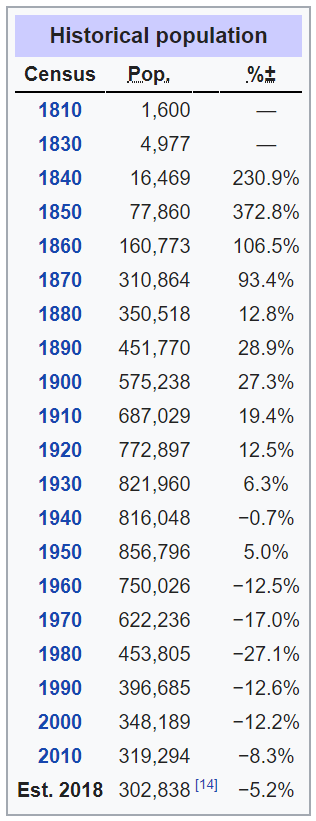
There are 2.8 Million People in the metro but the city limits have just 302,832.
I don’t think building a new Pruitt-Igoe is a good idea. Very bad idea. But, I also don’t think affordable housing with a mix of incomes spread out around Raleigh ITB is going to cause chaos and total destruction like Pruitt-Igoe did.
2 Likes
New York has been doing the massive high-rise redevelopment experiment for some time with mixed results (as far as Manhattan goes, anyway). San Juan Hill was demolished in 1962 at the direction of Robert Moses to make way for the Lincoln Square redevelopment (one can see the old neighborhood in the film version of West Side Story). 4,400 housing units were added with little set aside for AH pushing the original residents to Harlem and the Bronx.
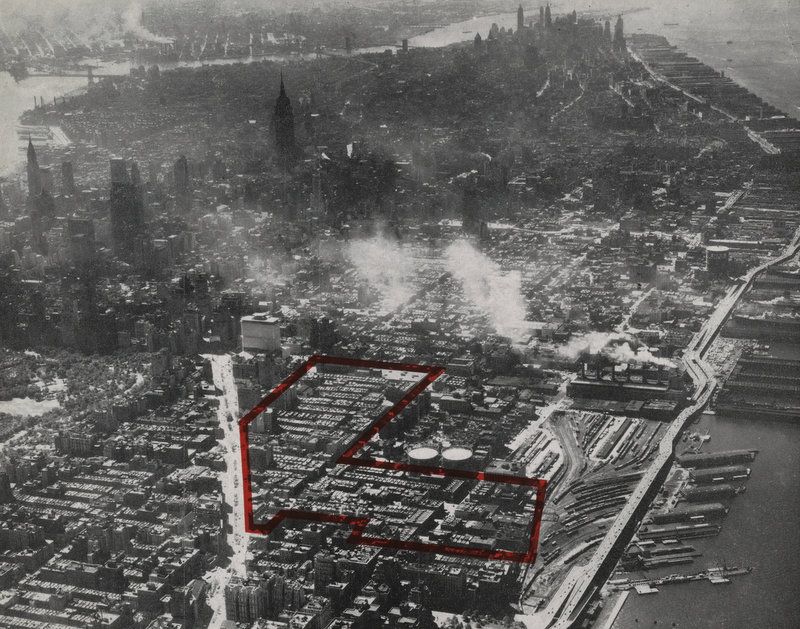
Stuyvesant Town–Peter Cooper Village came in with over 11,500 apartments after WWII to address a housing shortage at that time. And, it has been holding steady as a middle-class ‘city in a park’ while still maintaining it’s value. The difference could be that it’s remained in private hands, but there are probably more factors playing into it’s stability than could be addressed in a quick overview.
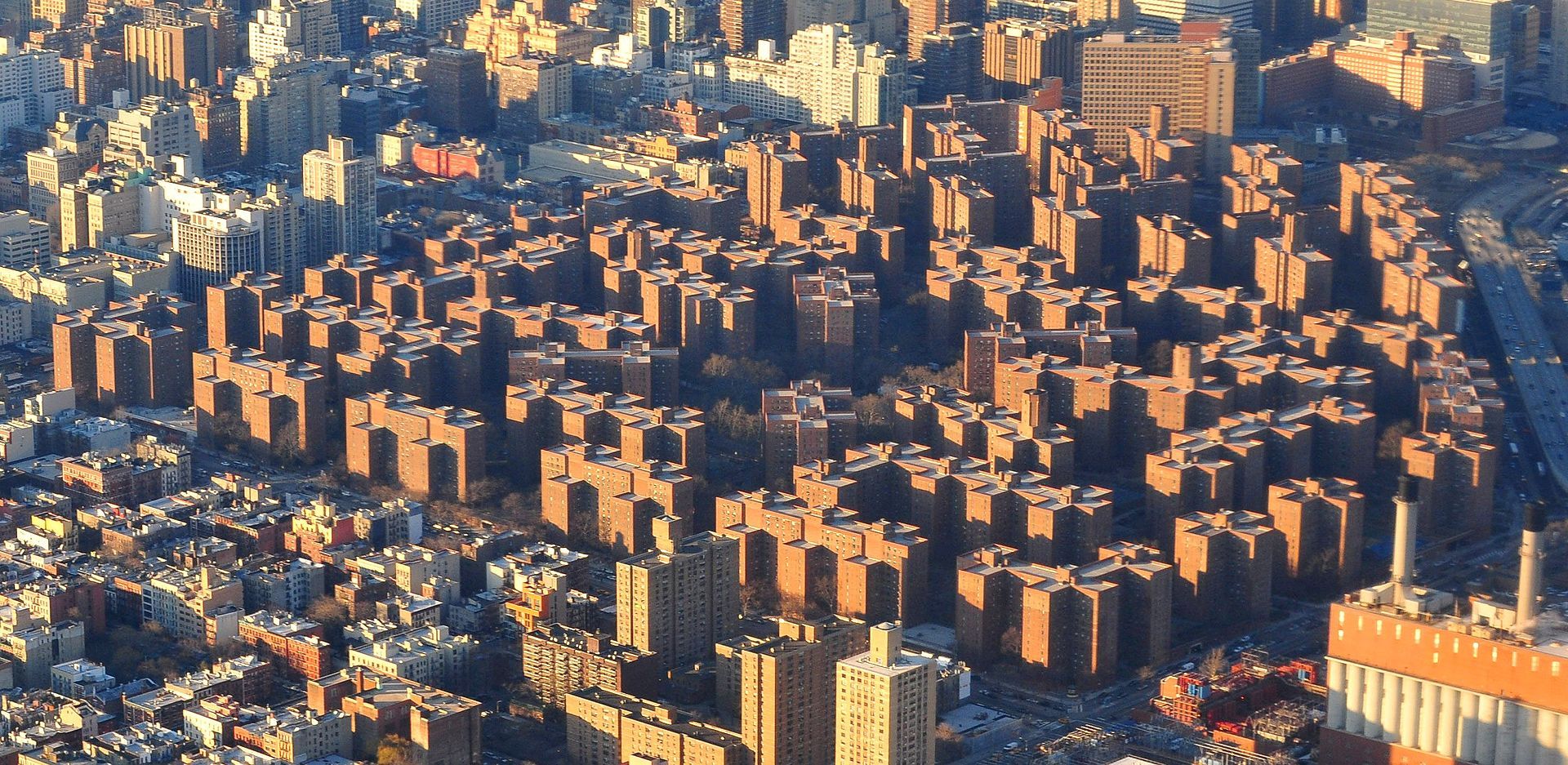
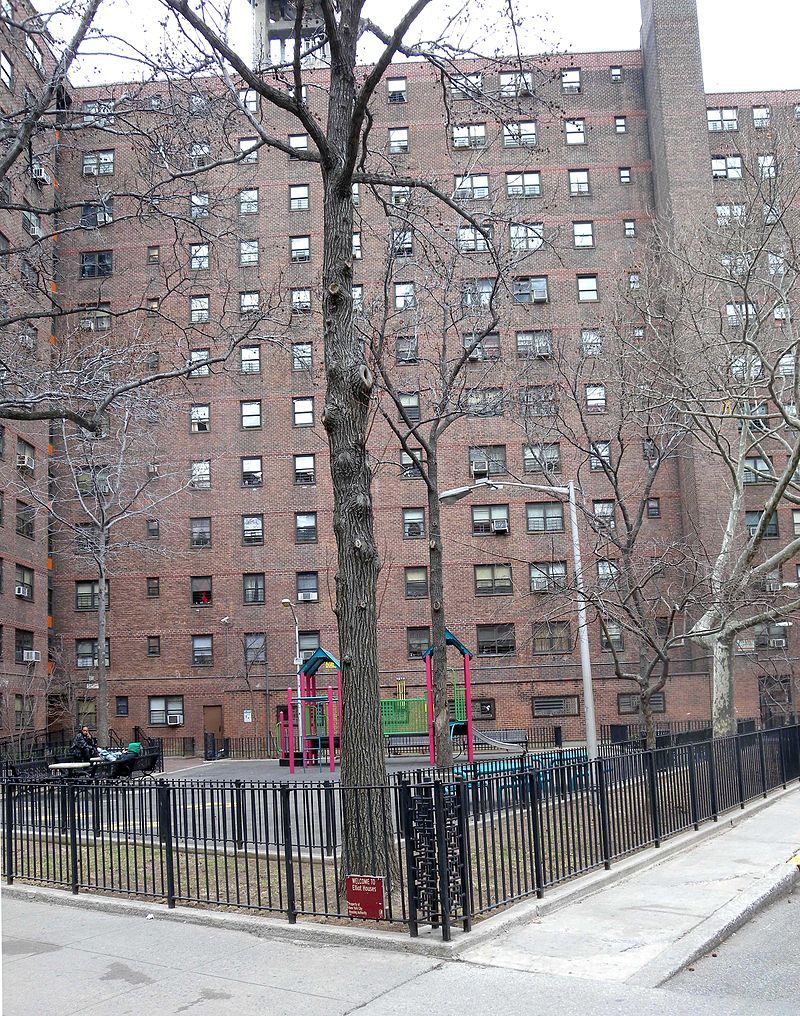
Chelsea-Elliot Houses (circa 1945) and Robert Fulton Houses (circa 1962) are run by the New York Housing Authority. Suffering from deferred maintenance issues and hyper-gentrification around them, there are big worries about losing them to the developer’s wrecking ball
.
4 Likes
The sheer scale of these projects is incredible. Could you imaging the total upkeep cost of a development like that?
4 Likes