Went looking for a weather related topic but couldn’t find one, so I’m starting one in the Pub.
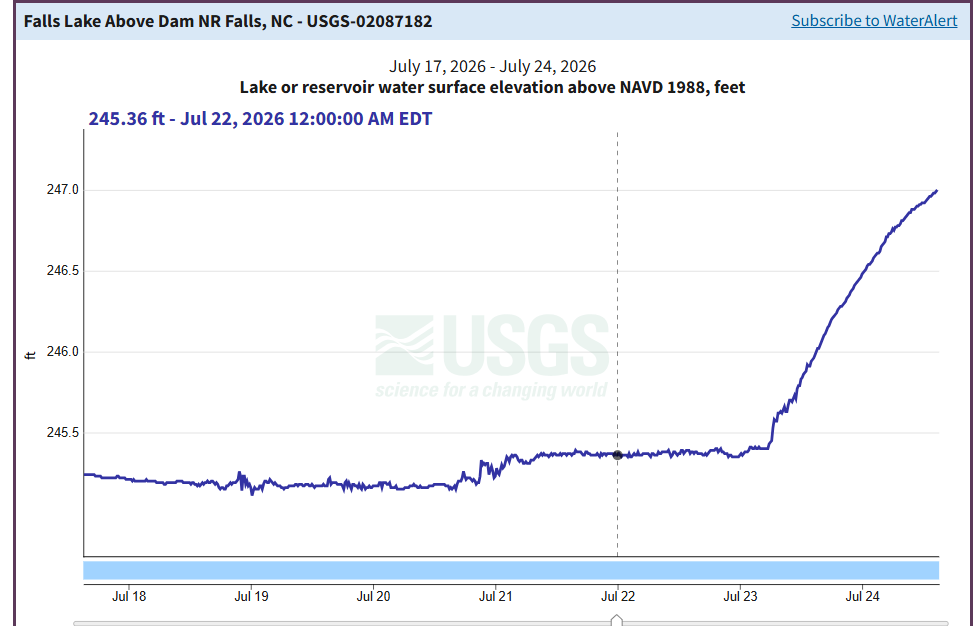
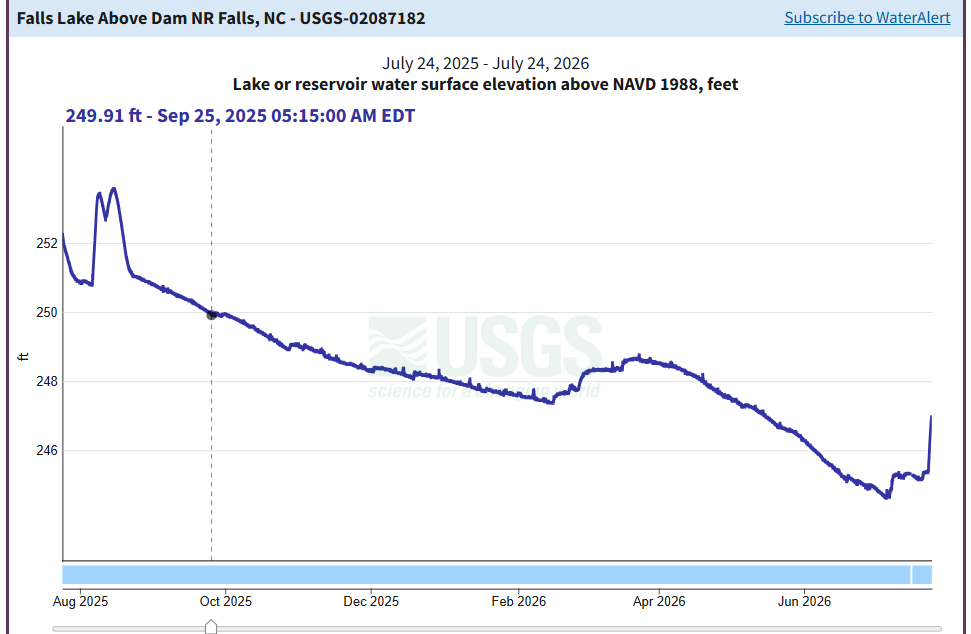
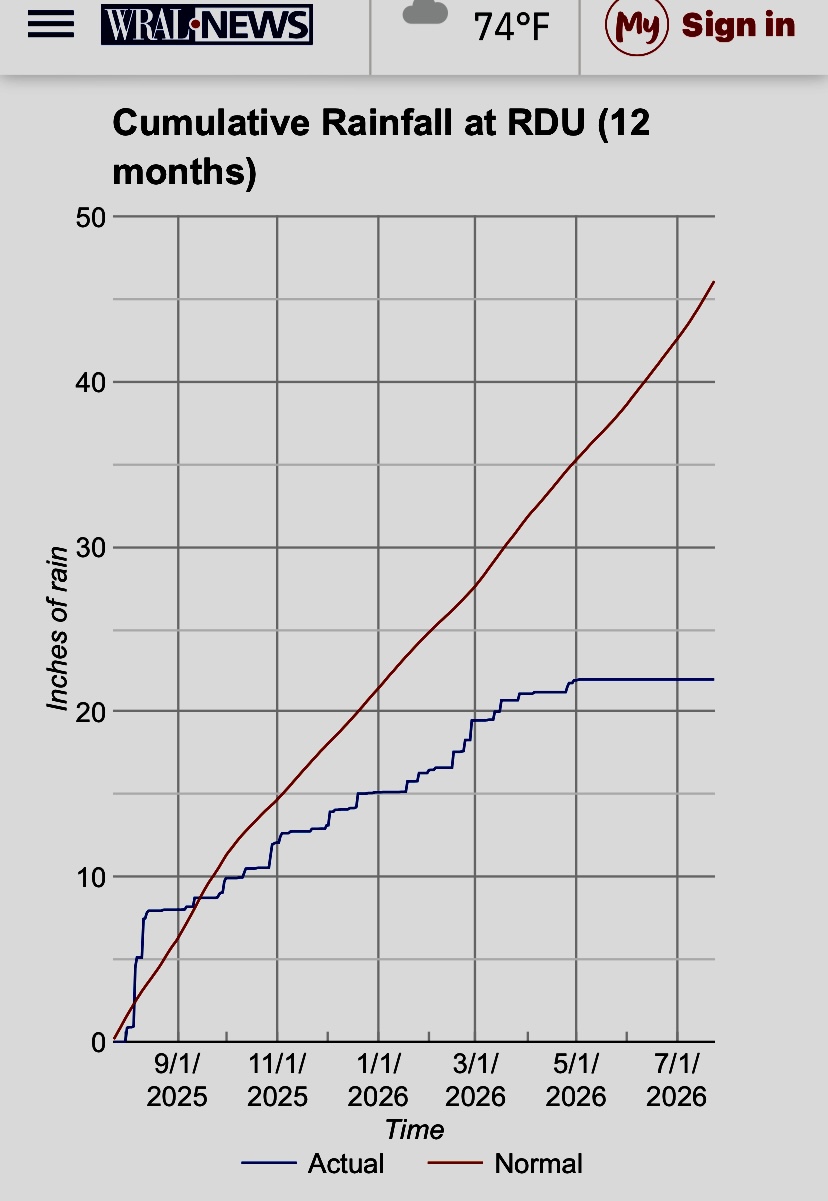
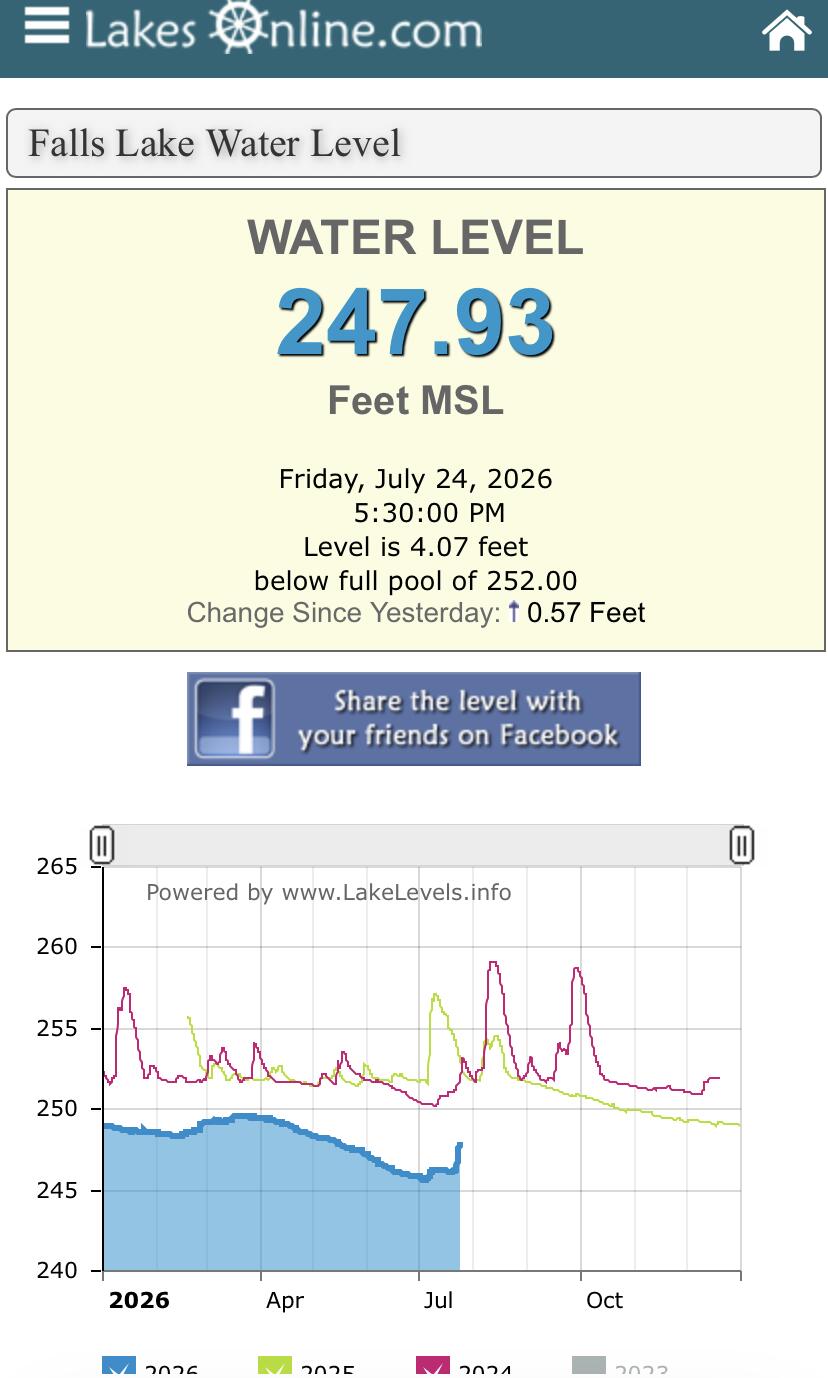
These latest bouts of storms have eased the crisis at Falls Lake and Raleigh’s water supply a bit. According to the lake level almanac at WRAL, the lake has added about a foot of water in the last week or so. This is great news, but we aren’t out of the woods just yet, and remain well below the normal level.
That recent flatline will look better when the current 7/20 data is updated with this week’s rain. But we need some near-miss hurricane rain this Fall.
Finally we are trending in the right direction! Another good crack at beneficail rainfall both tonight an tomorrow. Runoff should keep pouring in Falls Lake and hopefully we can add another 6-12" to the water level by the time this system is off the coast.
Is there comparable data for Lake Wheeler/Benson? I know they’re only a 10th of the water supply but a lot more of the rain seemed to fall south of RDU.
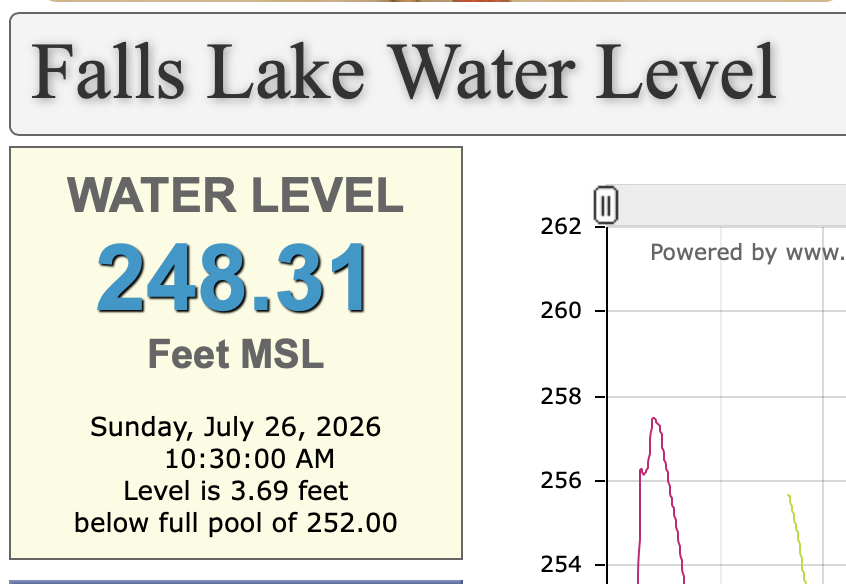
Now within less than 4 feet from full.
This has been a dramatic turn around. In early July, the lake was as low as 245.55 ft. Let’s hope that the rain keeps coming.
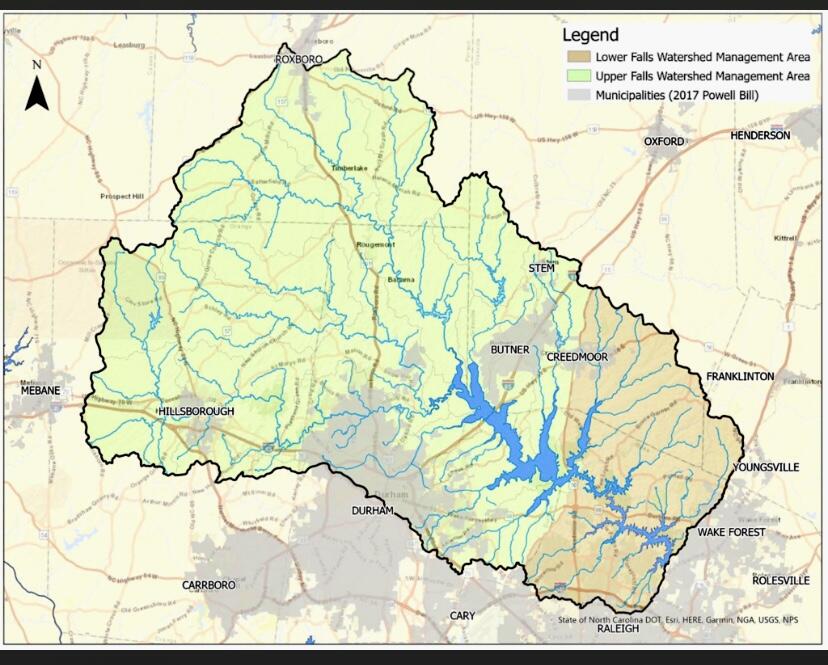
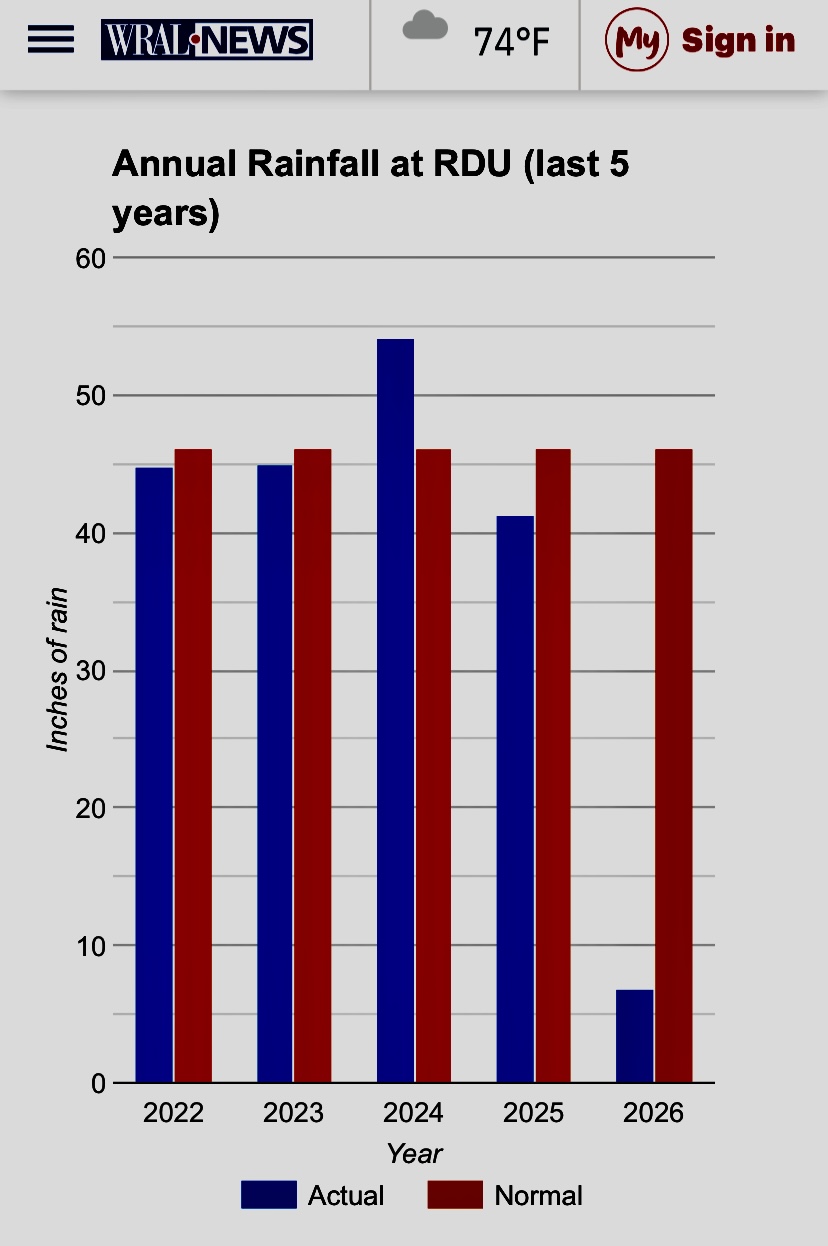
The anecdotal “dome effect” that seemingly pushes storms north (and/or south) of us (and RDU) means the Falls Lake watershed area may be receiving significantly more rainfall than us.
Also reservoirs are sensitive to recency events once the soil is rehydrated. Recovery can be fairly swift.