GoRaleigh Bus System, now and the future

Want to make the bus system an overnight success for almost no money? Restripe existing roads to give the buses a dedicated lane everywhere, especially where it’s congested today (and then actually enforce it.) It would result in reduced mobility for those who drive and increased mobility for those on the bus, and a massive shift from single occupancy vehicles to buses.

I would personally support this as I feel confident in my ability to get where I need to go on transit. I think a lot more people would come to realize that transit is a better option than they thought.

I do not think this is a tenable political option right now, and I do feel a bit bad for the people who planned their lives assuming driving would always be cheap and easy.

What we should do is use transit tax money to build a bus bypass of a highly congested area while leaving car capacity unchanged (Western Blvd at NCSU would be my pick) to demonstrate the power of bus lanes. People will see it working and demand more.

6 Likes

‘The roads go through minority communities’ … uhh far more roads have hacked through non-minorities property than through black neighborhoods. Think of I-40. All that farmland and private land paved. Hardly any of that was minority owned. Yes, some of Hwy 147. Maybe that’s what you speak of (and some other city roads)…

My tail pipe is melting the ice caps? Bullshit. How do you explain the last ice age? Cold/hot cycles have happened forever. What made the glaciers retreat? There was no industrial output back then.

That’s the problem with this emotional-style appeal ‘think of the polar bears and the disaffected minorities’ and so on. That’s got little to do with the transit challenges we have now.

So America is addicted to cars. I do agree with your assessment that more taxes on autos and gas should be used for more efficient, safer, and desirable public transit. Most of us would prefer to kick back on a maglev ride from A to B instead of fighting traffic in a car. But this liberal logic some of you guys fling around is not helping your argument.

2 Likes

I don’t think he insinuated you had a lack of humanity or empathy, he’s just clearly outlining the negative externalities of car usage, all of which are backed up by decades of research. I agree it’s not the best way of persuasion, but that doesn’t make it untrue.

I somewhat regret bringing up climate change and other things in this thread not because I think I went too far, but because it is a tangent. I gave my reasons for why I think driving is a big time bargain because of subsidies and unmitigated impacts.

I do think there is room for more user fees imposed on drivers. We could up the state gas tax by 50% for example to pay for transit and high speed rail, and it would hit drivers for about $100 per year (raising the total spent on gas in a year from like $1400 to $1500.) And even at that, driving would still be a bargain.

3 Likes

You are your own worst enemy. That suggestion would in conjunction with a vote on mass transit would fail completely. What is your opinion on all forms of mass transportation must always pay for itself? or is that opinion just limited to cars?

By the way, North Carolina already has the 14th highest gas tax rate in the country. A 50% increase would move us up to #3 (behind only Pennsylvania and California). Do you really think obscene levels of taxation is the answer?

If mass transit gets the same head start that our highway system got (virtually a nationwide connected system), I’m fine with either being subsidized at the same level

3 Likes

Despite what one believes on pollution/greenhouse gas relating to climate change, eminent domain disproportionately hurting [low income] communities, whether they be rural or minority, etc. The overarching dilemma is that governments and their agencies are in charge of building, funding, and maintaining transportation infrastructure (except industry owned corridors) and their decisions vastly influence public perception and lifestyle decisions.

Personally I believe government in a capitalistic society’s greatest role is to ‘fix’ economic and environmental issues that the free-market will not fix. To me, congestion and car dependency is one of those problems. No public transit incentivizes sprawl, hurts low income communities because dependable car ownership is required to participate in the economy, hurts the environment imo regarding water quality (impervious surface (sprawl and parking lots) + increased rain (2018 wettest year on record) = pollution in our drinking water), underutilized land value in CBD because land devotion to parking and driving, etc etc etc

Imo There are so many ways to argue that public transit is good for society, like high quality healthcare and public education, that we should expect our government to provide it. And if they’re not, we should vote and advocate accordingly.

7 Likes

I don’t see that as obscene. Really. A 50% increase would be an additional 18 cents per gallon. The price of gas fluctuates more than that month to month sometimes. I’d actually feel better knowing that that portion of the money I spend on driving was going to something worthwhile that enables me to drive less, rather than financing more fracking in North Dakota.

1 Like

It’s state taxes on gasoline. It doesn’t include the federal excise tax on gasoline. So none of that money goes anywhere outside of the state for fracking or anything else you don’t like. I am of the opinion that raising taxes never gives you the net positive return on your investment that you think it should. Maybe I should point out the Durham light rail project… Sometimes just simple policy changes and a difference in a vision going forward is all that you really need. And you just might get more people on board with the plan than you would by yelling out 50% increase in taxes.

With a 50% hike in state gas tax, drivers would pay about 72 cents per gallon in total tax. (Compare with France for example where gas tax adds up to short of $3 per gallon.)

And when I mention fracking I am not talking about the tax dollars supporting fracking (I don’t think it does, not to a substantial degree anyway.) I am talking about the portion of the money I spend on gas that actually goes to BP or ExxonMobil or whoever. And even that money spent in fracking in the northern plains is the best case scenario, better than having that money sent overseas to further enrich princes in Saudi Arabia.

1 Like

As prices rose again so did U.S. output, and America is now likely to be the world’s biggest oil producer by the end of 2019. And as of 2016 we were about 90% energy self sufficient. Probably pretty close to 100% now. Mostly due to fracking…

Energy independence is a good thing, to be sure, but if we didn’t use so much oil then we wouldn’t need to frack so much to be energy independent.

2 Likes

Regarding spending gas tax money on transit, I will agree that transit governance has been a mixed bag of late. The operations side is fairly efficient by national standards but the capital projects side has been mismanaged (with the failure of the 2005 rail line and now DOLRT this year).

NCDOT Rail is by nearly all accounts a well run organization that has the support of legislators from across the political spectrum. I believe that they have the chops to execute a PPP to bring high speed rail of the caliber found in the Northeast, or at least what is under construction in Florida, to NC for a reasonable public expenditure on capital (and probably little or no public subsidy on operations.)

It’s a tough argument. The liberal position is that govt should provide high quality healthcare and public education. But look at their record. Do you want the the medical system to be run like the crappy DMV? We pay more for public education than ever before, and quality continues to go down.

Public housing? Remember how bad that turned out? Amtrak?
Would these all be better if simply poured more money into them? No - it’s a management issue.

I just bring that up since you advocate the govt taking a bigger role in transit. Look at how poorly California handled the high speed rail project. Now scale that nationally. They just can’t get it done.

Even Democratic-dominated Nashville voted down a big transit bill as the public saw how the numbers were impossibly low-balled. No one wants to own a boondoggle that will not really solve the transit problems. Faith in govt is not high. Perhaps a private/public model like SpaceX / NASA would work for space transit. That’s working a lot better than the pure govt approach.

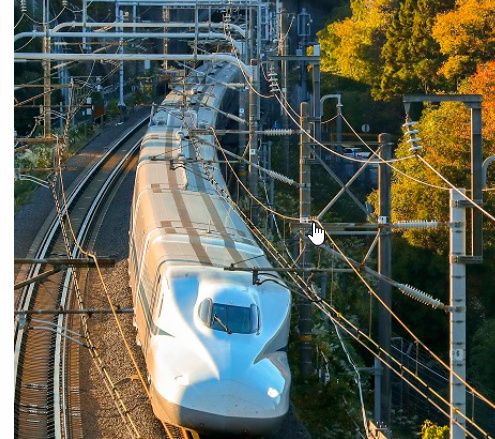
Another good one is the privately funded Texas High-Speed Train:

Commuters between Dallas and Houston could have a less expensive, more convenient alternative to flying by 2025.

The company behind a proposed 90-minute bullet train, Texas Central Partners, is waiting on a finalized environmental impact statement and record of decision from the Federal Railroad Administration. With a nod from the FRA, construction on the train—the first of its kind in the U.S.—will hopefully begin this year, Vice President of External Affairs David Arbuckle said at a Jan. 16 Growth & Mobility Luncheon hosted by the Richardson Chamber of Commerce.

So far funding for the train, estimated to cost between $12 billion and $15 billion, has come from private investments, Arbuckle said. A bill passed by the Texas Legislature said no state money can be used to pay for the train; however, Arbuckle said Texas Central can coordinate with the Texas Department of Transportation to make the train a reality.

Texas 200 MPH Bullet Train (online in 2025)
2019-07-23%2017_19_25-Houston%2C%20we%20have%20a%20project_%20Texas'%20high-speed%20railway

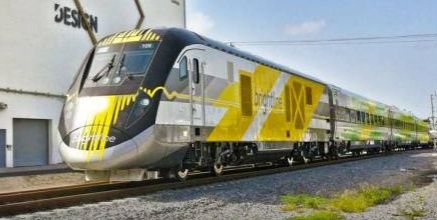
Also there’s the Florida project being developed by Virgin Trains USA (formerly Brightline).

They predict service between Miami and Tampa through Orlando has the potential to carry 9.5 million passengers annually.

Brightline-Virgin service also could achieve what Central Florida leaders have been unable to solve: establish a link between SunRail commuter rail and Orlando’s airport.

To develop service between Orlando and Tampa, the privately owned and operated Brightline is now negotiating with Orlando Utilities Commission, Central Florida Expressway Authority, the Florida Department of Transportation and with private landowners to lease or buy land for rail and stations.

Florida’s 125 MPH Train (in service now, extensions underway)
2019-07-23%2017_37_48-In%20Miami%2C%20Richard%20Branson%20Hits%20The%20Ground%20Running%20With%20Virgin%20Trains%20USA%2C%20High-S

I’m just mentioning some examples. Virgin Trains could do the Charlotte - Raleigh high speed route.
So what about the Triangle? I don’t know if any private entity is looking at a dense commuter path like UNC/Duke/RTP/RDU/Raleigh. I wonder if Virgin could find this route doable if public money made up the ‘non-profitable’ difference. Could be more viable than the last attempt by govt entities alone to pull off the project. Are residents ready to see transit like this operated by a private company?
3 Likes

Some government intervention is inevitable either way when it comes to transportation. The people who need roads, transit etc… the most likely won’t be able to pay the full costs that a business model would ask for so someone would need to step in to subsidize costs or to provide service to areas that a business might neglect because it’s not profitable. Also rail is a thing in the private sector not because of rail itself but because of the land development prospects around the stations, that’s where the true money is. I wonder what private company would want to operate bus networks like GoRaleigh or GoTriangle. I definitely get the gripe that the government track record here in the US is poor (and I 100% agree) but there are some situations where privatizing isn’t necessarily the answer either.

(you mentioned Amtrak - recently I read that Amtrak was created because passenger rail service was not profitable for the railroad companies and the choice was either to lose all the passenger rail lines or for the government intervene. I’d argue that’s better than having zero rail options now)

3 Likes

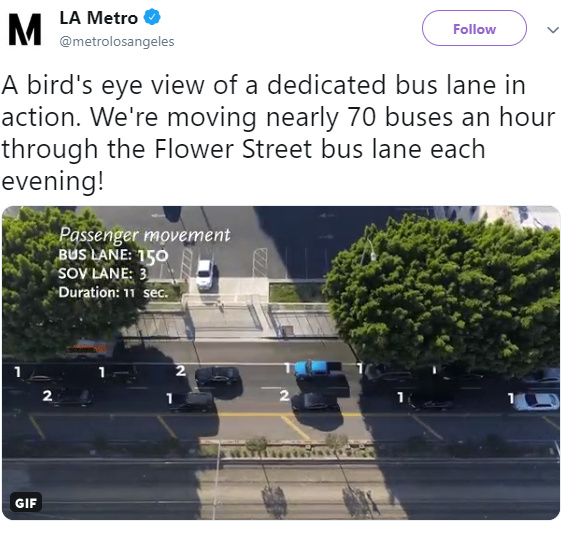
Thought this was a cool video/graphic on BRT in LA. Gives an idea what Raleigh BRT could accomplish.
Not sure how to paste just the video httpss://twitter.com/metrolosangeles/status/1153807208229957632?s=19

1 Like

actual link https://twitter.com/metrolosangeles/status/1153807208229957632

4 Likes

Sometimes, you wonder why some people bother pushing for ways to get a massive number of people between Charlotte and Raleigh (or across the Southeast in general) without flying.

Then, things like this happen :upside_down_face:

http://www.newsobserver.com/news/local/article233493292.html

Fun snippets from the article
5 Likes

Here’s an interesting video about, among the history of city planning methodology, how the shift from grids to culdesac neighborhoods impacts our ability to consider transit options other than the car.

1 Like