That’s fair - and I don’t disagree with you on that; investing in things that make bus-riding and driving safer definitely doesn’t hurt. But even then, I think the perception of safety goes beyond whether you are safe - or, in other words, everything can be okay for you as a bus rider, yet you can still feel like you’re in danger.
Click here for some additional thoughts and cool data.
As a matter of principle, I don’t like to dismiss people’s feelings even if their views don’t match the data. Sure, you’re around 28 times more likely to die as a car driver than a bus passenger (you could un-normalize that data using the numbers for billions of passenger-miles traveled in 2023 if you’d like). But despite this, there’s a big self-selection bias around perceived public transit safety based on if you already ride buses.
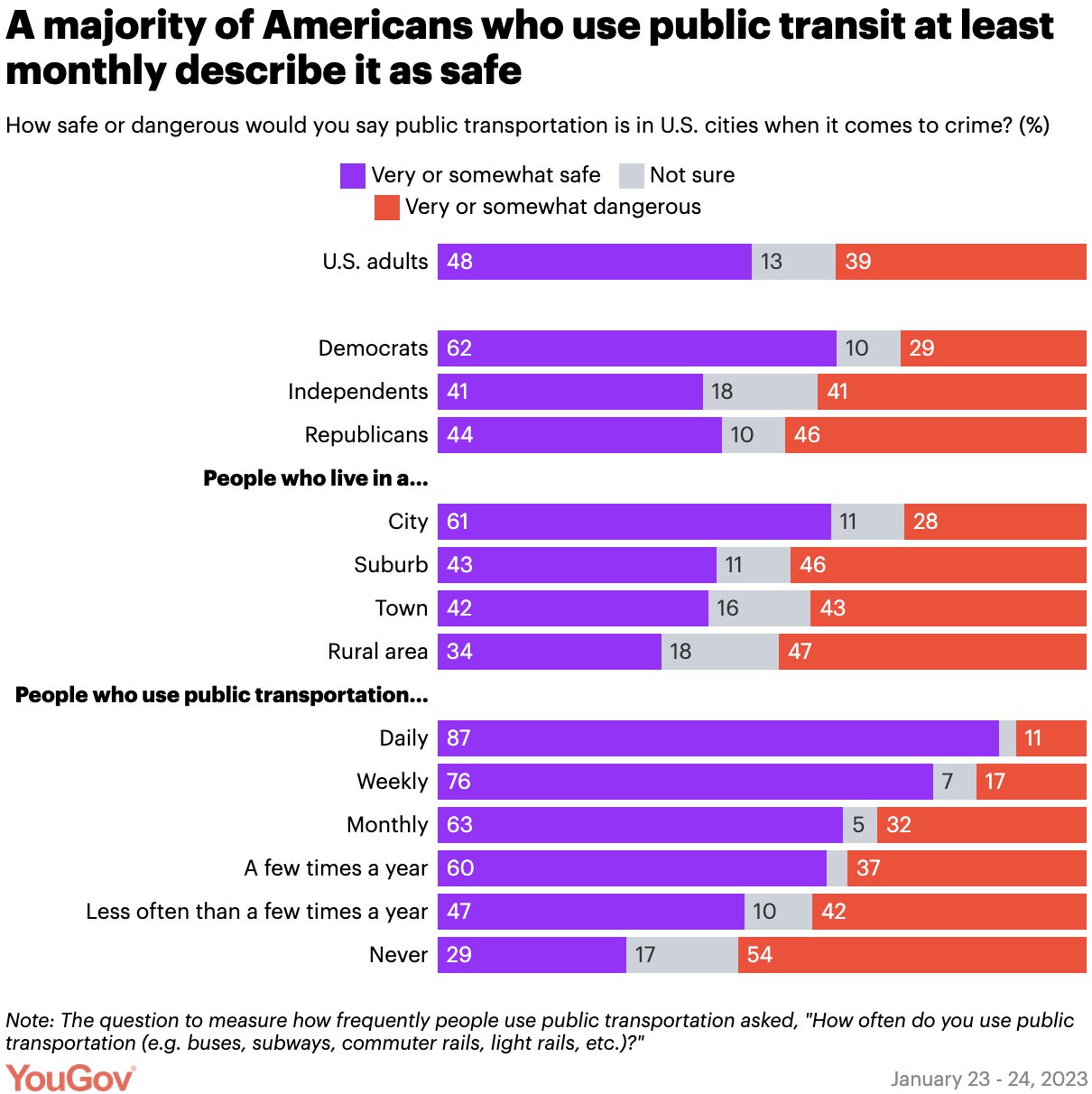
If you start asking why people feel too unsafe to take buses, I’m sure some people will mention obvious crimes that happen onboard (e.g. sexual harassment, drug use) - but if I weren’t a broke graduate student, I’d bet real money that a larger share of complaints would be about legally murky “antisocial behaviors” like people playing loud music from their phones, arguing with profanities, or smelling offensively bad while on board buses.
I know this is a common right-wing talking point, but more respectable outlets like the pro-transit think tank TransitCenter, Governing Magazine, Jarrett Walker’s blog (the transit planner who also consulted on GoRaleigh’s route redesigns), and this academic paper from the US Dept. of Justice recognize this as real problems, too. Plus, even in seemingly-unrelated places like this paper on barriers that people with disabilities face for using public transit, the idea of rudeness (in part of drivers or passengers) does come up as a subtle theme.
Besides, just look at the threads on public libraries or homeless people around Moore Square. Actual safety is a real concern in those places, too, but that’s not what drove the strong opinions behind those posts - and it’s those sorts of opinions that I think is relevant for the R-Line.
Yeah, absolutely. But I read the original question as an ask for ideas that the city could take (and measure results) in the short-to-medium-term that doesn’t demand massive, new investments right away.
Click here for some additional thoughts.
Raleigh Transit Authority advisory board members serve in two-year unpaid appointments, and I don’t want to blindly assume that Leo wants to serve multiple terms. So if we want our community to get things out of Leo’s work in a decent timescale, I don’t think it’s reasonable to just wait things out for 5~10 years - at least, as far as his goals are concerned.
Maybe this is pessimistic of me, but I don’t think I could convince most of my friends towards this point if I tried, and I’m having a hard time imagining that I’m in the minority. I could maybe make the case for taking buses to a small fraction of nighttime events or weekend bar crawls, but I’m not convinced that it’ll translate to any lasting changes in daily habits - and that’s what really matters, right?
To your last point, downtown Raleigh sorely needs bigger, longer-term infrastructure improvements like new sidewalks outside of downtown, more crosswalks, slower car traffic, traffic signal priority, and maybe even exclusive bus lanes beyond those for BRT. But, again, those things take time and money - not exactly something you want in tactical urbanism.
Wait, really? That’s news to me 
Even if that’s true for undergrads (especially if you live on-campus), that’s definitely not the case for us graduate students.
For those of y’all who didn’t know: the minimum guaranteed stipend for PhD students doing research for pay at State is $20,000/yr, which translates to like $9.62/hour. Try to convince me that you can survive a car-dependent lifestyle with that kind of paycheck 