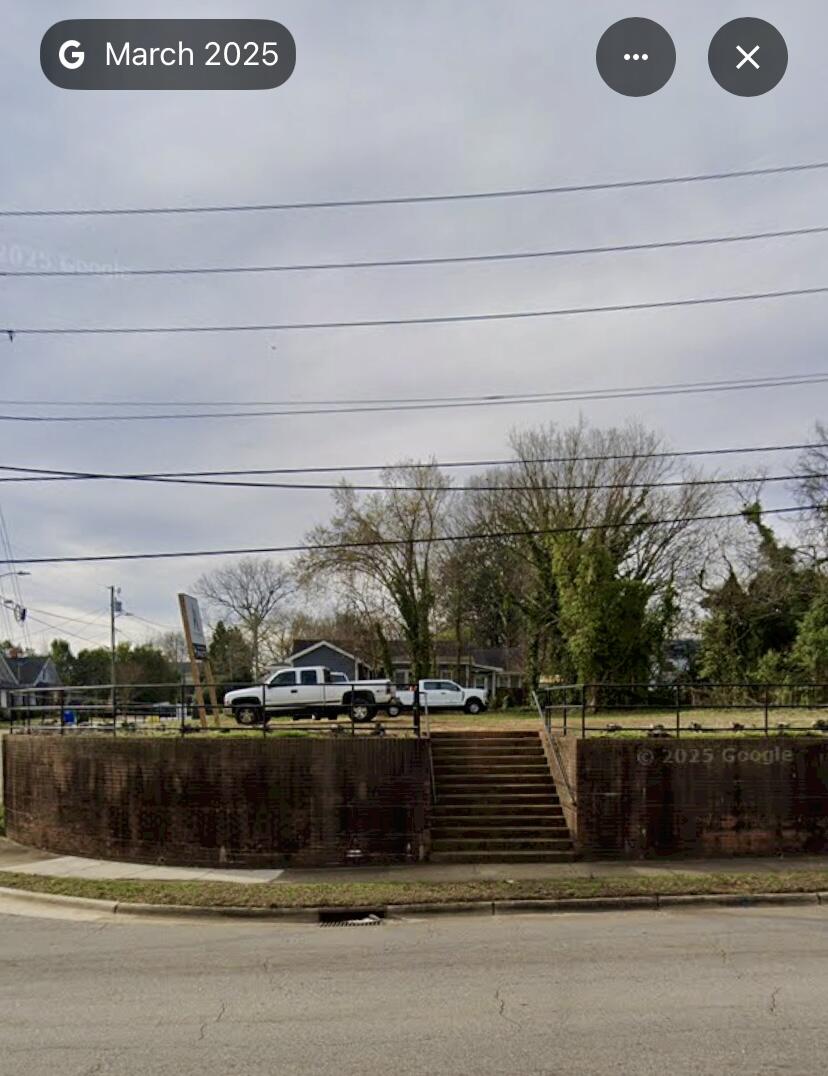
Can’t be used for anything else if the goal is the make the street better allow for excessive speeding vehicles. MLK is already 4 lanes + middle turn lane. Making the street wide and keeping structures 25’+ from the sidewalk is only going to keep an area from ever being pedestrian friendly. MLK will continue to act as a geographic boundary of the city limits because the city is basically encouraging developers to put in a townhouse project on a corner lot with 10 minutes walking of downtown.
Ligon Middle School vote was tonight. Option 3 was chosen which was to keep students in the current building while the system builds a new school on the site of the ballfields. The cost of the project would be $121.8 million, and the project would take 45 months. That option would also meet the goals that the first option would not be able to. It would move the campus from the top of the hill, which alumni say they prefer, to the back of the property, lower down. The new building would be elevated to address that concern. With this option, system officials say they also could preserve the history and legacy of the original school through design elements on the new building.
I did read the N&O story this morning, and saw this was the cheapest of the 3 options, and probably the safest too, but good golly, thats a lot of money. Fair point about Brady. I am just old I guess.
Through rose colored glasses, I think it’s supposed to work by having residents who don’t have cars. However, when I look at the satellite image of that site, the location is mostly sitting in a sea of low density residential and not on the BRT. I just question the pollyanna POV that thinks there won’t be at least as many cars as there are households, no less fewer cars than households.
Don’t get me wrong, I want to see a functioning city with fewer cars and fewer car miles being driven, but I don’t think that you take away parking and that manifests it to happen. We need to put fewer cars in places where one can reasonably live their lives with less time in a car. In other words, we need to stack density where we already have density and make our most walkable areas even more walkable. While this site is walkable to Shaw, townhouses with private rooftop decks doesn’t sound like student housing to me. Sure one can walk to the performing arts center, Chavis Park, and the office core of the city by crossing the multi-lane MLK Blvd. Other than that, I don’t see the daily walkable credentials that will allow the residents to effectively function without a car.
Car light and car free development needs to be paired with 15 minute city planning principles.
I generally agree with most of the points you’re making - except this is only 3 or 4 blocks from one of the proposed BRT stops on the Western route I believe (Wilmington and South). Additionally, Shaw will eventually either move forward with their plans to develop their campus commercially (or it will fail and somebody else will develop the campus), which will help - I think the developers here are thinking long-term and I’m excited to see it.
While we wait (for god knows how long), how is this supposed to function? Look how long the initial BRT line has taken to actually start construction. It is also not unreasonable to imagine it being 10 years before we see anything really happening with Shaw’s property.
Let’s prioritize stacking density where it can work today.
Also, are these townhouses for sale or for rent? Do we know?
Dude, we are both old. I remember the days when $250K or less bought you a huge house on the golf course in North Ridge. Now those houses are sold as tear-downs for over a million.
Am I missing something? It looks like there is a ton of unused street parking on Ellington and Bledsoe. Its not like residents are not going to be able to easily park nearby even if all the onsite parking was removed
@prettychill noted in a previous post that the on-street parking is already jam packed. I don’t have anything else to add to that since I am not familiar. That said, is pushing parking to the public streets a viable strategy for development?
And those jammed packed cities have robust and viable transit solutions in place. We don’t. We have some busses and comparatively limited service. This is why I think that we need to priortize stacking density where it can best work now.
As for removing parking minimums, I agree that it’s a great tool to have in the tool box. However, it has to be the right tool for the right project.