I did not know Wilmington has a Bowstring. I’m a big fan of Raleigh’s. Great place to watch football with good beer and pizza.
2 Likes
To add on to what @John is saying, the thinking here is that in the suburbs new growth was needed to pay the bills. Well Cary is running out, or has run out, of land so if your city’s revenue relies on growth, what do you do?
Well, you either keep growing but grow denser/vertically or you raise taxes. (or some combo of the two) It hurts more later (we’re talking decades later) when the honeymoon period of new infrastructure and new houses start to age and you get into the maintenance phase. Again, how do you pay for that?
Clearly it’s more complicated than that but that’s the general thinking. Cary is still new enough that the roads haven’t hit that “needs major work” phase yet.
At least, that’s how I see things anyway.
8 Likes
I think Ted has a valid point that it’s not a clear dichotomy of urban areas subsidizing suburban ones.
Suburbs cost more in part because you’re paying for more miles of asphalt and more miles of pipe that have to be maintained per capita. If a municipality composed of nothing but suburb is fine with paying that extra cost then… hey… that’s their prerogative. It’s a free country.
I don’t know if Cary’s finances are sound. I think they’re probably fine? But… you don’t see big projects from Cary quite as often while Raleigh has the money to renovate major streets like Fayetteville and Hillsborough, build Dix park, keep the Hurricanes around, expand the Convention Center, and has been much faster about expanding its greenway system. Raleigh has to balance those civic improvements with constant maintenance issues in North Raleigh… which is clearly a drag on the city’s coffers. Cary has the city park I suppose? In the end it’ll probably be revenue positive with the new residents it’ll add in its core around it. That was true for Raleigh’s Convention Center as well… I don’t know.
1 Like
The U.S. suburbs will be the end of natural forests (exceptions being mountain ranges)
The city park in Cary, and Dix/many Greenway projects, are all done with bond dollars. Not part of the regular Capex budgets. It will be interesting to see what happens in Cary when the majority of the Cary Pkwy ring reaches it’s second lifecycle (60-80 years old). It’s roughly 30-40 years old now.
5 Likes
As others in this thread have said, it’s subsidized by growth. Whenever there’s a new development, the infrastructure of that development is complete. The old developments begin to need new infrastructure after about 20 years. This new infrastructure is paid off by the taxes of the new neighborhoods that don’t need new infrastructure.
Essentially kicks the can down the road until you can’t grow anymore. Cary probably sees this too. They hired Urban3, a company that models where cities and towns are gaining/losing money.
6 Likes
Curious about whether this guy’s point is fully accurate, that Durham is better at building smaller homes than Raleigh:
1 Like
I’m never a fan of these tweets/tiktoks/youtube videos that cite micro examples as the basis for their macro arguments. I’ve seen examples where lots are converted to multiple homes in Raleigh. I’ve seen examples where teardowns are turned into mcmansions in Durham.
One of the cities is probably better, but his argument lacks proper evidence.
5 Likes
He may have a point, but I can’t take a comparison seriously between a house outside the Village District / walkable to NC State and one in an isolated part of Durham walkable to nothing. Or one that fronts Northgate Mall compared with Five Points.
1 Like
He’s referencing Durham’s small lot / small house option. I haven’t studied it, but at first glance it’s a more dense option than Raleigh’s current MM rules because it dictates a 2k sf lot size option (e.g. 40’ x 50’) in their urban tier zoning and RU of their suburban tier zoning. I don’t know how much of Durham is comprised of these zoning areas that allow the small lot option, but if we compare it to conventional development rules in Raleigh, the smallest lot is 4,000 sf in R10 zoning
https://www.durhamnc.gov/DocumentCenter/View/24691/Small-House-Small-Lot-PDF
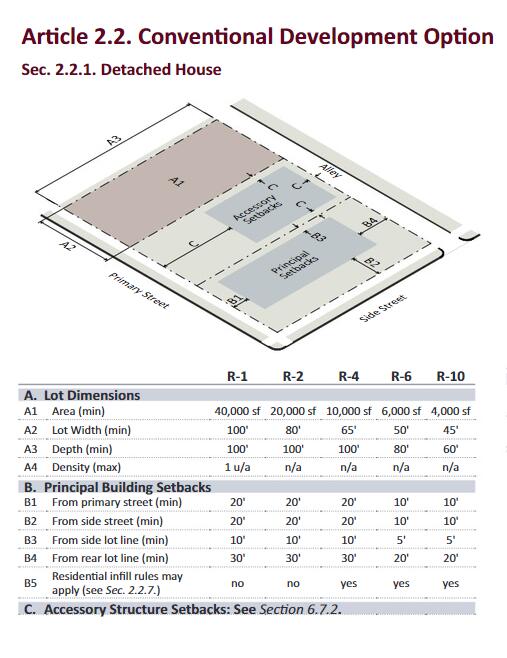
In compact development rules, even in R10 for a townhouse, the minimum lot size is 2,500 sf.
From what I understand, SCAD is proposed to fix some of the issues elsewhere in Durham’s code that prevents the successful implementation of their small lot rules in some cases.
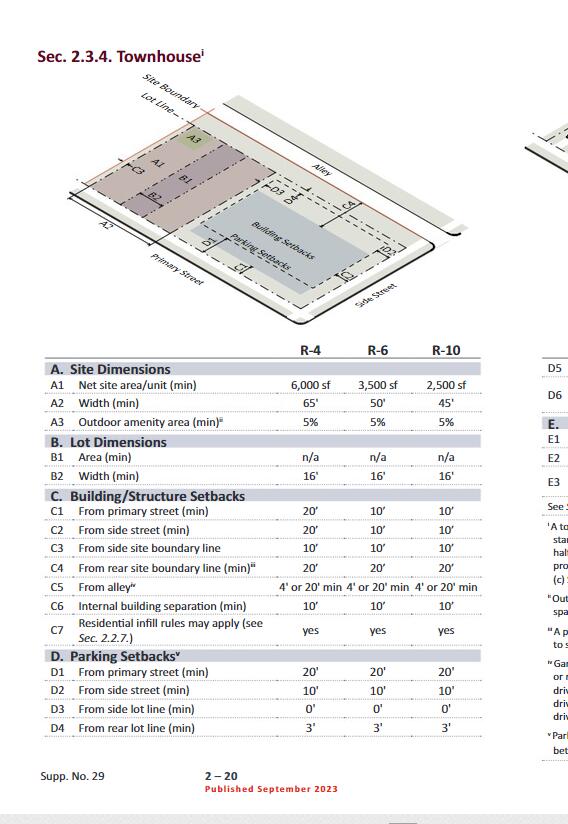
I should add I don’t know the full extent of the options under MM rules… like can you take a 4k SF lot in Raleigh and flag lot it leaving 2 non conforming lots? I think so?
4 Likes
I guess he couldn’t see through his smugness that there are actions being taken in Raleigh that are further densifying the city that’s already more densely populated than Durham.
3 Likes
Brother, that’s because that photo is from like 1956 lmao
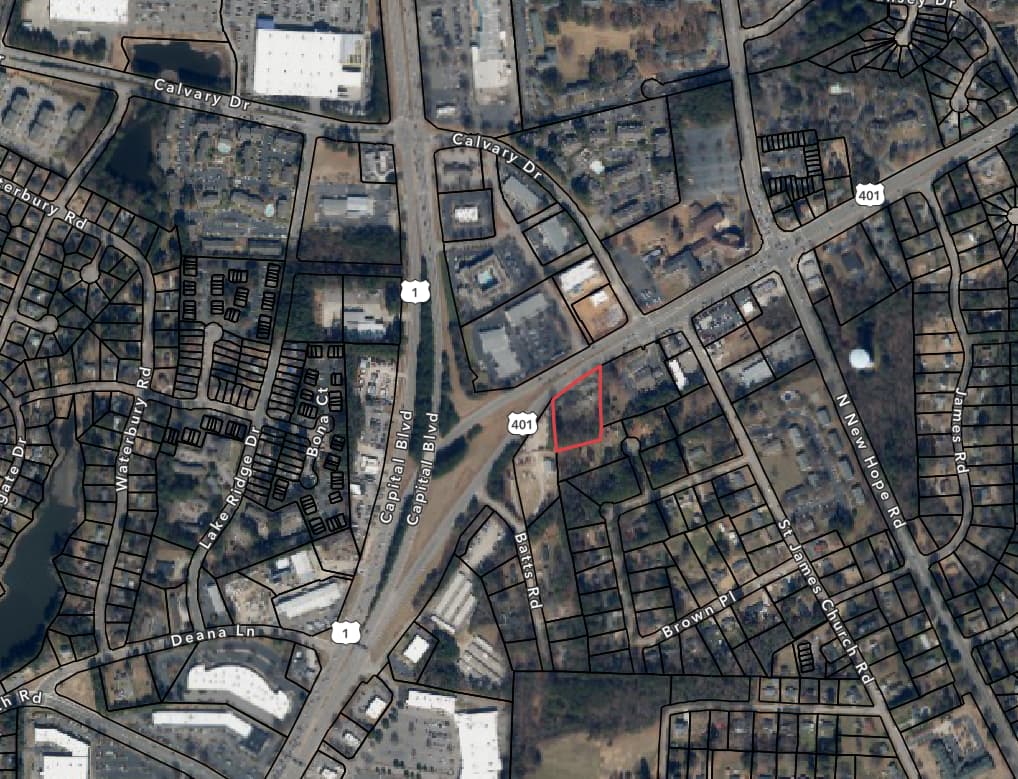
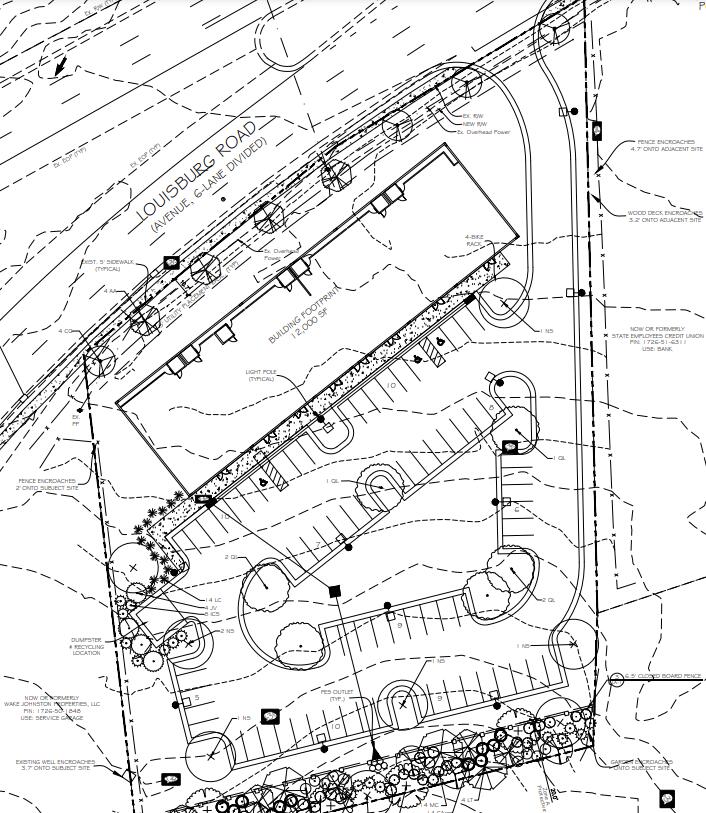
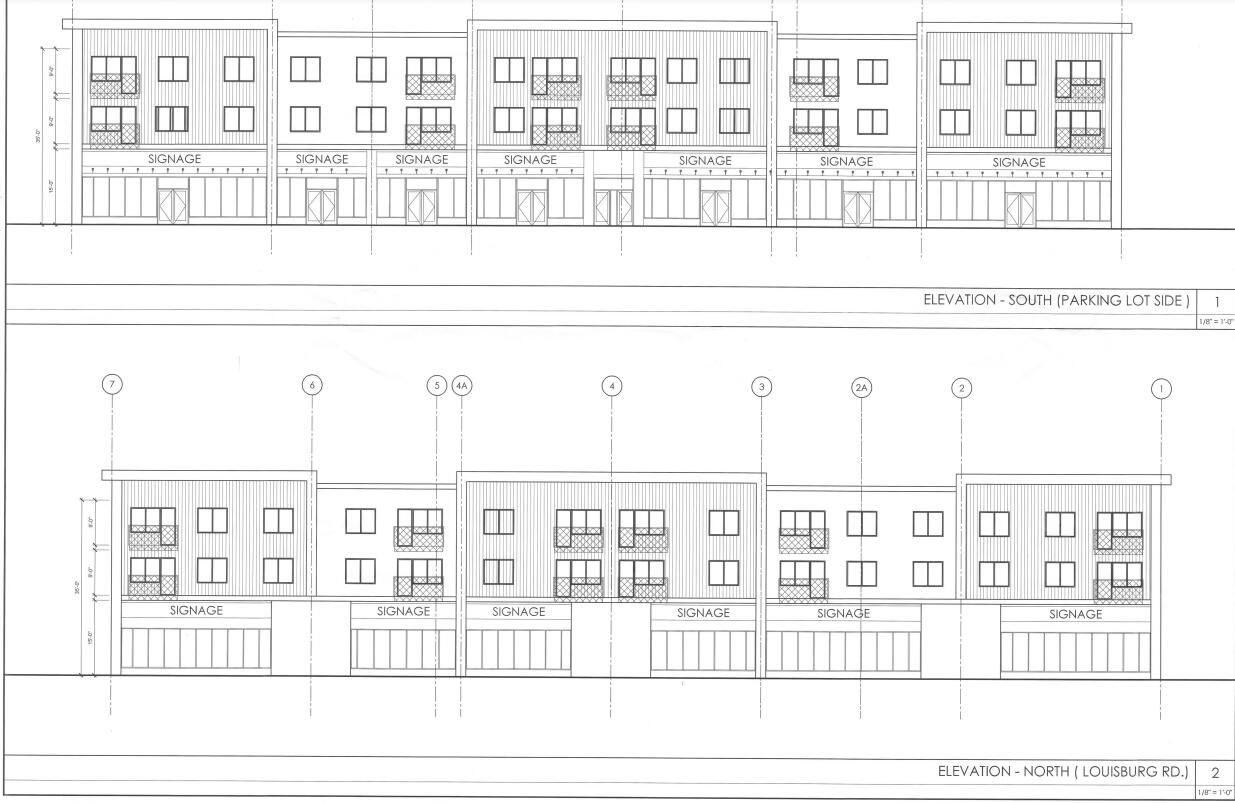
Interesting mixed-use proposed in North Raleigh. 2 levels of apartments above a retail strip. I’ve always thought this model could be replicated in strip malls all over the place to add incremental residential density.
4620 Louisburg Rd, 7 retail spaces, 24 apartments
20 Likes
It works really well at Oakwood Flats (Mordecai/Monroe) and this even has an extra floor of housing!
4 Likes
This is what McNeil Point, High Park, Gateway Plaza, Standard/Person St Plaza, etc should be.
14 Likes
YES!!! More of this please!!!
2 Likes
Yup, the Wegman’s shoulda been built with apartments on top. TJ’s, too.
18 Likes
That type of development is exactly what we need to start transitioning the inner city suburbs. Looks basically like what you’d see along a streetcar line from old LA or even streetcar era Raleigh
4 Likes
Not a bad development, but I hate that it’s happening on a busy high speed street that people would need to cross to get to the grocery store. If we can get that in a different area, then that would be nice.
2 Likes
