6 Likes
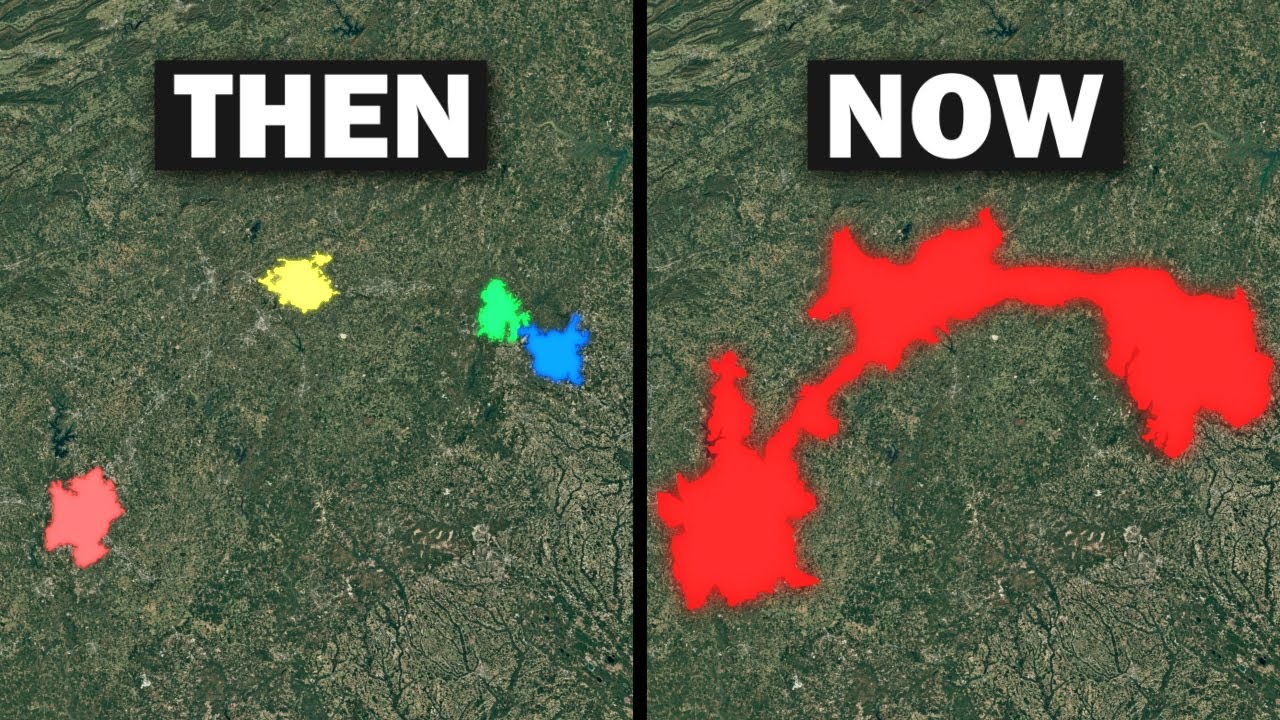
I love this picture, but Raleigh should do much better with urban development.
This city has literally reached the population level of much more renowned traditional cities. Wake county itself is the largest county in the Southeast outside of Florida and Texas. However, the insecurity of a certain privileged class see otherwise, leading to mediocre developments.
Where is the LRT or BRT? Raleigh is the densest city in North Carolina…
5 Likes
I agree, although it would not take much infill for Raleigh to reach an average place for a city its size. For me the issue is that we’re still seeing tons of sprawl in outer Wake County, and tons of new development in North Hills, and there are empty lots all over downtown that interfere with the pedestrian experience and make the place feel desolate and lonely.
It should be the priority of the city to find a way to fill those lots with anything. If private developers have given up on downtown (and it feels like after 2020 they mostly have), then the city should step in and become a developer and landlord and do what private entities here refuse to do.
6 Likes
The City can and should do seed commercial projects in DTR, and they can certainly do civic projects (city hall, Union Station, Convention Center, etc). But it’s not the role of city government to be a commercial developer. They don’t have the personnel, they don’t have the finances, and they don’t have the appetite for risk that’s inherent in commercial development. Nor does the commercial sector want the City in competition with them.
5 Likes
The city needs to be purposeful in shaping the personality of its downtown, and it’s something that’s been lacking for at least a decade. It seems to me that the last time the city really seemed to care about shaping its downtown experience was the decision to open Fayetteville Street to traffic and build a new convention center. Since then, it has seemed to me that the city was being led by late night business operators. Even with our new noise ordinance, the city capitulated to them with a carve out to allow more amplified noise in the one district with the most residents and the most potential for more robust urban experiences.
We need a vision for downtown that’s more than 10PM-2AM on Friday and Saturday night. That isn’t to say that we shut down the fun, but we need balance. Glenwood Ave. is all but dead the rest of the week, and especially daytimes. It’s a damn shame that the district is filled with residents who can walk to places, but with so few services and retail that can be accessed by foot.
6 Likes
We don’t have a “free market” for housing anymore. Rents are set nationally by a cartel of housing authorities, and this is why they have doubled in the past decade. A massive social housing program would restore the force of competition that was lost. This would also have impacts for retail. This has been implemented successfully in other cities, like Vienna, so there is no basis for saying “it’s not the city’s business” other than personal dogmas. That sounds like standard “can’t do” Raleigh attitude to me.
Raleigh needs to do something different and aggressive. There will come a time when the growth ends and when that happens whatever has been built will be locked in and it will be much more difficult to bring infill to downtown after that.
7 Likes
First, a municipality in NC cannot do anything it chooses. Its powers are granted by the General Assembly, either by law or by charter. As we are seeing in other contexts, the General Assembly can narrow those powers anytime it wishes. It’s no accident that the even the small-scale (compared to Vienna) Raleigh Housing Authority was created directly by the General Assembly, separate from Raleigh the municipality. Good luck trying to get the General Assembly to go along with a massive social housing program run directly by the City.
Second, there’s the question of money. The City already has a difficult time finding money for small-scale affordable housing programs. To make a dent in the problem you describe, there would have to be a $500M+ bond package to voters just as a starter. I don’t know that it would pass, especially since two-thirds of voters live OTB and don’t care much about the needs/desires of people to live downtown. They do care about people who work downtown – thus the passage of the transit tax – but that’s a different question. Historically, the Viennese and Austrian authorities bootstrapped their program with additional taxes primarily aimed at the fabulously wealthy. Raleigh doesn’t have that taxation power or that kind of royal wealth.
VIenna is a big success, but if you want to see some less successful social housing programs, visit the former Soviet bloc cities.
I am hopeful that the City will get on with BRT. Downtown needs job growth, and it’s not going to come from government. Besides, the NC economic development people are busied out trying to bring manufacturing jobs to rural and small town areas.
3 Likes
after a recent visit back…by bike and car…i noticed the HUB on hillsborough i think? 600+ units and 550+ parking spaces, a new large senior living place on Whittaker Mill…and a few others, raleigh could be a paradigm change for frequent transit i guess….at most a 10 percent reduction in vehicular traffic with transit infusion? im not sure of the peak vehicular max of some streets downtown…but as a longtime user of transit in Raleigh,maybe its the way to go. i dont know.
The HUB will be exclusively students, and there will be more walking and biking in its sphere than anything else. The cars that will be parked there will certainly be used, but it won’t be the sort of overall car usage that one would expect from a project that isn’t walkable to the university & the Village District.
6 Likes
I found this chart of Charlotte’s population and land area between 1980 and 2014.
Note that Raleigh’s current land area of around 150 square miles is similar to Charlotte’s in 1985 when they had about 350K people. That’s 150K fewer than in Raleigh today.
Also note that Charlotte didn’t cross 500K in population until the city was well above 200 square miles in size in late 90s.
While growth was certainly happening in and around Charlotte, the chart definitely tells the story of how Charlotte’s growth to its current population that’s pushing 1M was largely enabled by aggressive annexation in the 30 years between 1980 and 2010. It’s true that Raleigh also annexed aggressively in the years prior to 2010, but Raleigh shared annexation with more towns surrounding Raleigh, who also had growing ambitions of their own. Certainly Cary was a major blocking force to Raleigh growing by annexation on Wake’s faster growing west side.
With the lion’s share of the county within its control, the City of Charlotte has been able to establish more nodes of growth within its boundary, and has been densifying its limits in the post land-grab era post 2010. While both cities have more slowly annexed land since that decade, both have accelerated their densification as well. One of the big differences between the two cities is that Charlotte has far more of their newer suburban areas within their city limits while a larger share of Raleigh’s newer suburban development has landed in edge towns around the city itself.
While both cities have been densifying, Raleigh remains more densely populated across its entire limits when compared to Charlotte. While Charlotte has a larger urban footprint than Raleigh, it also has much more land area dedicated to low density suburbia than Raleigh.
Lastly note that I tried to find a similar chart for Raleigh, but came up empty handed. If any of you have one for comparison, I’d love to see it.
7 Likes
Charlotte had 451,000 people when it secured an NFL team in 93!
2 Likes
Yes but the Charlotte CSA at the time was about 1.3 million and clearly headed up. The real question is how many people live within 100 miles of the stadium (ticket sales) and how many viewers are in the TV market. Nobody cares about the population of the city itself. The city of Atlanta exceeded 500K residents only a few years ago… still less than 10% of the CSA.
1 Like
Charlotte was starved for sporting events to attend in their metro. The Triangle already had 3 division 1 college football programs with well over a 100,000 seats among them at the time. Even today I don’t think that the NFL would thrive in the Triangle because there’s too much competition from State, Carolina, and Duke.
7 Likes
Agreed, an NFL team for the Triangle is not in the cards. Maybe MLB (there’s another thread about that) although it’s far from a certainty. The NFL would be looking at London, Toronto, St Louis, San Diego, San Antonio, …
2 Likes
Actually I think NFL could work very well despite conventional wisdom. If you look at the size of the states that get multiple teams… NC is in that range now. It is the 9th largest state and there is one smaller state that already has multiple teams. It is also true that the Panthers serve two states representing a region more populous than PA.
It would draw from the rising talent in college football. Some fans would get a chance to continue following their favorite players. A football season doesn’t have that many games anyway. If one school is having a bad year (which always happens) then it gives those fans something else to root for. Having a rival team competing against Charlotte could be a lot of fun.
I don’t think it’s gonna happen because there are many other good candidates for expansion but maybe it should.
4 Likes
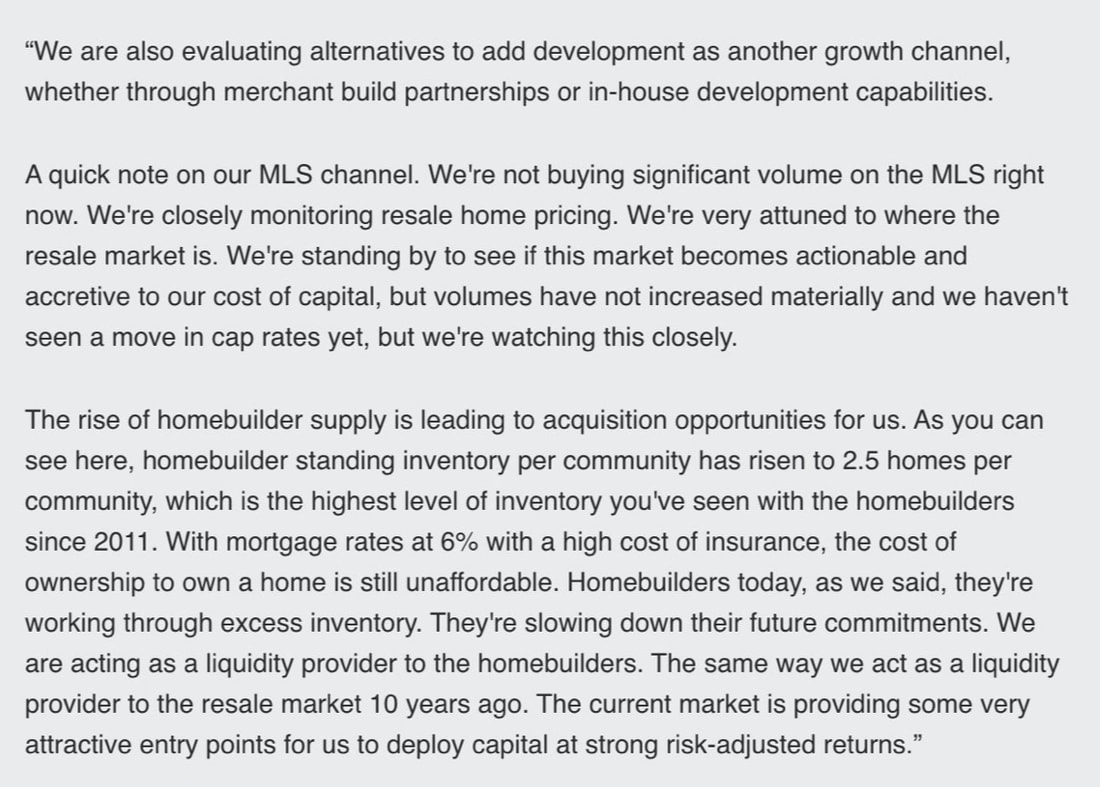
Would be interesting to get forum members thoughts/comments on this. Right now there is huge capital flowing to institutional single family rentals (occasionally townhomes) and commonly referred to as BTR product. This is driven by a lot of factors, but as Invitation Homes discusses, housing is unaffordable so this is a way to securitize rental income. So my question is, if people are going to be renters for life, are they more likely to pick an urban or suburban product?
2 Likes
I have not been a renter for life, and haven’t rented since I was 26 years old when I bought my first starter suburban condo. However, I can imagine what I’d do if I were a renter for life.
It would seem to me that one of the benefits of being a renter for life is that it would be easier to move among a variety of housing products based on my stage of life and what my personal life demanded. For example, if I had school age children, I’d likely choose housing based on school assignment, and I’d likely choose size over location if that was the determining factor. When I was done raising kids, I’d likely choose a location based on my changing life needs and requirements, likely downsizing and focusing on quality of space and quality of experience for me as an empty nester. I suspect that I’d continue to move as stages of life demanded a different housing solution.
3 Likes
Interesting question. Certainly we are in a period of renting nearly everything, something younger people adopted knowing or not - from their music and movies to leasing cars or using ride share. However, I feel there maybe a growing backlash as folks learn that leasing your music is only good till there is change in policy, the company goes under and you lose everything, or your monthly rate is jacked up so you can’t afford it. I still own a healthy cd and record collections!! No one will ever get my nearly pristine copy of Beauty and the Beat.
I think this could apply to housing. With up front cost being so expensive, renting certainly can be a wise fiscal move. But at what point does that become to unstable? John’s points about moving as your life changes, relatively easily as opposed to a sale and new purchase, are well made. Certainly there a lot of folks stuck with too much space because of price, etc. I rented for a long time in graduate school and afterwards. I actually tried to move once and my landlord lowered my rent to keep me, lol. I don’t think that happens much. But for me it always felt unstable, unrooted is probably a better word. The stability and ability to do what I want to a place, and to the yard, made me long to own a place, which I was able to achieve once I landed stable, long-term employment.
It will be interesting to see how this plays out, but I do not think long-term renting would ever make me happy. But heck, for this group, I am old geezer and I maybe out of step with the younger crowd.
3 Likes
I’m also old but not as old as you. I would hate to still be renting a home, I also hate this trend of rented music. My digital music is on my computer and backed up in 2 places in the cloud. I do have plenty of CDs though who knows if they work. The same with movies. I also bought my car at the dealership so no payments, much less leasing. I also can’t imagine paying the high rents people do now for an apartment where you get literally nothing.
3 Likes
It seems to me that there are more and more things that available to us “as a service”. This idea of being a renter for life makes wonder if anyone is going to look at housing as a service? And, if they looked at it as a service, how would they set that up, and how would it work?
3 Likes