Paying a subscription for your heated steering wheel and seats is the ultimate in this insanity.
1 Like
“As of service” is definitely hitting nearly all categories these days.
When I think “ownership” - it’s keeping the risk/upside solely to those with possession, but it doesn’t remove the expense of “holding/having something” because you still are typically responsible for ongoing cost (CD’s collections not so much).
With renting, you are basically removing the risk and not partaking in the upside, in return you get the predictability and possibly the flexibility. A lot of residential leases are yearly, but then there are commercial leases that can be decades, and then ground leases that go to nearly 100 years.
While unlikely, a 10-year home lease with fixed annual increases could provide a massive advantage in stagnant markets because it allows you to cap your housing costs while offloading the risk of declining asset values. We are very fortunate that Raleigh is experiencing a massive population boom causing rapid appreciation, but as history has shown - other places in the US aren’t so lucky.
6 Likes
i was born in raleigh, late 60s. folks had been here since the late 40s and early fifties via the school for the blind and state govt jobs….sure, much different situation than today. hopping to a different neighborhood (based on in our case transit changes or work locale…still within the beltline or just ouside of it) via a house sale at the time was easy….quick sale and generally quick buy. if planning changes and employment scattering has changed all that, im not sure.
1 Like
Today the city council approved the purchase and protection of 277 acres in Granville Co. (just north of Wake) by buying it from a family who’s owned it for hundreds of years. The land is in the watershed of Falls Lake, and protecting it contributes to our water quality. I fully support this action. In total, the city has invested nearly $13M over time protecting nearly 12,000 acres over the years.
That said, we should remind the city council that protecting watershed land where we can is intrinsically connected to developing densely as the yin to the yan of good city government decision making. While not an urban development boundary, the city protecting this additional land today requires growth to either come through densification, suburban development that avoids/leapfrogs beyond the protected areas, or a combination of both. If we as a city can see the value of buying land that’s outside of not only our city limits, but also the county limits, then we should be motivated by the value of densifying land that’s already under our control.
12 Likes
I have a friend who says they’re “pro‑rural” precisely because they’re pro‑urban. Their view is that if we focus growth within existing boundary and build upward to increase density, to make better use of developed land, this allows us to avoid sprawling into untouched rural areas. In their mind, strong, compact urban development actually protects open landscapes, allowing those natural spaces to remain unspoiled for people to visit, explore, and enjoy!
27 Likes
Saw this analysis about underground infrastructure:
“In low density each household has to proportionally pay for the pavement, utilities, hydrants, valves, etc to service their home. That can be anywhere from 100-200 linear feet per home for a typical subdivision.
In medium density you have to upsize waterlines from 8" to 12"…maybe even 16". But the linear feet per household is much lower. Maybe even down to 10-20 linear feet per household. So you have double the cost of infrastructure but 10x the people to pay for it.
Then in high density, all the infrastructure sizes double underground (24" and 36" waterlines) but the density increases to as low as 3-5 linear feet per household…maybe even lower. Another 2x cost in infrastructure but 3-4x in people to pay for it.”
10 Likes
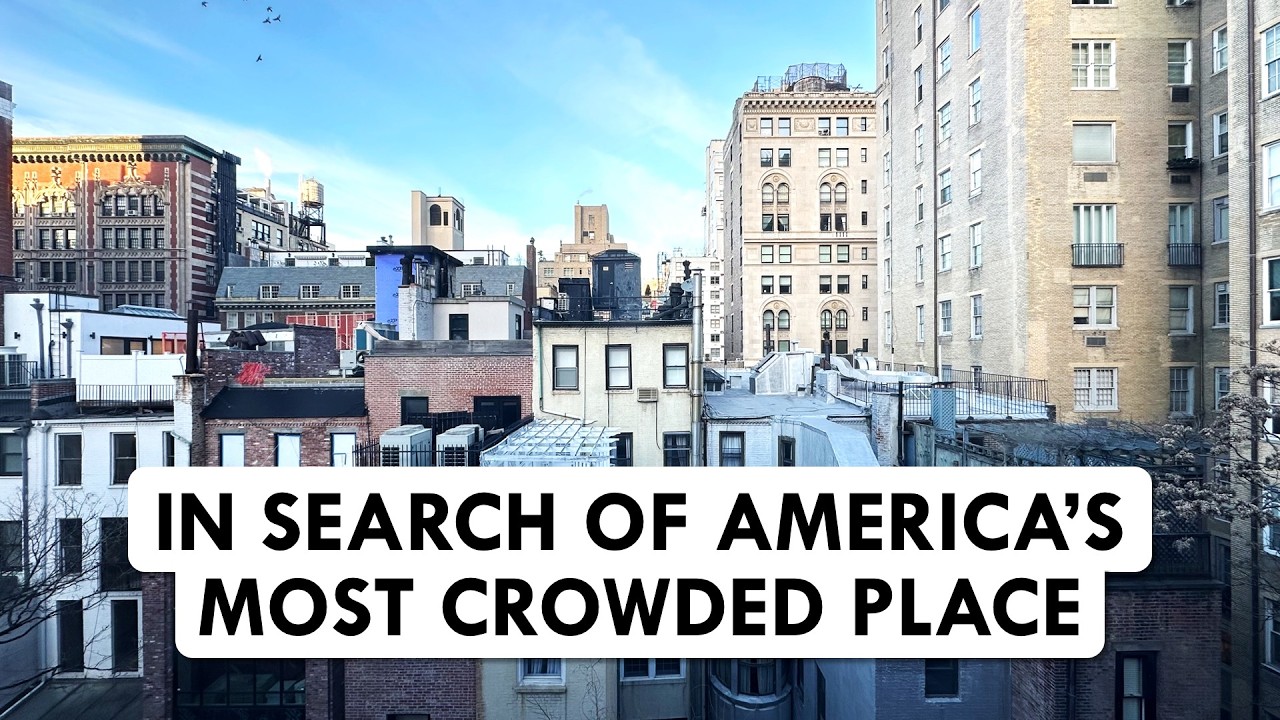
Look where the most “mid” census tract is.
5 Likes
This does a solid job of covering why Raleigh is shaped the way it is:
5 Likes
Nice summary article. Prior to the 2013 UDO Raleigh had perhaps the most difficult zoning ordinance in the Triangle to navigate. Utilizing the Municode format it was highly legalistic with seemingly every provision modified by two other provisions located in other sections of the ordinance with spotty cross references.
The Planning Director from the mid-80’s to the mid-aughties, George Chapman, was prone to stuff some of the more modern code revisions such as stormwater management into the Comprehensive Plan document rather than try to modify the zoning ordinance and just enforced those sections like code.
The UDO and the design manuals that followed were a much needed breath of fresh air.
2 Likes
I’d seriously like to explore the data behind the White Flight that this article claims for Raleigh’s post WW2 past. While my family has only been in Raleigh for 52 years, I never got the sense that Raleigh’s sprawl was due to white flight, rather rapid growth largely due to domestic migration. Many of the desirable ITB and downtown adjacent neighborhoods of today were desirable 50 years ago as well (and have only gotten more desirable). What I do know is that Raleigh certainly participated in gentrification and displacement over many decades, and continues to do so with the rapid gentrification of East Raleigh. Those in this community are also aware of how the Black, working class Smoky Hollow neighborhood was obliterated by the construction of Downtown (now Capital) Boulevard post WW2. Nonetheless, these are not necessarily stories of White Flight.
4 Likes
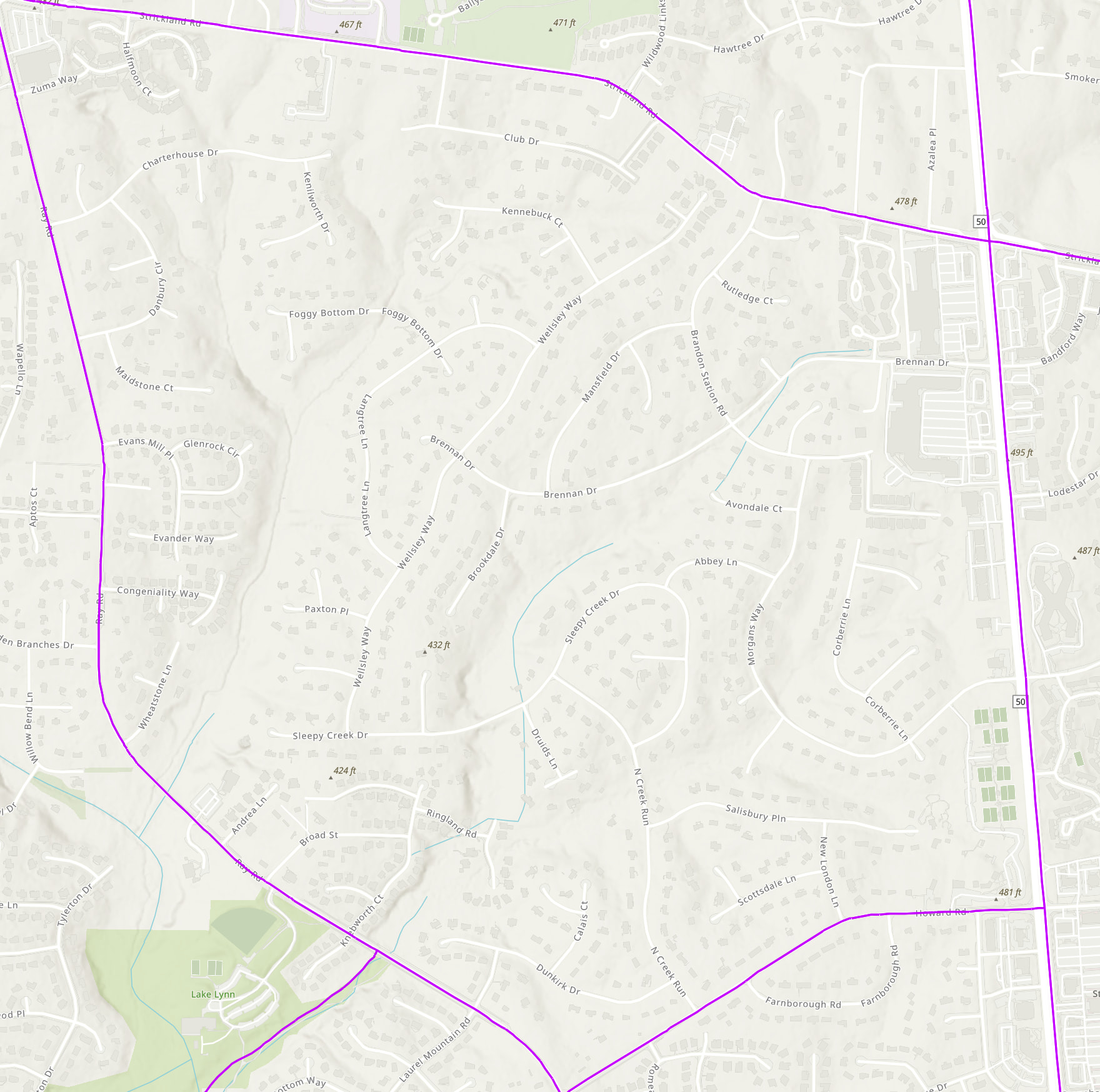
Interesting, but it’s “mid” only in terms of density. Median household income is almost double the national average. Census Tract 537.12, Wake, NC - Profile data - Census Reporter And there’s clusters of higher density at the edges including townhomes, an apartment complex, and some new developments on tiny lots (~0.1 acres) that balance out the big homes on giant lots in the center.
in my family’s case…a house built in 66 or so in robinwood…illeagnes dr area. had some subsidized housing put in at the end of a cul de sac….traffic and crime did increase (gunshots litter etc). my folks depended on transit for employment. anyway, we ‘fled’ to inside the beltline into longview. mid 70s on the flight.
1 Like
Most of that tract was developed 1965-1990 before the City’s water and sewer system reached it. Thus, wells and septic fields. Some are per-home and some are operated by a private utility. Density has increased since City utilities reached the tract, but in part that represents the much higher value of land today.
The video was only about population density. Had that Census tract been downtown or immediately adjacent to it, it would have been embarrassing, but it wasn’t. It wasn’t a surprise to me that the most “mid” density tract was in a lower walkscore, car oriented, suburban development model part of the city. I think that he was just trying to show a place that’s highly representative of where most folks live in this country.
4 Likes
A bit OT… no one really knows how the sprawl vs density argument will play out here, but the Triangle will never turn into another metro DFW (currently 8 million). There’s not enough fresh water supply for the Triangle to sustain that many people. Numerous reservoirs had to be built north of metro DFW for raw water. The lay of the land there is conducive to large reservoirs. Not so here. The only way the Triangle gets that much raw water is tapping into the Roanoke River, and Virginia has already indicated they would fight that tooth and nail.
1 Like
Honest question here. I understand that there’s a limit to how many residents our area can support based on available water resources. What happens if/when we reach that limit?
What could the city or county do at that point to manage or slow additional growth? Outside of denying 100% of development applications, what other options would they have?
There are plans from a while back to build another reservoir in eastern Wake County. There isn’t much publicity about it, but it has been in the works for nearly 30 years now (note attached article is from 2012…) For whatever reason, we haven’t hit the threshold for it to start progressing.
Also, Sharon Harris was built to house 4 (FOUR!!) reactors, but it has only ever had one. Again, the plans for massive expansion of this area were in place a long time ago, but we haven’t hit the threshold to expand. I seem to recall talk about adding the second reactor to SH, but they would have to raise the lake level to provide enough water for cooling, which would mean US-1 would also have to be raised or rerouted. Also, from what I understand the permitting process is many years long before they could actually bring another reactor online. TMI threw cold water on nuclear power in the US, but IMO it is time to revisit it.
Sorry @dtraleigh this may should move to the Sprawl thread?
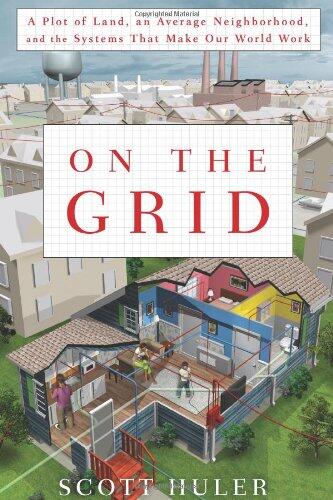
Edit: Here is a book written by a local author about infrastructure and he uses Raleigh as an example. It is light hearted and a good read for anyone interested in the infrastructure/utility side of out cities.
3 Likes
DFW’s combined metro is now over 8.9 Million, and while it would take many, many decades for the Triangle to get there, I don’t think it’s out of the question. DFWs framework is not dissimilar to the Triangle with two core cities and lots of fast growing, large, suburban sprawl around it. If water can be found in north Texas, then surely a water solution could be found for the slightly wetter Triangle area. Many in this community with 4 or more decades of expected lifespan left are surely going to see the Triangle push well over 4 million, and maybe 5 million.
4 Likes
Additional context: The CAMPO region, primarily encompassed by the Raleigh MSA, is expected to have 2 million more residents by the year 2055.
Raleigh’s problem (and Durham’s problem, too) is that the Neuse River watershed doesn’t extend very far upstream. Consequently, the size of the watershed that serves us is relatively small. Falls Lake is already in place and cannot be enlarged, although the City has been trying to persuade the USACE to redesignate some of the flood protection storage for water supply. (This has political implications downstream.) The Little River reservoir, if it’s ever built, would be smaller than Falls Lake and would provide for only about 10 years’ growth.
The Trinity River watershed from Dallas upstream is much larger than the Neuse River watershed upstream from Raleigh. Long-term, Dallas has potential access to the Red River watershed although expensive desalination would be required. (The Red River is, basically, a salt water river.)
So, absent a really long pipeline to import water from the Tar River basin or the Roanoke River basin – a political challenge as well as an environmental threat because of inter-basin transfers – Raleigh is in a tough spot. There’s water in Jordan Lake but the municipalities that draw from Jordan Lake and downriver jealously guard it – and it would be another inter-basin transfer. What Raleigh could do, if necessary, is recycle its treated sewage. Some cities already do that, either deliberately or accidentally because they’re near the mouth of a river that has a lot of treated sewage.
3 Likes