The other thing is this affects the riders of the busses as well. They deserve a safe environment and experience. It is so detrimental to many underserved communities who rely on the busses, and to downtown as a whole. It cannot continue this way.
12 Likes
It needs to go away I hate Moore square never dealt with so much second hand smoke there than I did before.
2 Likes
Smoking isn’t allowed in public parks in Raleigh.
I do get the issue of Moore Square bus station having a very poor design - not operationally efficient, too small, and difficult to police. It’s overdue for a replacement.
On the other hand, I haven’t used it regularly for about 20 years, but I don’t recall it being that bad back then, so guess it must have gotten worse? Even back then it was a bit rowdy at times, and there were often people lingering there who don’t seem to be there for the purpose of riding the bus. I would say I did sometimes have an uneasy feeling there, especially late at night, but maybe not any worse than walking down the sidewalk downtown at night, and probably not outright unsafe?
2 Likes
must not happen then
1 Like
I end up at Moore Square Station to make a transfer pretty frequently, and while I do think that the danger is generally overstated, I could easily understand why someone who’s not a large adult man like me would be uncomfortable. 99% of folks there are just trying to get to where they need to go, but there’s always some loitering around the entrances, and I’d say the police are there “dealing” with somebody during maybe a fifth of my visits to the station. The loiterers definitely tend to smoke and yell and make people uncomfortable. Otherwise, it’s really just that it’s cramped and crowded and dirty. But I myself have rarely felt unsafe.
4 Likes
I just want to clarify that the issue is absolutely not the riders at all. They come in, they make a transfer, and they leave.
This is a situation driven by bad actors. It’s a bottleneck for a large number of people. bad actors take advantage of the poor design of the station to do bad activities.
It’s a great spot for drug dealers. Large number of people come in and make transfers. Drug addicted people follow the dealers and make an exchange when they can get the money for it. I’m sure some riders are also customers, but this would be the vast vast minority. IMO, this is also what leads to a lot of the begging on Fayetteville Street.
Just wanted to clarify that the riders aren’t the issue. The bad actors are. I’ve heard many of the dealers live in Skyhouse.
This obviously isn’t the only thing that causes issues. But, the bottleneck incentivizes this and many more things.
5 Likes
Adding the platforms under the parking deck and removing the center platforms close to Hargett St really detracted from the station experience. It used to be a relatively pleasant public space, or at least I didn’t feel the same unease using the station as a middle schooler as I do feel now as an adult.
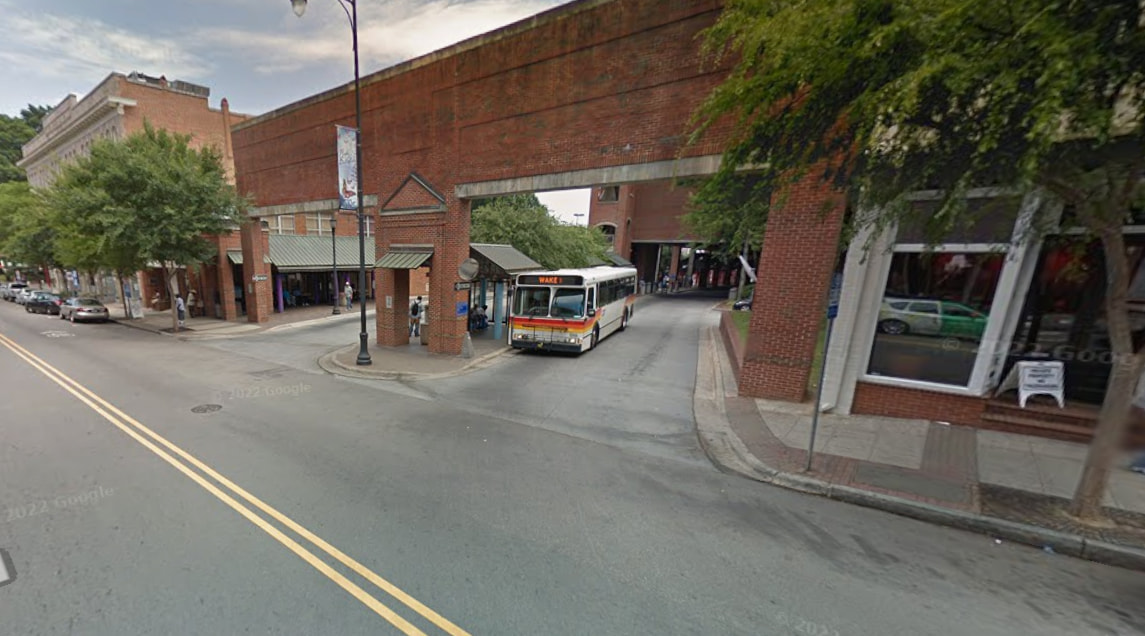
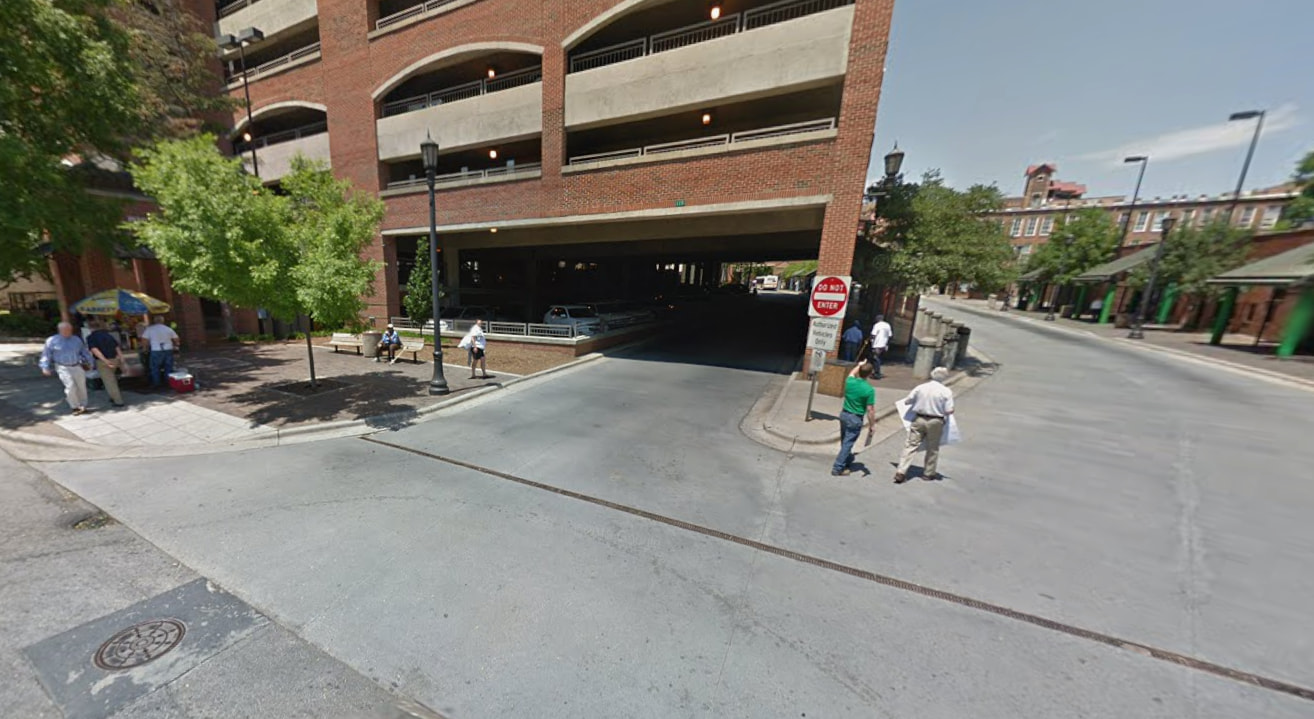
(This Sabrette stand sold me hundreds of dollars worth of Honey Buns, I’m sure)
Too late now, but if GoRaleigh had chosen to decentralize the transfer points downtown instead of trying to increase capacity at the station, I don’t think we would be seeing the same degradation of station experience.
I like the idea of a transit mall along one of our east-west streets that some have suggested in this topic already. Hillsborough between the capitol building and Dawson doesn’t have a lot of traffic now so it wouldn’t be the end of the world to close it off to most thru car traffic. Pair it with a new modern facility that replaces the municipal parking deck for longer or less frequent layovers.
Alternatively, if we have to keep the station where it is now, I would redesign it to be more easily secured (close off the entrances from Wilmington and Blount with doors or gates) and place a transit mall on Martin street for quick transfers between Moore Square and RUS Bus.
6 Likes
Even then, most people wouldn’t want to voluntarily put themseleves in that environment. I also don’t want to be somewhere where someone could go around and threaten random people with a mache… wait, that actually happened.
1 Like
Ok. So instead of improving and updating the area. We should just get rid of the people? Yep this is xenophobia 2026.
Much of what you’re seeing are the churches supporting poor people in the area. Should we get rid of the churches too?
3 Likes
I think that folks here are addressing unacceptable behaviors, not who the people are. IMO, it’s perfectly fair to not accept behaviors that are threatening or cause physical harm.
Also, xenophobia refers primarily to immigrants/foreigners. Xenophobia is behind the panic and aggressive actions of ICE and folks like Stephen Miller. I don’t know that I see that sort of narrative here with regards to this topic.
6 Likes
Big dawg, legitimately asking here… what are you reading that suggests anything you’re insinuating? LMAO. Every comment is in support of “improving and updating the area” regardless of the differences in opinions of how to do it. And nobody has suggested “get[ting] rid of the people” - some have certainly suggested moving the station and thus moving the congregating area for the large number of vagrants who gather there with no intention to even use a bus, but even then I have not seen a single commenter suggest getting “rid” of people full stop. And to echo @John - you keep using that word (xenophobia) … I don’t think you’re aware that you’re not using it correctly. Xeno = alien/foreign, phobia = fear. Fear of foreigners.
Homeless people ≠ foreigners lmao
6 Likes
even smaller markets as i recall in reno nv did the same within a certain time frame.
1 Like
2 Likes
People are always so quick to point to the amount of crime on the city busses, but I’d be curious to compare the rate of deaths of public transit users vs people driving their own vehicles.
5 Likes
I wonder what the odds of being assaulted on a bus are compared to driving my car
1 Like
Absolutely. It’s a biased article (car bias, what a surprise) that offers no context and does this passive aggressive reporting to do “analysis” to paint some picture that transit overall is unsafe. I mean, given all the issues we’ve discussed right now with transit, to the best of my knowledge, there were zero deaths in 2025 related to transit. That should be an easy comparison when you put it up against Raleigh car crash data. Also, the incidents taking place at GoRaleigh, if you talked to people, COULD be argued that it has nothing to do with transit. There are people hanging out there and not riding the bus, just causing problems.
Let’s see what Claude came up with real quick which is by no means scientific:
What the article actually says (and doesn’t say)
The key numbers from the piece: 112 violent crimes occurred at the GoRaleigh Station on South Blount Street in 2025, with 96 classified as assaults. Notably, Raleigh told WRAL it does not track on-board incidents in that way, so the article is really only talking about the station itself, not the system. Durham’s transportation director provided the more useful framing: roughly two issues per every 100,000 riders. wral
Now let’s do the math.
Transit side:
- GoRaleigh had about 7.99 million boardings in 2025. Wikipedia
- The article reports 112 violent incidents at the station. We don’t have on-board numbers for Raleigh, but if we borrow Durham’s rate of 2 per 100,000 as a proxy for on-board incidents, that would add roughly 160 on-board incidents, bringing a generous total to around 272 incidents across 8 million boardings.
- That gives you roughly 3.4 incidents per 100,000 boardings, or about a 1-in-29,000 chance per trip of being anywhere near an incident.
Driving side:
- Raleigh’s population is around 500,000 to 517,000. World Population Review
- In 2022, Raleigh experienced 15,905 car accidents, resulting in 6,247 injuries and 62 fatalities. Steventmeierpllc More recent data suggests similar or slightly improved numbers.
- The average American driver makes about 2.44 driving trips per day. AAA Foundation for Traffic Safety With roughly 94% of Raleigh’s adult population driving, that’s something like 400-420 million driving trips per year in the city.
- That works out to roughly 3.8 crashes per 100,000 driving trips — and that’s just the reported ones. Minor fender-benders frequently go unreported.
So your theory holds up, and it’s actually underselling it. The per-trip incident rate is comparable or slightly worse for driving, but the severity gap is enormous. Those 15,905 car crashes produced 6,247 injuries and 62 deaths in a single year. The GoRaleigh station incidents, while alarming in a headline, produced zero deaths. The article itself even quotes a transit rider who feels safe and Durham’s transit director who rides the system with his young children.

11 Likes
I know of one incident that involved a death but it was after they’d already left the transit vehicle in November of last year. Two people were fighting on the bus and got off the bus and one killed the other. My partner got called as a potential witness via her Umo Card.
Even so auto deaths are so much more common, likely and senseless. These two knew each other and the situation had escalated to that point. Rather than being the third car in a pile up.
2 Likes
data below, with ai disclaimer, reminds us that driving is one of the riskiest and deadliest activities any of us ever take part in. everyone thinks it won’t happen to them.
2 Likes
it’s just weird to me to conflate violent crime and car accidents. nobody ever argued riding in a bus is less safe than driving, the article is about violence (and it’s a terrible article)
2 Likes